

The Safari Ceiling: East Africa’s Gold-Plated Escapes and the Uncomfortable Truths Beneath
POLICY WIRE — Nairobi, Kenya — So, you’ve got a cool $20,000 burning a hole in your bespoke safari jacket pocket, do you? Good for you. You can climb aboard a private Cessna, sip champagne, and watch...

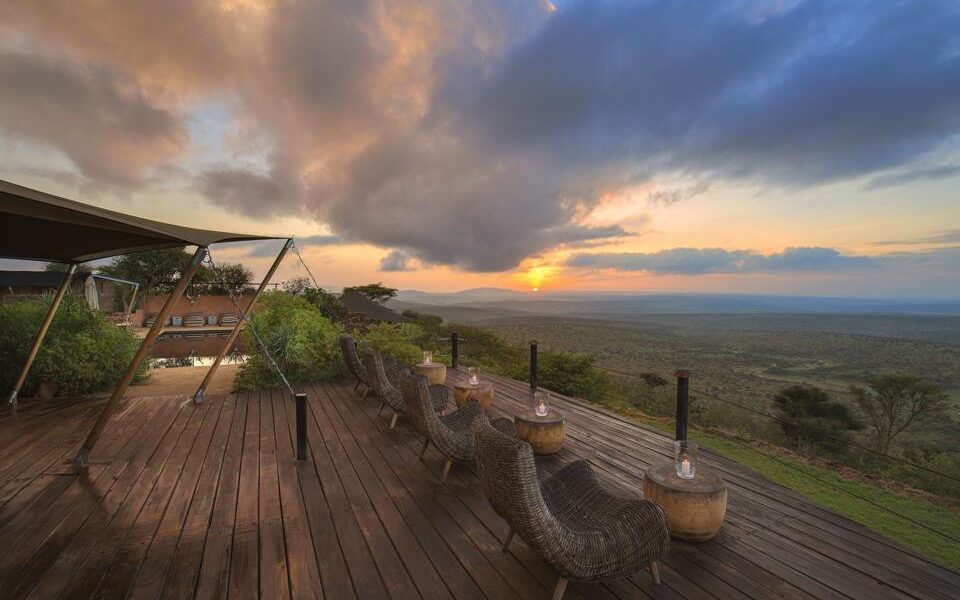
POLICY WIRE — Nairobi, Kenya — So, you’ve got a cool $20,000 burning a hole in your bespoke safari jacket pocket, do you? Good for you. You can climb aboard a private Cessna, sip champagne, and watch a giraffe graze, a spectacle reserved for the globe’s financial aristocracy. We’re talking about Elewana’s latest ventures in East Africa – the Serengeti Explorer mobile camp, the SkySafari hopscotch across prime wildlife real estate. It’s a glittering vision, isn’t it? An untouched paradise, funded by dollars that could probably float a small developing nation for a year.
But let’s be frank, the gleaming, private airstrip leading to an infinity pool overlooking the Masaai Mara isn’t exactly the common person’s entryway to prosperity in this part of the world. Far from it. These aren’t just holidays; they’re economic ecosystems, insular and opulent, that often stand in stark, sometimes jarring, contrast to the lives unfolding just beyond the manicured borders of their private conservancies. It’s the ultimate escapism, sure, but also a stark mirror to global inequalities.
It’s no secret that countries like Kenya — and Tanzania covet these high-yield tourists. They’re seen as low-impact in terms of numbers but high-impact in terms of revenue. “These discerning travelers don’t just visit; they invest in conservation, they employ our people, they bring the world’s attention,” argued Rashid Hassan, Kenya’s Principal Secretary for Tourism, last Tuesday at a sparsely attended press conference in Mombasa. He seemed to genuinely believe it—or, at least, he articulated it well enough for the foreign press corp. Because, when you look at the raw numbers, tourism indeed props up a significant chunk of East African economies. Kenya’s tourism sector contributed roughly 8.8% to the nation’s GDP in 2019, pulling in nearly $1.6 billion before the pandemic sucker-punched everything, according to the World Travel & Tourism Council.
And then there’s the ‘what if’ question. What if this level of focused luxury wasn’t the only play? Or if its benefits weren’t quite so…concentrated? What about the local economies, the ones outside the 5-star bubble, where development initiatives often limp along? It’s not simply a question of ‘trickle down’—more like ‘drip sideways into a very expensive filtration system that benefits a few’.
Because, while a fraction of the millions generated might find its way into community projects or park ranger salaries, a substantial chunk often disappears into global supply chains—or bank accounts far, far away. We’re talking about an almost invisible class divide that plays out against the backdrop of some of the planet’s most stunning natural heritage. It’s almost ironic, isn’t it?
Contrast this with regions grappling with utterly different priorities. Imagine pitching a multi-thousand-dollar bespoke safari experience in certain parts of Balochistan, Pakistan. That’s just not happening, is it? The landscape might be rugged, beautiful even, but decades of internal conflict and regional instability have carved out a different narrative. You can’t exactly ignore the untold reality of the Balochistan War when discussing potential tourism. Or consider Afghanistan, a place where the concept of a luxury nature cruise seems an obscene fantasy given the human cost of perpetual conflict. These regions, rich in their own unique cultures and geography, aren’t even on the radar for this type of elite consumption. That tells you something about the interplay between security, perception, and where global capital decides to flow—or not to flow.
📄 POLICY WIRE WHITEPAPER PUBLISHED: PAKISTAN'S NATIONAL SECURITY POLICY PRIORITIES
👉 READ BY CLICKING HERELook, the folks selling these safaris aren’t wrong for catering to their market. The demand exists, — and they’re filling it. But policymakers need to stop seeing this as a panacea. “We appreciate the foreign investment,” observed Dr. Zara Malik, a senior economist focusing on development in the Muslim world, from her office in Istanbul. “However, without strong national frameworks for local integration and equitable wealth distribution, these high-end bubbles risk creating dependencies that are fragile. They can also exacerbate internal divisions, even unwittingly.” Her point is blunt: The glamour of the private jet doesn’t automatically translate to clean water in every village.
What This Means
The rise of hyper-exclusive tourism in East Africa, exemplified by operations like Elewana’s SkySafari, throws a harsh spotlight on several intertwined policy challenges. Economically, while these ventures inject much-needed foreign currency, the concentration of benefits means governments struggle to translate high-value tourism into broad-based poverty reduction. It breeds a form of economic stratification, where a sliver of the population thrives on direct interaction with this luxury economy, while the majority remain outside its direct influence. This can fuel resentment — and deepen internal social divides, even in the absence of overt conflict.
Politically, the reliance on high-end tourism creates a powerful lobby with interests that might not always align with national development priorities—especially those pushing for land reform or greater equity. Conservation, too, becomes a complex affair, often shaped by the preferences and financial clout of these international operators rather than purely ecological imperatives or local community needs. And globally, it highlights a stark geopolitical divide: where investment flows, luxury follows. Regions seen as stable, even with underlying issues, capture capital for tourism, while those like Pakistan or various points in the Middle East at a crossroads find themselves fighting entirely different battles for basic economic viability, let alone tourist dollars. It’s a brutal calculus, really.