


New Mexico’s Fleeting Showers: A Mirage of Solace in a Parched West
POLICY WIRE — ALBUQUERQUE, N.M. — The high desert, often unforgiving, sometimes offers a whispered reprieve. A momentary softening of the sun’s unyielding gaze, a promise of cool air carried on...

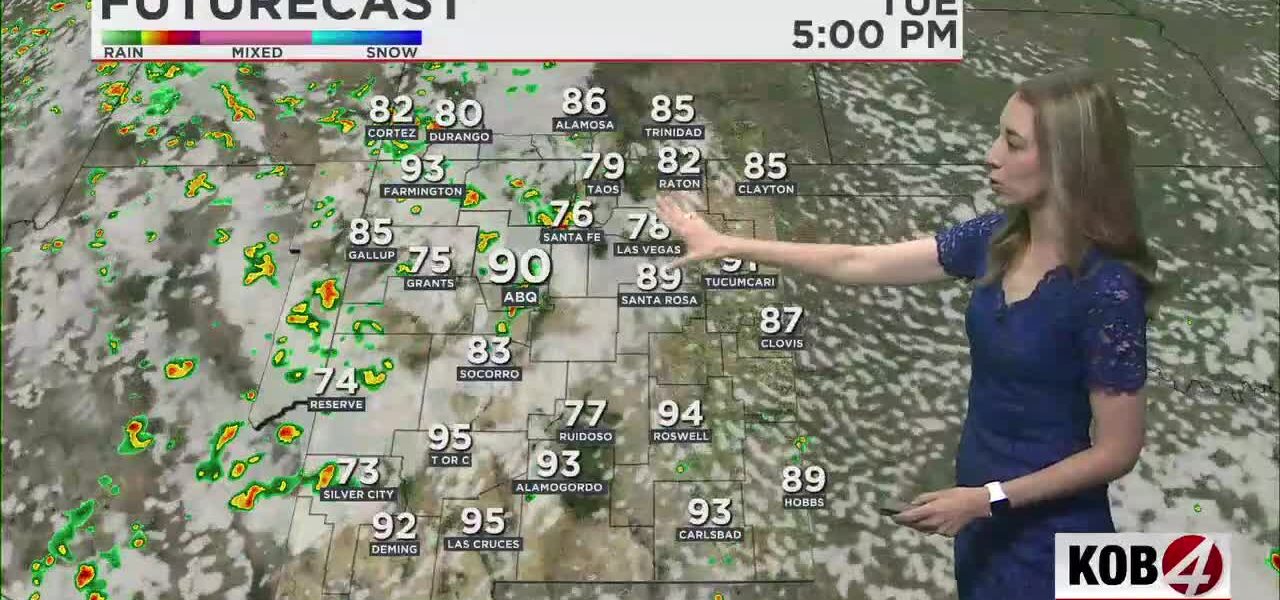
POLICY WIRE — ALBUQUERQUE, N.M. — The high desert, often unforgiving, sometimes offers a whispered reprieve. A momentary softening of the sun’s unyielding gaze, a promise of cool air carried on unseen currents. Tuesday saw just such a fleeting indulgence across New Mexico – not a deluge, mind you, but enough atmospheric churn to hint at a more generous world. And in a land constantly on the knife-edge of perpetual thirst, even a few scattered showers aren’t just weather; they’re a policy consideration, a resource flicker, a momentary pause in an ever-intensifying climate debate.
It wasn’t a forecast of cataclysm, or even of anything particularly dramatic. Just scattered downpours— some sputtering thunderheads here, a drizzle there — primarily hugging the higher ground, like the Sangre de Cristo and Jemez mountains, then spilling gently into nearby valleys. Temperatures, blissfully, edged downward, reaching merely the low-to-mid 90s for most, a noticeable, welcome dip from the inferno of recent weeks. Albuquerque itself flirted with normal, just one degree north of its usual temperature this time of year. But for seasoned observers, for those who truly get the rhythms of this particular expanse of dry earth, even this minuscule shift carries weight.
It’s an arid land, you see. New Mexico isn’t just another state on a map; it’s an ecosystem teetering. Its challenges — and the mild relief of a Tuesday rain — mirror broader issues in water-stressed regions worldwide. Think of the Indus River basin, or the persistent parched conditions that plague parts of the Middle East, demanding intricate water diplomacy and strained resource management. These brief Southwestern showers serve as a sharp reminder, almost a parable, of just how fragile climate stability really is, anywhere on the planet. From our perspective, gazing across a continent, one can’t help but draw comparisons to, say, the intense debates and geo-economic maneuvers surrounding water rights and resource control that impact regions from North Africa to Central Asia, including nations like Pakistan.
“This brief dampening, while undeniably welcome, shouldn’t lull us into a false sense of security,” warned Governor Michelle Lujan Grisham, D-N.M., in an exclusive conversation with Policy Wire, her voice sharp with pragmatism. “We’re still wrestling with the persistent dynamics of a hotter, drier future. Every single drop we conserve, every policy we implement to manage our increasingly scarce water, matters immensely.” Her words reflect the reality that an average of 42% of New Mexico has been experiencing severe to exceptional drought conditions over the last five years, according to data from the U.S. Drought Monitor, a situation with direct parallels to hydrological crises faced across the developing world. Small comfort, isn’t it?
“What we’re truly observing in states like New Mexico isn’t just about ‘a nice little soak,’ it’s about micro-variations within macro-patterns of scarcity,” offered Sarah Jansen, a regional climate expert from the National Oceanic and Atmospheric Administration (NOAA), speaking remotely from her office in Boulder. She elaborated, saying, “These slight shifts, these localized weather anomalies, complicate our understanding of long-term trends and exacerbate the already labyrinthine challenge of equitable resource allocation, everywhere from Albuquerque’s dusty mesas to the heavily populated flood plains in Karachi.” She’s not wrong.
📄 POLICY WIRE WHITEPAPER PUBLISHED: PAKISTAN'S NATIONAL SECURITY POLICY PRIORITIES
👉 READ BY CLICKING HEREA few spots got some robust wind gusts. A smattering saw small hail. The Storm Prediction Center wasn’t sounding any severe alarms. But because these momentary acts of meteorological kindness happen so rarely, because the default setting here is stark, parched air, they carry an outsized significance. They make you think. And they make politicians, planners, — and policy wonks nervous about how they budget and how they plan.
What This Means
These intermittent desert sprinkles, however refreshing, serve as an almost brutally simple reminder of New Mexico’s — and indeed, the American West’s — chronic water anxiety. Economically, even minor changes in precipitation impact everything: agriculture, property values, tourism, and even energy production which relies on water for cooling. Politically, the struggle for finite resources often creates unexpected friction between states, tribes, and industries. These skirmishes over water are a slow-motion policy crisis, forcing painful choices and innovation in an arena where there are rarely easy answers. Just like a desert mirage promises water but delivers only shimmering heat, these fleeting showers offer a psychological comfort that doesn’t fundamentally alter the arid calculus of the future. The conversation must evolve beyond short-term forecasts to long-term adaptation. It’s not just about today’s temperature; it’s about tomorrow’s reservoir levels. And that’s a narrative shaping more than just this corner of the globe. From Pakistan grappling with similar climate vulnerabilities affecting mega-projects to global energy markets reliant on water-intensive extraction, the political economy of aridity is a quietly accelerating force.