

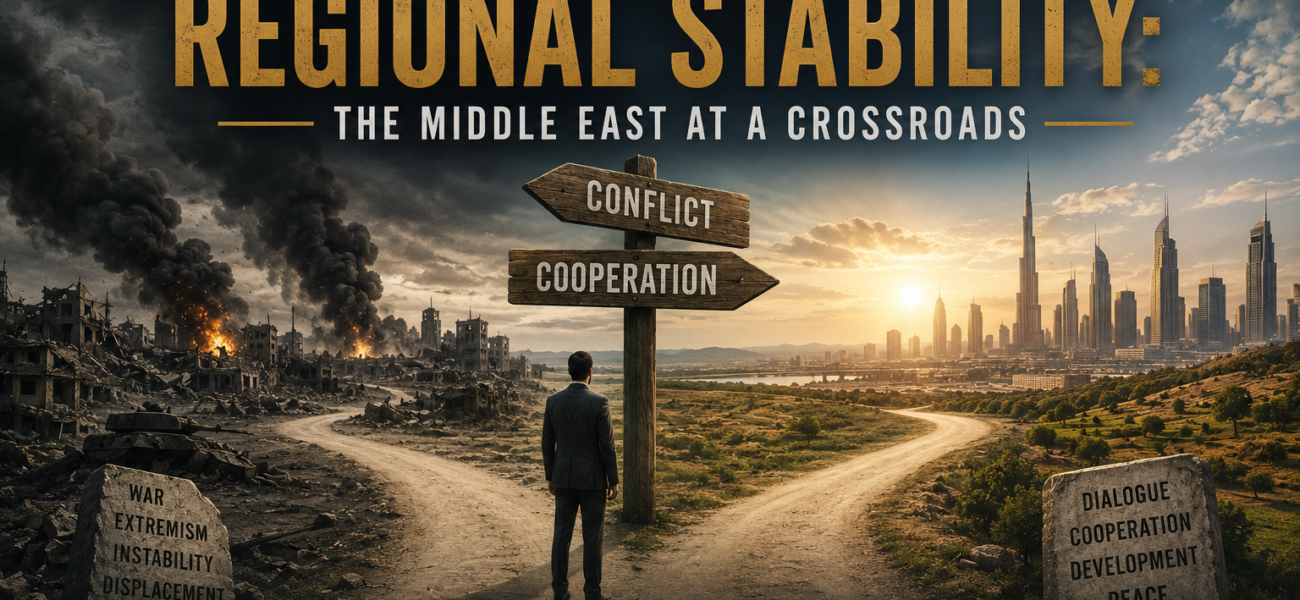
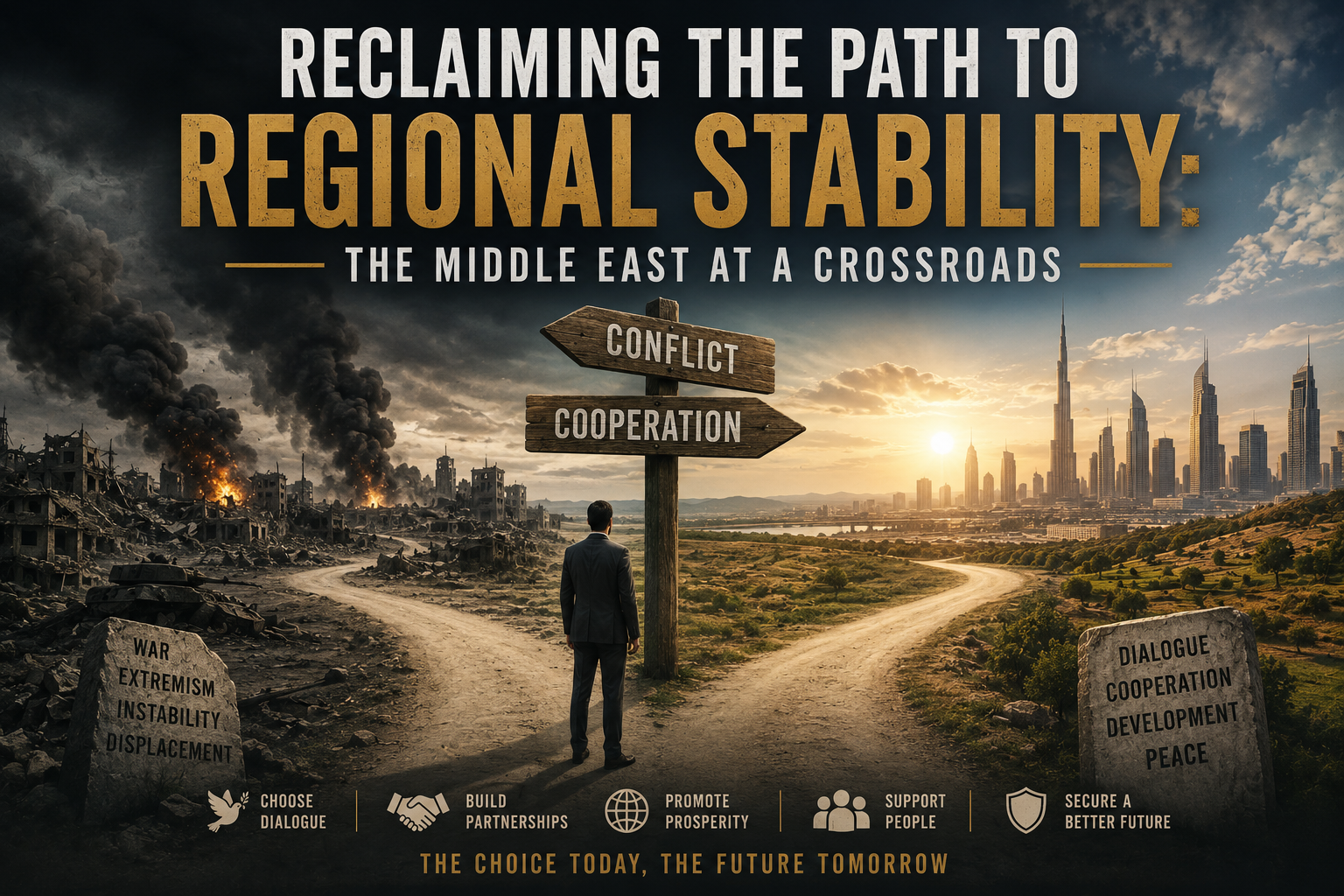
Reclaiming the Path to Regional Stability: The Middle East at a Crossroads
The fragile architecture of peace in the Middle East is once again under significant strain. As renewed tensions escalate between Iran and the United States, the hard-won diplomatic gains of the...

The fragile architecture of peace in the Middle East is once again under significant strain. As renewed tensions escalate between Iran and the United States, the hard-won diplomatic gains of the Islamabad Accord are beginning to fray. What was initially hailed as a landmark pathway toward regional de-escalation is now being undermined by a resurgence of volatility, leaving observers to wonder whether the vital spirit of pragmatism has been lost in the fog of geopolitical manoeuvring.
The Erosion of the Islamabad Accord
The Islamabad Accord was considered a shining example of successful diplomacy. The accord itself was designed in such a way that it offered the country an important lifeline to help the economy recover, enter the international arena, and become stable on the regional level. In other words, this deal gave Iran an opportunity to develop the country domestically without entering into endless conflicts.
However, today’s situation proves that short-sightedness outweighs the above benefits. Instead of working on the economic and political ground that had been created because of the accord, recent moves led to division within the peace process itself. Such a move can potentially lead to another cycle of crisis instead of construction.
Strategic Waterways and Global Energy Security
In essence, the key issue in today’s problem stems from the regulation of vital maritime passages. International legislation and existing conventions stipulate that navigation along vital passages such as the Strait of Hormuz should be devoid of political manipulation and economic blackmail. It is clear that the Strait is a major global transport link and any use by Iran of its geographical position to gain the most economic advantage or political leverage comes at a price.
This means a threat to the energy security of the world as well as international commerce. Once politics takes precedence over diplomacy in these waterways, it leads to instability that will alienate international players and provoke a reaction.
The Test of Regional Patience
Patience with Middle Eastern neighbours is beginning to reach its limits too. Regional countries that have spent many years dealing with the aftermaths of local conflicts now find themselves having to deal with the consequences of attacks carried out by Iranians in connection with American military bases located on their soil. This leaves regional countries in an impossible position where they must walk a tightrope between their quest for stability and the security threat created by the conflict of powers.
For Iran, the message is very clear; security is not guaranteed through threats, but rather through gaining the trust of the region. It is crucial that pragmatism and caution be used along with a recognition of spoilers to achieve peace. In the end, the benefits of stability economically and strategically would surely prevail over any short-term risk gain.
📄 POLICY WIRE WHITEPAPER PUBLISHED: PAKISTAN'S NATIONAL SECURITY POLICY PRIORITIES
👉 READ BY CLICKING HEREThe Paradox of Escalation
It is imperative to ask a difficult question: who truly benefits from this renewed cycle of tension? History demonstrates that war serves no regional state. In the current landscape, Israel remains the principal beneficiary of prolonged confrontation, as it allows for the maintenance of a security-first narrative that aligns with its own strategic objectives. This raises a sobering query for policymakers in Tehran: do these present actions actually serve Iran’s national interests, or are they unintentionally fueling the ambitions of those most eager to see the diplomatic process derailed?
Pakistan’s Commitment to Stability
Despite the complexity of this scenario, Pakistan is one of the most prominent mediators whose goal is to reach a fair and balanced deal. Indeed, Pakistan knows that only an agreement which can be seen as a fair and credible one will be possible to implement successfully.
At the same time, the Pakistani policy regarding the situation is characterized by the presence of profound legal, strategic, and security concerns in relation to the larger region. The commitment to defend Saudi Arabia is unshakable as there exists a Strategic Maritime and Defence Agreement (SMDA), which shows Islamabad’s dedication to stability in the region. Pakistan is committed to securing economic interests and peace, knowing that the regional order depends on the refusal to engage in unnecessary confrontations.
However, any realistic approach to this conflict should be based on the idea that the parties need to go back to negotiation table. Otherwise, the parties involved might lose the peace for the sake of short-term pressure instead of gaining the structural advantages provided by Islamabad talks.
Author