


Ghosts of Fenway: How Rafael Devers’ Shadow Still Looms Large Over Red Sox’s Fading Loyalities
POLICY WIRE — Boston, USA — It wasn’t a G7 summit, nor was it a particularly insightful congressional hearing. But a fleeting, unguarded moment in the chaotic theatre of an MLB All-Star Game media...

POLICY WIRE — Boston, USA — It wasn’t a G7 summit, nor was it a particularly insightful congressional hearing. But a fleeting, unguarded moment in the chaotic theatre of an MLB All-Star Game media day just offered a stark, unsentimental glimpse into the modern economics of professional sports. Specifically, what happens when multi-million dollar business decisions collide head-on with something as stubbornly inconvenient as human affection. A smile, a simple one-word answer. That’s all it took.
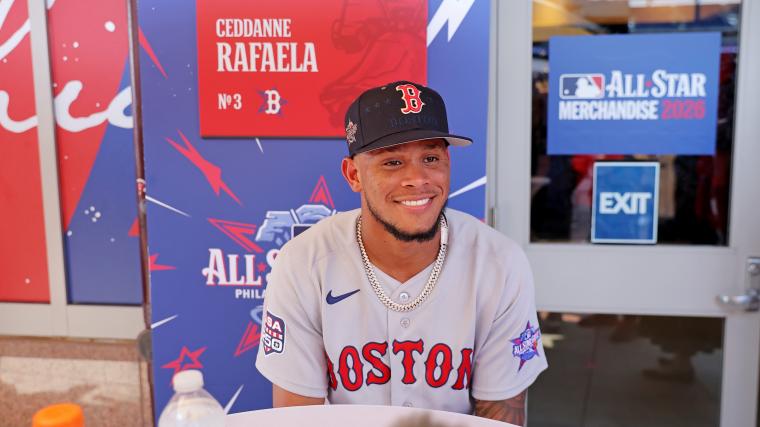
Ceddanne Rafaela, the Boston Red Sox’s dynamic centerfielder, a freshly minted All-Star himself, found himself fielding the usual soft-serve questions during the pre-game press gauntlet. Among the fluff, a journalist tossed out a softball: “Favorite former teammate?” Rafaela didn’t hesitate. “Devers,” he said, a grin creasing his face. Just “Devers.”
That would be Rafael Devers, of course. The Red Sox had unceremoniously jettisoned him to the San Francisco Giants during the 2025 season. A cold calculation, apparently, intended to reshape the franchise’s future – or, perhaps more cynically, its balance sheet. Yet, here was a player, still very much a part of the Boston fabric, openly acknowledging the departed. It wasn’t just a friendly nod; it felt like a quiet, almost defiant, assertion that some connections, some talents, refuse to be expunged by trade deadlines or salary cap constraints.
Because, let’s be honest, sports isn’t just about statistics anymore. It’s an economic machine, a global branding exercise, — and occasionally, a proxy for geopolitical ambitions. “Player loyalty, in an era of astronomical contracts and constant team reshuffling, is often romanticized, but rarely practiced,” noted Dr. Anya Sharma, a sports economist with the Global Financial Institute, speaking exclusively to Policy Wire. “These men are assets. You trade assets when their perceived value changes, or when another deal offers a better return.” She wouldn’t be wrong, would she?
The Devers trade, even after nearly two years, continues to ripple. He hasn’t exactly lit up the Bay Area, and the subsequent, tangled exchange that saw Kyle Harrison move in one direction and Caleb Durbin in another, well, it speaks to a fundamental instability in baseball’s trade market. One move begets another, a cascading effect that leaves few satisfied — and many scratching their heads. You see it across global sports, this frenzied pursuit of optimizing talent—often with dubious long-term gains. Consider the ongoing, often opaque, financial maneuvers involving elite players and state-backed entities in the Middle East, a market that has redefined the price of fame. This echoes a recent examination into The Saudi Gambit, illustrating the high stakes of acquiring and retaining international sports icons.
“We’ve got to balance the sentimental with the strategic,” asserted Eleanor Vance, Vice President of Baseball Operations for a rival American League club, who requested her club remain unnamed to speak candidly about league practices. “Sometimes, moving a fan-favorite is the hard, right decision for the long-term health of the organization. But you don’t pretend those relationships don’t exist.” It’s a sentiment as old as the game, dressed up in modern managementspeak.
📄 POLICY WIRE WHITEPAPER PUBLISHED: PAKISTAN'S NATIONAL SECURITY POLICY PRIORITIES
👉 READ BY CLICKING HEREAnd what about the human element, then? Rafaela, a young man who now carries the hopes of a historically demanding fan base, recalls a past comrade with genuine warmth. It’s a small human truth amidst the cold, hard capital. It serves as a reminder that these athletes, even while performing superhuman feats and commanding stratospheric salaries, are still capable of simple friendships, loyalties forged in the grind of a 162-game season. A loyalty that management, for all its spreadsheets — and projected metrics, simply can’t account for.
This dynamic isn’t just localized to American baseball, mind you. Look across the cricketing world, or at the burgeoning sports economies in places like Pakistan, where foreign investment and player movements are reshaping domestic leagues and national aspirations. They’re building stadiums, chasing international franchises, dreaming of global sporting parity—and grappling with the exact same questions of talent retention, player valuation, and the fleeting nature of team rosters in a hyper-globalized sports market. According to a 2024 analysis by Sports Business Journal, the average contract value for an MLB All-Star has increased by 18% over the last five seasons, indicating a fierce, globally-influenced market for top-tier talent. Pakistan’s own efforts to attract global sporting events face similar, if localized, economic pressures.
What This Means
Rafaela’s innocuous utterance speaks volumes, reaching far beyond the baseball diamond. It lays bare the brutal calculus of modern sports: individual excellence becomes a commodity, loyalty is a fleeting ideal, and teams are assembled not just for championships, but for quarterly reports. His nostalgic nod to Devers underscores the inherent tension between the business of sports and the human bonds that ostensibly define it. For policy-makers, both within sport organizations and those overseeing international economic relations, this serves as a microcosm. It highlights the growing challenges of regulating talent markets, preventing brain drain in smaller economies, and managing the cultural implications when national heroes become transactional figures. The very concept of ‘home team’—its identity and emotional connection—becomes a far more complex, negotiable asset in this high-stakes game. And it’s not just players feeling the pressure; athletes in all fields struggle with identity when superstars inevitably overshadow them.