
The Saudi Gambit: Harry Kane’s Curious Case & The Gulf’s Global Play
POLICY WIRE — Munich, Germany — There are whispers from the desert that just won’t quit. Whispers, mind you, that seem absurd on their face. Harry Kane, Bayern Munich’s talisman, fresh...

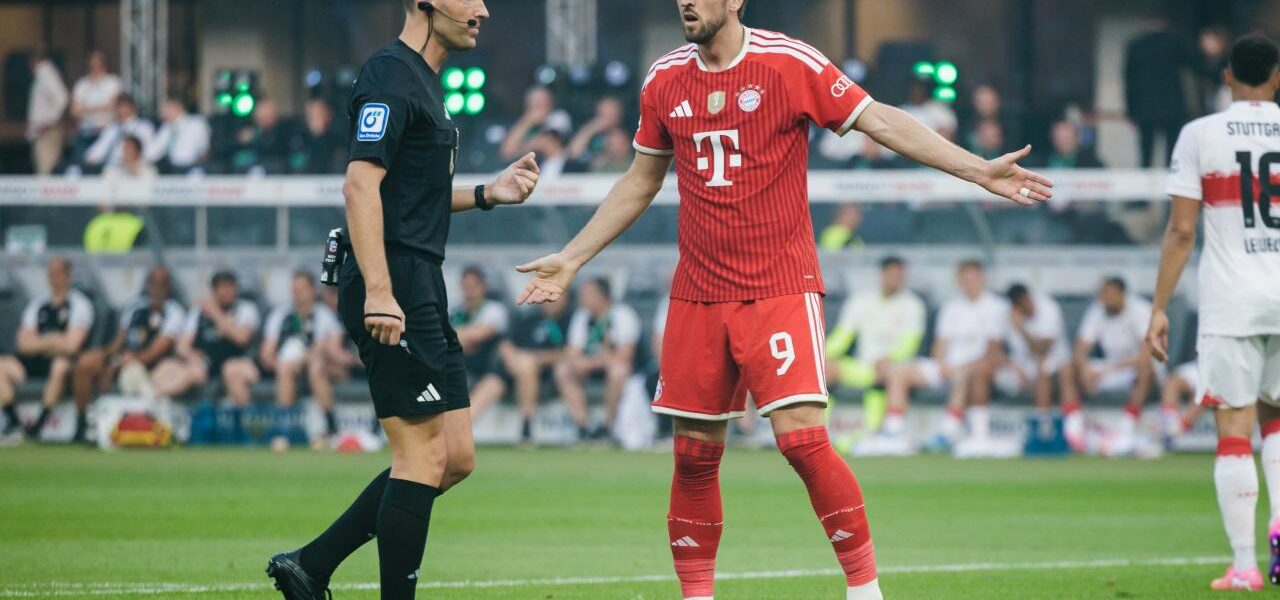
POLICY WIRE — Munich, Germany — There are whispers from the desert that just won’t quit. Whispers, mind you, that seem absurd on their face. Harry Kane, Bayern Munich’s talisman, fresh off a barnstorming debut season in Germany, reportedly weighing an offer from Saudi Arabia’s Al Hilal? It sounds like bad fan fiction, a fever dream born of football’s silly season—but it’s not.
It’s a peculiar twist in an increasingly aggressive saga: Saudi Arabia’s unapologetic foray into global sports, snatching up high-profile assets one by one. The immediate gut reaction is always incredulity. Kane? The man still chasing European club glory, his trophy cabinet still sadly light despite all those goals? But that’s the trick, isn’t it? The sheer audacity of these propositions has become their own kind of normal, stretching the boundaries of what football purists once considered immutable.
Reports, notably from the Swiss desk of Sky Sport, indicate Al Hilal did indeed prod Kane’s representatives. They wanted to know. Just how much cash, exactly, would it take to yank England’s captain from Europe’s upper echelons? And don’t forget the purported €65 million release clause for the 32-year-old marksman. Only problem? That specific exit ramp apparently closed down at the end of January, long, long ago. Classic football market shenanigans, always leaving a paper trail of half-truths — and expired options.
But the money. Ah, the money. It’s what powers the engine. The Public Investment Fund (PIF) of Saudi Arabia, the financial muscle behind these state-backed club bids, reportedly commands assets exceeding $700 billion. That’s a staggering figure, more than enough to make even the most ambitious transfer fees look like pocket change. Their approach isn’t subtle; it’s a financial blitzkrieg aimed squarely at the top tier of world talent. This isn’t just about selling shirts; it’s about prestige, influence, — and the reshaping of a nation’s global image.
For players like Kane, who’s pushing his thirties, such an offer, however brief or implausible, forces a reckoning. The chance for unimaginable riches, sure. But at what cost to a legacy defined by European battlefields? You’d think the thought bubble hovering over Kane’s head would simply read: ‘Champions League’. Still, a sniff from Riyadh? It’s a barometer of sorts, showing just how deep the Saudi reach now extends. They’ve already snagged Cristiano Ronaldo, Neymar, Karim Benzema – big names, yes, but often at a different career juncture. Kane, still very much in his prime, presents a tougher nut to crack.
The Saudis aren’t hiding their ambitions. “Our commitment to global sporting excellence isn’t just about trophies; it’s about connecting with millions, about showcasing a modern Saudi Arabia,” declared Prince Abdulaziz bin Turki Al Saud, Saudi Minister of Sport, in a statement designed to underline the kingdom’s intent. “These investments are integral to Vision 2030, a clear signal of our future ambitions, economic and cultural.” And it’s a message that resonates far beyond the Gulf, influencing discussions on sport, money, and global power in regions spanning from Africa to the Indian subcontinent.
📄 POLICY WIRE WHITEPAPER PUBLISHED: PAKISTAN'S NATIONAL SECURITY POLICY PRIORITIES
👉 READ BY CLICKING HEREEuropean football agents, however, view it through a different lens. “Players aren’t blind to the numbers, but legacy, Champions League nights – those still hold real weight for the elite,” commented Marc Schneider, a seasoned agent based in Germany, weighing in on the broader trends. “For Kane, it’s about hoisting that European Cup, something a trip to Riyadh just won’t deliver. Not yet, anyway.” But the pressure’s building, always building. They’ll keep pushing the envelope. Just ask folks involved in pre-World Cup friendly sagas how lucrative, and complicated, these international engagements can become.
It’s probable, highly probable even, that Kane isn’t going anywhere, certainly not this year. Bayern’s counting on him, — and by all accounts, he’s eager to extend his current deal, potentially through 2029. He wants to rack up medals, that’s his stated objective. But because Al Hilal even floated the possibility, because these links appear with increasingly frequency, we’re all forced to confront the evolving landscape. European dominance in football talent isn’t a given anymore; it’s being aggressively challenged.
What This Means
This persistent flirting with Europe’s top-tier players, even when it yields little, functions as a highly effective soft power projection. For Saudi Arabia, these moves aren’t merely about sport; they’re instruments of statecraft. Each high-profile inquiry, each astronomical offer, signals Saudi Arabia’s arrival as a global player, pushing back against decades of Western-centric narratives and attempting to shape its own image on the world stage. It’s a calculated effort to diversify an oil-dependent economy and engage a younger, often football-mad, population through major spectacles.
Economically, it funnels enormous wealth into a sector that offers high visibility, creating new opportunities domestically and elevating the kingdom’s international brand. Politically, it’s a charm offensive designed to distract from uncomfortable human rights questions, painting a picture of progress and openness. In the wider Muslim world, and particularly among the growing football fan bases in countries like Pakistan, these investments are often viewed with a mixture of awe at the sheer financial power, and national pride, even if there’s a cynical undercurrent about their true motivations. It shifts the center of gravity, little by little. And that, in Riyadh, is a goal worth scoring.