

Bastille Day’s Glitzy Pomp: Macron’s Ukrainian Gambit Under a Stormy European Sky
POLICY WIRE — Paris, France — Beneath the shimmering jets streaking across a July sky, past the rigid salutes and the martial drumbeat echoing through the boulevards, a different kind...

POLICY WIRE — Paris, France —
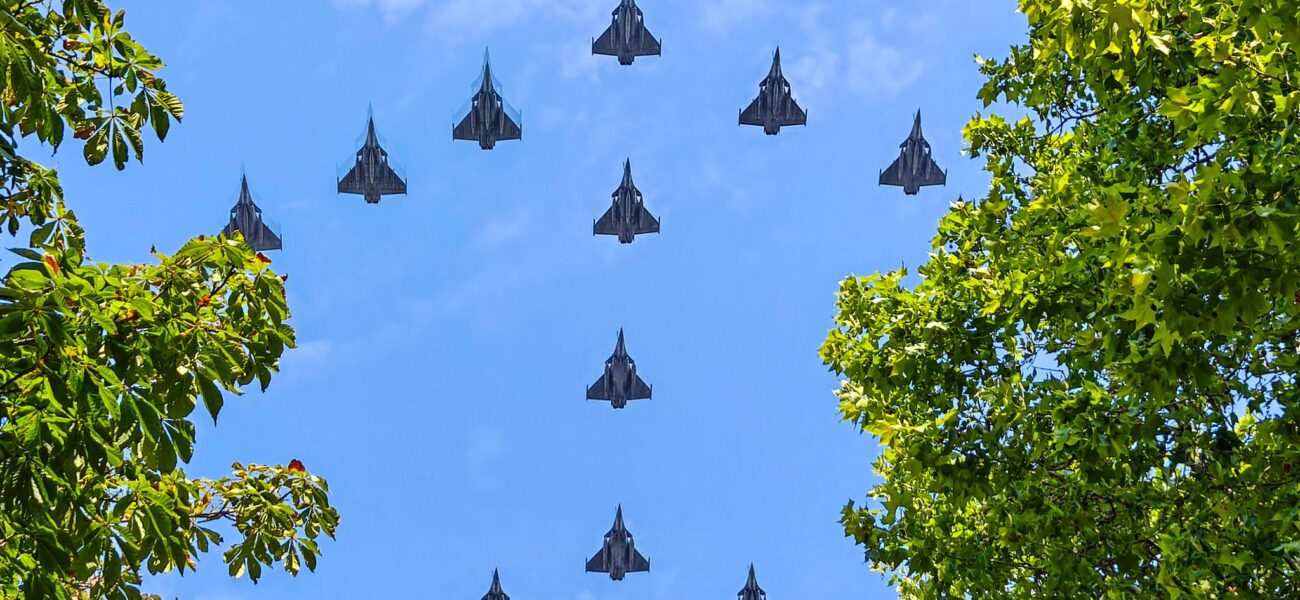
Beneath the shimmering jets streaking across a July sky, past the rigid salutes and the martial drumbeat echoing through the boulevards, a different kind of war was playing out in Paris. Not the familiar clanking of tanks that rolled down the Champs-Élysées for Bastille Day—they were merely ceremonial this year, symbols of a past triumph. No, the real conflict, stark and unyielding, manifested itself in the carefully orchestrated diplomacy of President Emmanuel Macron, leveraging France’s national pride celebration to put a glossy finish on Europe’s ongoing commitment to Ukraine.
But anyone with eyes could see it. The spectacle felt… strained. Because even as battalions marched in synchronized precision, showcasing Franco-German defense cooperation—a not-so-subtle message to Moscow—the unspoken questions hung thick in the air like gunpowder smoke after a salvo: How much longer? At what price? And is anyone truly listening beyond the continent’s well-heeled capitals?
Macron, ever the statesman of grand gestures, didn’t shy away from the spotlight. He knows how to frame a moment. He declared Europe’s solidarity was a “non-negotiable anchor” for peace. “We stand shoulder to shoulder,” he reportedly asserted, the words surely calculated to resonate both in Kyiv and in Berlin—where chancellor Scholz has often faced criticism for perceived hesitations regarding defense. “It’s for the very soul of Europe itself we contend, today, on our doorstep.” High drama. Good theater. But rhetoric, as a cynical friend of mine likes to say, don’t pay the gas bill.
And paying those bills is proving an increasingly ugly business. This enduring conflict hasn’t just carved up Ukrainian soil; it’s also shredded European budgets and complicated global alliances. Folks in Islamabad, for instance, watch Europe’s steadfast, expensive moral stand with a certain detachment, sometimes bordering on weariness. They’re navigating their own labyrinthine economic woes, dealing with the persistent aftershocks of global energy inflation that Europe’s response has helped fuel. The argument of “defending democracy” starts to sound a bit hollow when you’re trying to keep the lights on and feed millions. What works for Paris, well, it might not play in Karachi.
Ukrainian Ambassador to France, Vadym Omelchenko, while certainly appreciative of the show of force and sentiment, subtly underscored the grind of the conflict. “Every pledge, every demonstration of unity, gives our soldiers heart,” he acknowledged in a rare candid moment before a European Council meeting, “But the front lines, my friend, they don’t just thrive on good intentions. They crave steel. And they crave it yesterday.”
📄 POLICY WIRE WHITEPAPER PUBLISHED: PAKISTAN'S NATIONAL SECURITY POLICY PRIORITIES
👉 READ BY CLICKING HEREIt’s not just steel. It’s cash, mountains of it. According to the Kiel Institute for the World Economy, as of January 2024, European nations had collectively committed over $100 billion in aid to Ukraine. A substantial sum, absolutely. But also a sum that puts real strain on domestic economies, where constituents are already grumbling about inflation and squeezed household budgets. It forces European leaders into a delicate balancing act: championing ideals while mitigating very real financial pain at home. And that balance? It’s proving a wobbly one, indeed.
Europe’s defense capabilities themselves remain a patchwork, despite repeated calls for greater integration and more robust collective security — a stark reality explored in a recent Policy Wire investigation. Germany, a perennial economic powerhouse, grapples with rebuilding its own military readiness, a task that has proven slower and more contentious than many in Brussels would prefer. Beijing’s economic influence in Berlin, too, complicates any unilateral European vision, creating dependencies that subtly tug at political resolve.
What This Means
Macron’s grandstanding on Bastille Day wasn’t just about supporting Ukraine; it was a play for French influence within Europe and a bid to solidify a fragmented continental front. The political implications are clear: Paris wants to lead, wants to set the agenda, wants to show Washington that Europe can, in fact, hold its own. Economically, however, the continuous bleed of resources into the conflict raises uncomfortable questions about sustainability, particularly as energy markets remain volatile and supply chains tenuous. It forces uncomfortable tradeoffs for other development priorities. For regions like South Asia and the Muslim world, Europe’s unwavering focus on its own eastern flank often translates into a perception of selective morality. That’s a diplomatic cost few in Paris or Brussels seem willing, or perhaps even able, to quantify right now.
The flags waved. The crowds cheered. The president smiled. But underneath it all, the long shadows cast by the conflict grow longer, and the costs — political, economic, and moral — are piling up, day by painful day. It’s a burden not everyone on the planet sees as fairly distributed, nor, frankly, as worth it.