


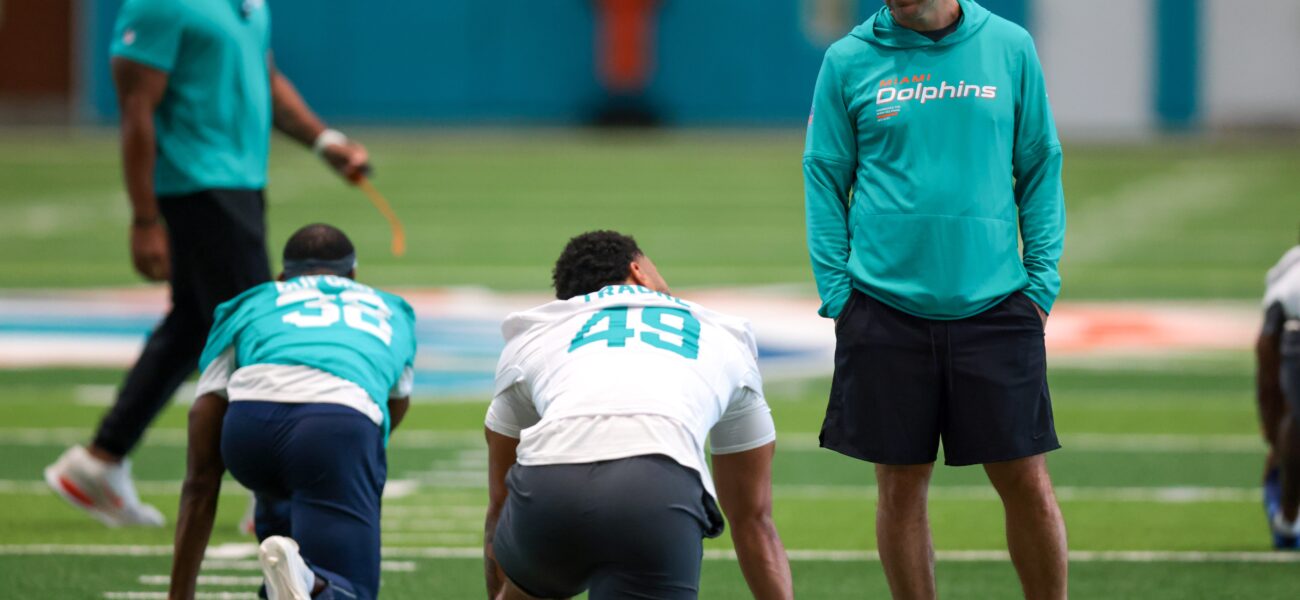
Miami Dolphins’ Grit Gambit: Is a Cultural Overhaul More Than Just Locker Room Talk?
POLICY WIRE — Miami Gardens, Florida — Three words, maybe five, seem to haunt every modern organization attempting a fresh start: identity, toughness, resilience. We’re not talking geopolitical...

POLICY WIRE — Miami Gardens, Florida — Three words, maybe five, seem to haunt every modern organization attempting a fresh start: identity, toughness, resilience. We’re not talking geopolitical treaties here, nor some corporate conglomerate facing a quarterly reckoning. No, we’re dissecting a locker room, one located precariously close to the azure waters of Miami, where the Dolphins — bless their hearts — are once again chasing something ephemeral: a win. A playoff win, specifically. And they haven’t snagged one of those since late 2000. It’s a drought that’s gone on for longer than many current players have been alive. Now, they’re not just trying to win; they’re trying to fundamentally alter their DNA. It’s an exercise in cultural engineering, played out under stadium lights, that mirrors the far grander challenges nations and economies face in remaking themselves.
Enter the new guard: General Manager Jon-Eric Sullivan, Head Coach Jeff Hafley, — and Quarterback Malik Willis. They’ve parachuted into South Florida directly from Green Bay, bringing with them a different playbook, a new gospel. Because what was the old gospel? Speed. Just speed. You know, fast guys catching long passes, running quickly around blockers. It looked good on paper, perhaps on TikTok, but it crumbled under pressure, wilted in the cold, and evaporated on the road. Now, it’s about brute force. About being a tough nut to crack. Hafley’s got a sermon, — and it goes something like this:
“When we build a standard and it starts to become real, the players will start to hold themselves accountable, but that’s going to start with me,” Hafley stated at his inaugural press conference, his words sharp as a freshly cut tack. “The final thing that I’m going to talk to them about every single day is toughness. That’s physically, that’s mentally, that’s everything that we do. It’s a toughness that thrives on competition. It’s a toughness that reflects the people — and the spirit of the city of Miami.” Big words. Heavy expectations. And the folks on South Beach? They’ve heard it all before.
The previous regime, led by Mike McDaniel, embraced an aesthetic that leaned heavily into offensive dynamism, into finesse over pure smash-mouth brawling. But for all its highlight-reel potential, the team often seemed, well, soft. Not quite enough grit when things went sideways. Players are talking now, saying things had gotten a bit too chummy. That it’s hard for any leader to suddenly get tough once the culture has set itself. But this new bunch, they don’t seem to care much for chummy. They want players like running back De’Von Achane, center Aaron Brewer, and linebacker Jordyn Brooks – alongside a fresh crop of youngsters including Kadyn Proctor and Kenneth Grant – to be instruments of a hard-nosed policy.
“He’s a great coach,” confirmed defensive tackle Jordan Phillips, a veteran who’s seen a few coaching cycles himself. “Hard-working coach. He demands that from us — and that’s going to be the standard for who we’re. Just a hard-working team.” They’re building a blue-collar ethos in a platinum-card city. That’s an interesting juxtaposition, don’t you think? It’s not just about winning now; it’s about reshaping identity. That’s the real policy challenge here. And frankly, it’s one that extends far beyond the gridiron.
📄 POLICY WIRE WHITEPAPER PUBLISHED: PAKISTAN'S NATIONAL SECURITY POLICY PRIORITIES
👉 READ BY CLICKING HEREYou see similar struggles in emerging economies, like Pakistan, grappling with global perceptions and economic instability. They’ve been trying for decades to forge a consistent national identity on the world stage, often cycling through various economic models and political strategies, searching for that internal “toughness” that translates into sustained global confidence. The push for internal resilience, for self-accountability, often feels like a constant, uphill battle, much like an NFL franchise trying to shake off a quarter-century of mediocrity. According to a comprehensive NFL statistical review, the Dolphins have managed precisely zero playoff victories between 2001 and 2025. Zero. That’s not just a statistic; it’s an indictment of a lack of institutional ‘toughness’.
But the focus this year, according to insiders, isn’t on the final score. It isn’t measured in a 3-14 or a 6-11 season record. It’s about how they lose. Are they getting pushed around? Are they quitting? Or are they still fighting, still clawing, still radiating that manufactured ‘toughness’ Hafley preaches? It’s about building a reputation, player by player. And because, in the harsh glare of professional sports, reputations precede you – they decide if you attract top talent, if you garner investor confidence. Sounds a lot like international relations, doesn’t it?
What This Means
This organizational overhaul in Miami speaks to a larger truth about leadership and strategic redirection, applicable well beyond the turf. It’s an acknowledgment that simply having talented pieces isn’t enough; you need a bedrock of culture, a shared, often unpleasant, commitment to grinding it out. In the political and economic spheres, we often see nations, companies, or even international bodies chasing quick wins—the equivalent of signing a flashy free agent—rather than investing in the painstaking process of cultivating internal strength. The Dolphins’ bet on ‘toughness’ isn’t just about football; it’s a proxy for any entity attempting to recover from decades of underperformance by fundamentally altering its perceived identity and internal discipline. Think of governments implementing austerity measures or companies enduring painful restructuring – it’s all about demanding accountability and fostering a hard-nosed spirit when comfortable strategies haven’t delivered. This kind of hard reset rarely offers immediate gratification, a tough sell in an era addicted to instant results. But as any seasoned policy observer will tell you, building genuine institutional strength requires patience, and sometimes, a whole lot of calculated pain.