



Angels’ Melodrama Mirrors Broader Malaise: A Case Study in Dissonant Fortunes
POLICY WIRE — Arlington, Texas — There’s a particular kind of poetry in failure, a grim, repetitive verse that can speak volumes not just about a baseball club, but about systems...

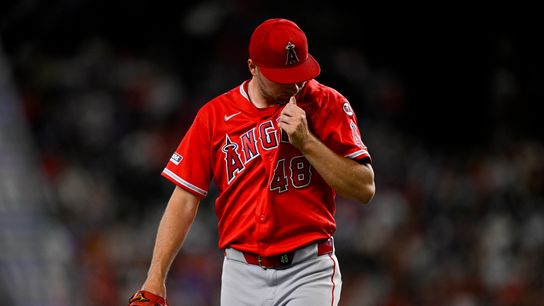
POLICY WIRE — Arlington, Texas — There’s a particular kind of poetry in failure, a grim, repetitive verse that can speak volumes not just about a baseball club, but about systems larger and far more complex. It’s not simply a game lost; it’s an entire ethos unraveling in real-time, often on national television. This past Thursday’s brutal 7-6 walk-off defeat of the Los Angeles Angels by the Texas Rangers — again — wasn’t just another entry in the scorebook; it was a testament to a deep-seated institutional struggle, one that many nations might find grimly familiar.
You see it — this familiar pattern of unfulfilled promise — in narratives spun across continents, from burgeoning economies unable to escape developmental traps to political entities that can’t seem to get out of their own way. Here, in the sterile modernity of Globe Life Field, it played out with striking clarity. The Angels had arrived with a split series and what felt like momentum, handing the ball to Reid Detmers, a pitcher who’s been, for spells, one of their more effective arms. His overall ERA — a respectable 4.13 — doesn’t quite capture his recent July surge where he posted a 2.27 ERA across five starts. You’d think that’d buy a modicum of confidence, wouldn’t you? [QUOTE_PLACEHOLDER]
Instead, the Rangers jumped him early, collecting two runs in the first inning. Then they tacked on three more, including home runs, turning Detmers’ supposed strong form into a distant memory — he left after only four innings, having surrendered five earned runs. And this is where the story gets intriguing: the Angels’ offense, mostly quiet, roared to life. They erased a yawning five-run deficit in the seventh, leveling the score at 6-6. Wade Meckler, Nolan Schanuel, Jorge Soler, and Jo Adell all delivered key hits, transforming what seemed a sure loss into a stunning, improbable tie.
But hope, like capital, can be fleeting. For an outfit that has consistently struggled to capitalize on its chances, that comeback felt less like a turning point and more like a cruel tease. And sure enough, after keeping the game tied through the bullpen’s effort, Kirby Yates, usually reliable, surrendered the decisive hit in the bottom of the ninth to Wyatt Langford. A walk-off loss, the kind that rips the heart right out of you — not that this club appears to have much heart left to spare, many would argue.
It’s an almost cyclical pattern with this Angels team. They’re perpetually the worst in baseball, despite hosting some of the game’s brightest stars. They had an honest shot to be a spoiler in the tightly contested American League West, a chance to really make life complicated for division rivals like the Rangers, Seattle Mariners, and Houston Astros. They just — well, they couldn’t. Inconsistent play prevented them from doing so.
What This Means
This isn’t just about a baseball team’s misfortune; it’s a narrative archetype that recurs in geopolitical and economic contexts. Think of it as a case study in how immense talent — let’s say, abundant natural resources or a vibrant, youthful populace, or perhaps even billions poured into flashy projects — can be utterly squandered by persistent, systemic failures. In many emerging markets, particularly across South Asia, you see a parallel: incredible potential, robust human capital, but an inability to convert it into sustained, broad-based success due to issues often tied to governance, corruption, or policy inertia.
📄 POLICY WIRE WHITEPAPER PUBLISHED: PAKISTAN'S NATIONAL SECURITY POLICY PRIORITIES
👉 READ BY CLICKING HEREConsider a nation like Pakistan. It boasts one of the world’s youngest populations — about 64% of its people are below the age of 30, according to data from the UNDP’s 2023 report — an immense, energetic human resource. Yet, its economy often struggles to provide adequate opportunities, with cyclical crises eroding public trust and stifling long-term development, reminiscent of the Angels’ perennial inability to forge a winning team from extraordinary individual players. It’s a situation that fosters frustration — and a deep sense of resignation, both in the stands and on the streets.
The Angels, despite immense resources and star power, frequently find themselves outmaneuvered, their strategic blunders costing them dearly. The Rangers, in contrast, consistently — if sometimes narrowly — execute. It’s about leadership, sure, but it’s also about the very structures and processes underpinning an organization. This isn’t just a rough patch; it’s a structural deficiency, a chronic malady. For those keeping an eye on how complex systems operate — or don’t — it’s a telling display. The immediate implication for the Angels is, naturally, another season slipping away into irrelevance. But for us, watching this peculiar brand of sporting heartbreak, it’s a sharp reminder of how potential, left ungoverned, often spirals into the predictable pattern of ‘what if.’ When a team, or a nation for that matter, can’t break that cycle, the cost isn’t just a lost game; it’s a lost future.
