

Israel’s Justice Under Scrutiny: Pardon Push for Convicted Soldier Reignites Hebron Flashpoint
POLICY WIRE — Jerusalem — The long shadow cast by an almost decade-old military shooting in Hebron seems destined to persist, much like an unwanted house guest who simply won’t leave. Yisrael...

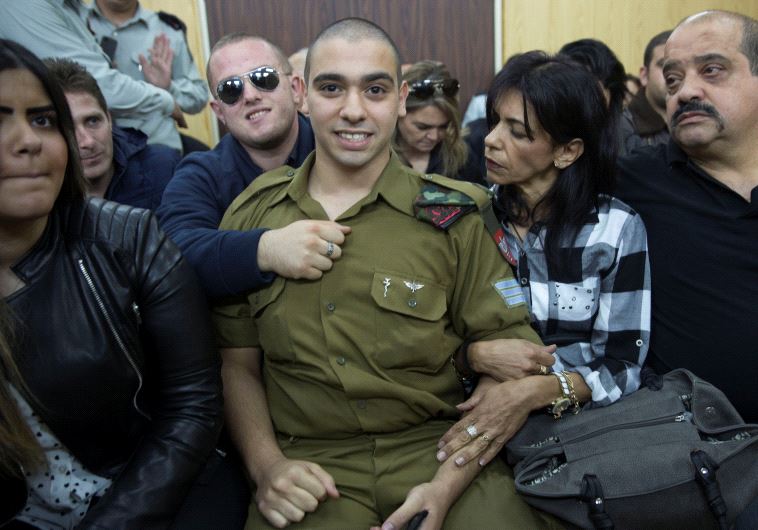
POLICY WIRE — Jerusalem — The long shadow cast by an almost decade-old military shooting in Hebron seems destined to persist, much like an unwanted house guest who simply won’t leave. Yisrael Katz, Israel’s Foreign Minister, has — surprise, surprise — officially asked President Isaac Herzog to issue a formal pardon for Elor Azaria, the former soldier convicted of manslaughter after killing a disarmed Palestinian attacker in 2016. But this isn’t just about clearing a name; it’s a raw nerve, a perennial flashpoint for a nation grappling with its own idea of justice and the uncomfortable realities of occupation.
It’s a bizarre dance, really, this national fixation on Azaria. The initial event, caught on camera no less, showed a soldier shooting an already incapacitated man, Abdul Fatah al-Sharif. Then came the very public trial, a divisive spectacle that pitted the military establishment’s standards against a significant segment of the public—and many politicians—who saw Azaria as a scapegoat, a hero even. And here we’re again, dragging that whole ugly business back into the light. You’d think some chapters might just close themselves.
Katz, never one to shy from a dramatic statement, sees this as a moral imperative. “Elor Azaria sacrificed for the security of our nation,” Katz declared recently. “To permanently mark him as a criminal would be a grave injustice, eroding the morale of our brave defenders. It’s high time we fully embrace him — and erase this blemish from his record.” He wasn’t subtle. It’s classic populist signaling, speaking directly to a base that never truly accepted the conviction. He wants a full clean slate for Azaria—not just a pardon, but for the entire criminal record to vanish, like it never happened.
But Herzog, as President, isn’t some rubber stamp. His role is meant to be apolitical, a unifying figure. This request shoves him right into the partisan meat grinder. Because for every Katz, there’s a seasoned observer of military law and ethics—like retired Brigadier General (Res.) Shimon Harari, a former military advocate, who quipped, “Justice isn’t a popularity contest, and it isn’t an erasure service. The military court upheld its verdict. Granting a full pardon that attempts to rewrite history undermines the rule of law we supposedly hold dear.” Harari’s observation cut right to the quick.
And let’s be frank: the case, even years later, isn’t just an internal Israeli squabble. How the Israeli justice system treats such cases echoes far beyond its borders. The broader Muslim world, including nations like Pakistan and those across South Asia, often watches these legal dramas unfold with a mix of weary familiarity and acute frustration. It’s viewed, by many, as another instance where accountability for actions against Palestinians can feel elusive, fueling a perception of systemic injustice that continually hinders any semblance of regional stability or trust. Such optics, even if local, contribute to a narrative that has very long-term international consequences for how Israel is perceived in these geopolitically significant regions.
The numbers don’t lie about the initial public sentiment either. When the case first exploded, a 2016 poll commissioned by Channel 2 News via Midgam Research & Consulting found that 67% of Israelis thought Azaria shouldn’t have been charged in the first place. That’s a huge chunk of the populace, illustrating the depth of the internal schism, one that hasn’t magically disappeared with the passage of time or the serving of a reduced sentence.
📄 POLICY WIRE WHITEPAPER PUBLISHED: PAKISTAN'S NATIONAL SECURITY POLICY PRIORITIES
👉 READ BY CLICKING HEREWhat This Means
President Herzog now faces a thoroughly unenviable choice. Granting Katz’s request could pacify a significant portion of the right-wing electorate and elements within the military. It would be a nod to the ‘soldier’s soldier’ narrative, validating those who believe that in a conflict zone, decisions are rarely clean, and soldiers deserve absolute protection—legal niceties be damned. But because, on the flip side, such an action would undoubtedly infuriate legal purists, human rights organizations both at home and abroad, and virtually every segment of the international community watching the Israeli-Palestinian conflict, especially those within the Muslim world.
A full pardon, especially one that wipes the record clean, could be seen as an official state sanction of behavior that the military’s own courts deemed manslaughter. It’s a dangerous precedent, threatening to unravel what remains of military ethical codes and perceptions of impartiality. it directly undermines the independence of the judicial system, a foundational pillar in any functioning democracy, particularly one under constant scrutiny. Herzog will need to weigh domestic political expediency against institutional integrity and the ever-present specter of international condemnation. He’s got to thread a needle here, — and honestly, there’s no way he avoids alienating somebody big.