

Nicaragua’s Iron Grip: When Justice Becomes a State Affair
POLICY WIRE — Managua, Nicaragua — The slow, agonizing suffocation of democracy rarely begins with tanks in the streets. More often, it starts with paper: edicts, decrees, — and the quiet erasure of...

POLICY WIRE — Managua, Nicaragua — The slow, agonizing suffocation of democracy rarely begins with tanks in the streets. More often, it starts with paper: edicts, decrees, — and the quiet erasure of inconvenient professions. In Daniel Ortega’s Nicaragua, the scales of justice aren’t just tipped; they’ve been tossed off the wagon entirely, smashed on the paving stones of Managua. And it isn’t just about politicians getting disappeared or journalists silenced anymore. Now, they’re coming for the folks who speak Latin in court, who cite articles, who try to make sense of the law – they’re coming for the lawyers.
It’s a peculiar brand of authoritarian creep, this latest maneuver. The Supreme Court, effectively an arm of the executive, has been systematically yanking licenses from legal professionals—not for incompetence, mind you, but for what amounts to political inconvenient-ness. Think about it: a country’s entire legal defense framework, suddenly stripped bare, leaving dissidents, activists, or even just regular folks caught in the machinery of state repression without so much as a whisper of legal counsel. It’s audacious. It’s chilling.
This isn’t some new play from the Sandinista playbook, not really. It’s an escalation. For years, opponents have faced bogus charges, sham trials, — and politically motivated incarcerations. But with lawyers now facing the same fate as those they represent, the very notion of due process becomes a cruel joke. One can almost hear the cackles emanating from El Chipote prison, where many political prisoners endure inhumane conditions—conditions that a functioning legal system might, at least, acknowledge.
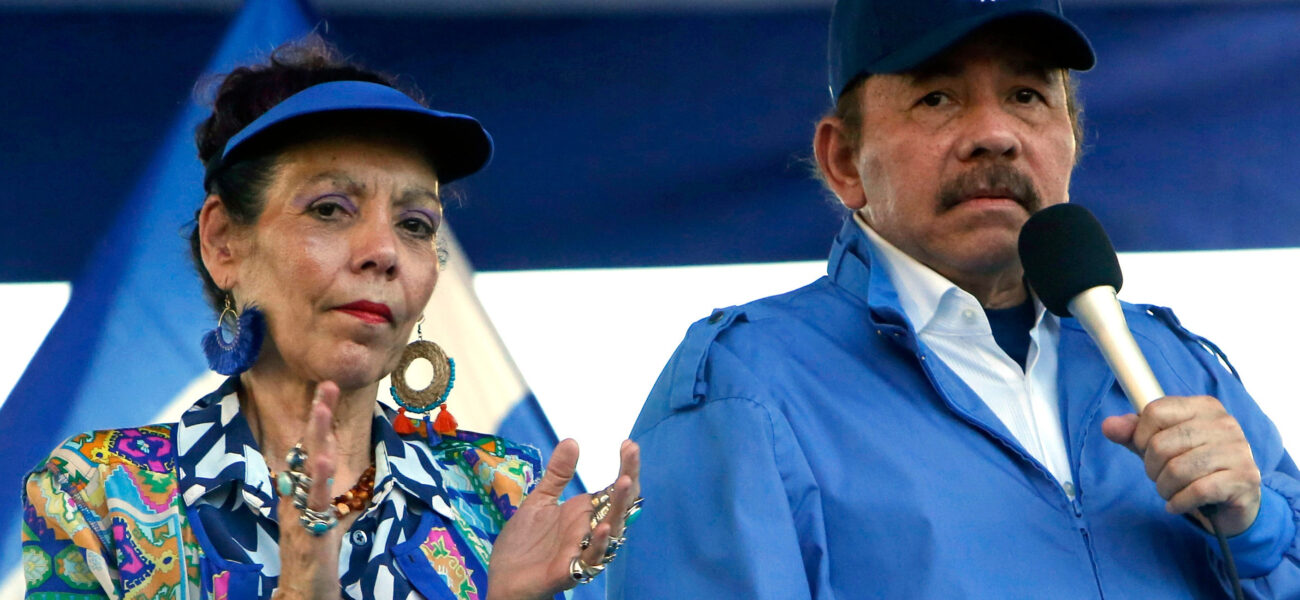
“This government, you see, it acts to safeguard our national integrity,” stated Rosario Murillo, Nicaragua’s Vice President—and first lady—in a televised address earlier this week. “We won’t permit agents of foreign agendas to destabilize our peace, not in our courts, not in our streets.” Her words, broadcast across state media, paint a picture of national unity against shadowy foreign influence, neatly sidestepping the reality of internal dissent being crushed with brutal efficiency. But for the disbarred attorneys, for the families whose loved ones are held without recourse, it’s just another twist of the knife.
Because let’s be honest: in an environment where even defending someone can be construed as a subversive act, the legal profession isn’t just challenging; it’s existentially risky. Imagine dedicating years to law school, passing the bar, believing in a system, only for that system to suddenly declare your very occupation a threat. It’s enough to make you pack your bags, ain’t it? And many have. Reports indicate that over the past five years, over 300 Nicaraguan lawyers have been stripped of their ability to practice or have been forced into exile, according to local human rights organizations. That’s a staggering figure.
“What we’re witnessing is the systematic dismantling of due process,” observed Tamara Taraciuk Broner, a senior policy expert at the Inter-American Dialogue, commenting on the broader regional trend. “When a regime neuters its own judiciary and disbars independent counsel, it broadcasts a clear message: there’s no avenue for justice here. It makes dictatorships’ jobs far too easy.” She’s right. The erosion of rule of law isn’t unique to Nicaragua, of course. It’s a chillingly familiar pattern for observers of authoritarian creep, from Havana to Islamabad.
📄 POLICY WIRE WHITEPAPER PUBLISHED: PAKISTAN'S NATIONAL SECURITY POLICY PRIORITIES
👉 READ BY CLICKING HEREThink about the implications across the global South—across regions where democratic institutions are still fragile. The tactics employed by regimes like Ortega’s often get studied, modified, — and sometimes replicated. From Southeast Asia to North Africa, from certain corners of Pakistan where legal challenges to state power face insurmountable obstacles, this playbook serves as a grim template. Stripping away the lawyers is a shortcut to absolute power. It’s efficient, brutal, — and makes international condemnation feel like background noise.
And what’s left then? A nation where political prisoners—journalists, students, religious leaders—are held incommunicado, without bail, often without a formal trial, and certainly without anyone truly capable of challenging the state’s narrative. It’s a society where justice is no longer a right, but a privilege dispensed (or withheld) by the powerful.
What This Means
This crackdown on the legal profession in Nicaragua isn’t just another item on the human rights agenda; it signals a critical phase in the country’s slide into outright totalitarianism. Politically, it means the complete elimination of internal dissent mechanisms, forcing any opposition to operate underground or from exile. There’s no legal avenue left to challenge the government’s authority, making street protests or international appeals the only—often futile—recourse. Economically, this atmosphere of lawlessness and unpredictability frightens away any significant foreign investment not directly tied to state interests, choking off development and increasing poverty. Who, after all, wants to do business in a country where property rights and contractual obligations can simply vanish on a whim, where there’s no impartial court to arbitrate disputes? The long-term implications are grim, threatening to turn Nicaragua into a pariah state, increasingly reliant on the few remaining authoritarian allies who turn a blind eye to its internal abuses. It also sends a dangerous message to other aspiring autocrats about just how far they can push the envelope when silencing their critics. It’s a global blueprint for institutional collapse, one that echoes far beyond Central America.