


Arctic Seabed: Norway’s Mineral Mania Confronts Pristine Depths
POLICY WIRE — Oslo, Norway — Deep below the churning surface of the Arctic Ocean, where sunlight never touches and pressures could crush a submarine, lies an alien landscape. It’s a world teeming...

POLICY WIRE — Oslo, Norway — Deep below the churning surface of the Arctic Ocean, where sunlight never touches and pressures could crush a submarine, lies an alien landscape. It’s a world teeming with life, a biosphere we’re only just beginning to map—and a territory Norway’s government has decided is ripe for the picking. What a gamble, eh?
It’s not just a matter of finding new species, though those discoveries are fascinating. An Arctic seabed mission, launched to chart these remote, frigid expanses, stumbled upon delicate, highly localized ecosystems—complex webs of creatures built to survive conditions hostile to almost everything else. This isn’t your garden-variety seaweed patch; it’s a living, breathing archive of adaptation. And here we’re, already discussing how to carve it up.
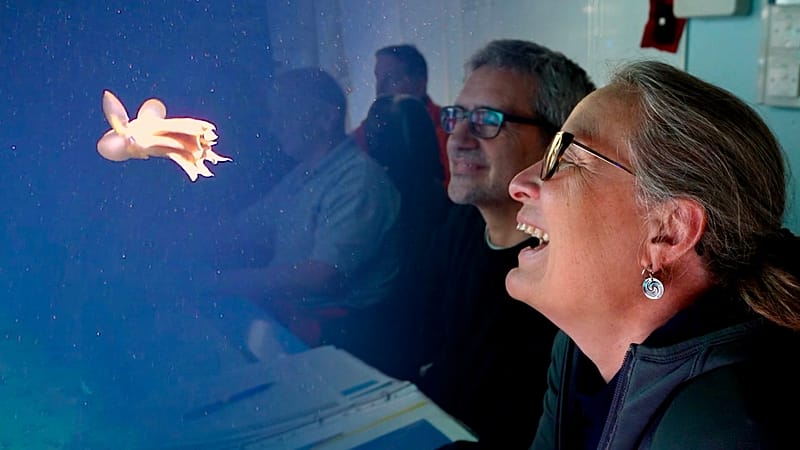
Scientists on the mission, according to reports that have stirred plenty of chatter in environmental circles, documented extensive cold-water coral forests, vibrant sponge communities, and diverse populations of unique deep-sea invertebrates. Think otherworldly flora — and fauna, evolved over millennia, oblivious to our squabbles above. But suddenly, they aren’t so oblivious. They’re directly in the crosshairs of a deep-sea mining rush.
Norway, with its ambitious eye on resource security and—let’s be honest—profit, formally opened parts of its continental shelf to deep-sea mineral exploration back in 2023. This move sparked immediate backlash from environmentalists, who argue the science just isn’t there to greenlight such a destructive endeavor. But, government officials continue to tout the necessity, suggesting Europe needs these minerals, badly. They say [QUOTE_PLACEHOLDER] regarding future energy needs, though precisely what they mean by future is up for debate when discussing irreparable environmental damage. It’s always a balance, isn’t it?
This whole situation — the dash for Arctic metals—it echoes a familiar, deeply unsettling pattern. You’ve got wealthier nations, often in the Global North, reaching further and further into untouched, often vulnerable, environments to extract resources deemed essential for their industrial appetite. It’s the same appetite that fuels the very climate crises disproportionately ravaging developing nations, many across South Asia and the Muslim world. Consider Pakistan’s coastline, for example. Already facing severe erosion and the creeping threat of sea-level rise—a direct consequence of planetary warming—the nation struggles with basic resource allocation while Arctic ecosystems face annihilation for the very industries exacerbating these threats.
And then there’s the broader issue. Experts have repeatedly warned about the unknowns. We just don’t grasp the intricate connections within these deep-sea systems. One leading marine biologist told an online forum that [QUOTE_PLACEHOLDER] if operations go ahead as planned. Because here’s the thing: once you trash an ecosystem at that depth, it’s not coming back anytime soon. It’s not like planting a few trees after clear-cutting a forest; this is on an entirely different scale, one barely comprehensible to surface-dwellers.
But the numbers speak, too, or at least they attempt to. The Norwegian Ministry of Petroleum and Energy’s own preliminary assessments, publicly available, suggest an estimated 22.8 million tons of copper and 24 million tons of zinc lie on the Norwegian continental shelf. Those aren’t insignificant figures for a resource-hungry continent, they’re practically flashing dollar signs. And officials are quick to point out that [QUOTE_PLACEHOLDER] when challenged on the environmental implications. This cold, hard economic calculus, though, doesn’t account for species diversity, the role these unique environments play in ocean health, or the long-term, perhaps irreversible, ecological debt.
So, the paradox continues: as our understanding of these deep-sea worlds expands, so too does the machinery poised to exploit them. It’s a classic showdown, really, between the finite patience of nature — and the infinite appetites of industry. A fight playing out in the dark, silent trenches of the Arctic, yet with ripples that can—and will—reach across every continent, including the vulnerable, low-lying communities of Bangladesh or the fishermen in Karachi, struggling against a changing climate they didn’t create. They’re already living the consequences of resource consumption, far removed from Norway’s icy ambition.
What This Means
This isn’t merely an environmental dust-up over some obscure snails in a faraway sea. It’s a fundamental challenge to global resource governance — and environmental ethics. Economically, Norway positions itself as a critical supplier of ‘green’ transition metals, feeding Europe’s demand for electric vehicles and renewable tech, yet doing so via highly carbon-intensive and ecologically risky deep-sea mining. It’s a self-defeating prophecy for some, a pragmatic necessity for others. The political implications are immense; other nations with maritime claims are watching, evaluating whether to follow Norway’s lead, thus potentially unleashing a truly unregulated rush to mine the last pristine oceanic frontiers. The precedent set here—the balance struck or broken between immediate industrial gain and profound ecological stewardship—will shape not just Arctic policy but how resource extraction impacts the health of the planet for decades to come. And that’s a truth worth thinking about, regardless of where you call home.