
The Gold Standard’s Gilded Cage: An Olympian’s UFC Baptism and the Global Market’s Unblinking Eye
POLICY WIRE — ALBUQUERQUE, N.M. — It’s a tale as old as combat sports itself: a champion, forged in the fires of amateur glory, stepping into the glaring lights of professional pugilism. But when...

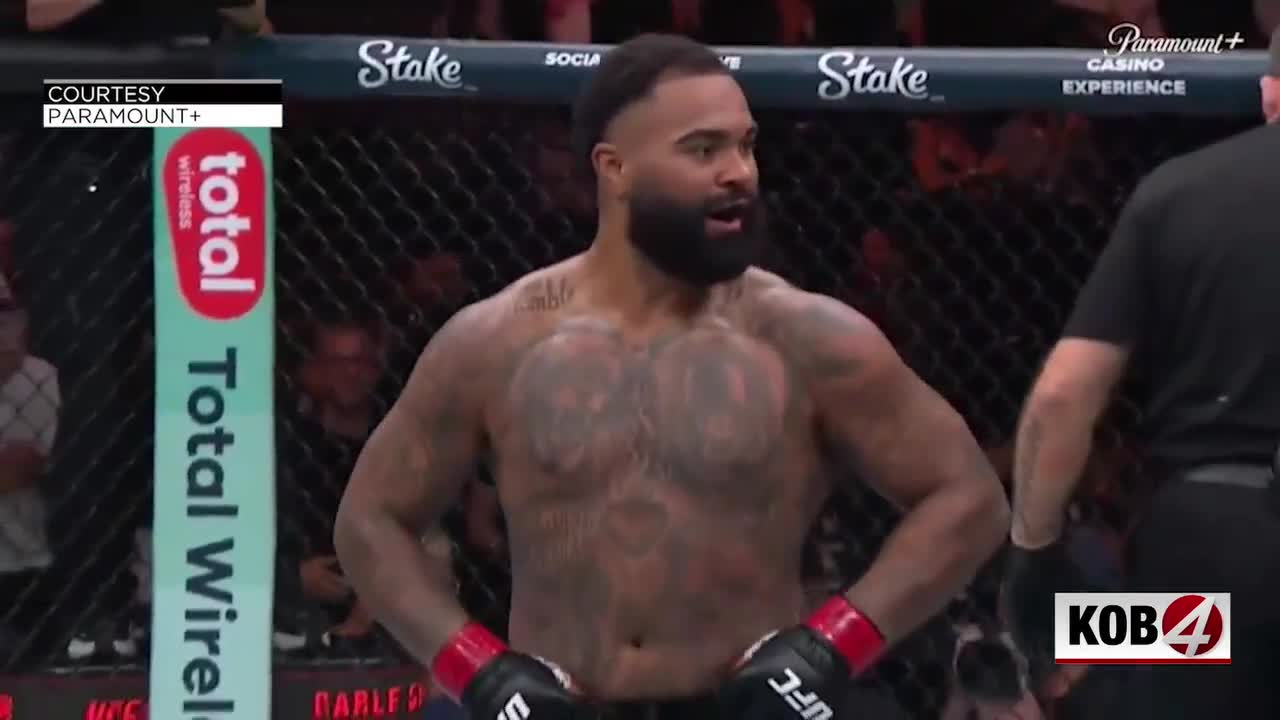
POLICY WIRE — ALBUQUERQUE, N.M. — It’s a tale as old as combat sports itself: a champion, forged in the fires of amateur glory, stepping into the glaring lights of professional pugilism. But when Gable Steveson—an Olympic gold medalist, mind you—tore through Elisha Ellison in a blink-and-you’ll-miss-it first-round TKO for his UFC debut, it wasn’t just a fight; it was another brick laid in the towering, brutal edifice of global sports capitalism. Steveson didn’t just win. He validated a blueprint. He made good on an investment. And the powers that be? They surely took notes.
Albuquerque, New Mexico. It’s not exactly Wall Street. Or Hollywood, for that matter. But for a certain brand of warrior—those who earn their keep with sweat, blood, and fractured orbital bones—it’s something akin to Mecca. The Jackson Wink MMA Academy, where Steveson hones his particular brand of structured violence, has long been a quiet factory for world-class talent. Steveson’s rapid, dominant performance—making him 4-0 in his fledgling MMA career, but notably 1-0 under the UFC banner—it’s less about personal triumph and more about the smooth gears of a global machine whirring into action.
Because let’s be honest: an Olympic medal in wrestling? It’s not just shiny metal. It’s a brand identifier. It’s a shortcut past years of grinding regional circuits. It speaks of discipline, technique, and a pedigree that the Ultimate Fighting Championship—and its parent company, Endeavor, a conglomerate with insatiable appetites—is all too eager to co-opt. Steveson isn’t just an athlete. He’s a product, perfectly packaged — and ready for export.
“Gable represents a generational talent, a true crossover. His Olympic background isn’t merely a talking point; it’s proof of the refined aggression we can market across the globe,” an unnamed senior UFC official, not authorized to speak on the specifics of fighter contracts but known for candid assessments, reportedly told Policy Wire. “He comes pre-vetted. Pre-hyped. We just add the cage and watch the revenue tick.” A cynic might observe that even a gold medal, eventually, finds its price in the gladiatorial marketplace.
And the local angle? New Mexico State Representative Eleanor Vance, a staunch advocate for economic development in Albuquerque, expressed a tempered pride. “Albuquerque’s long been a crucible for fighters, a silent powerhouse. Gable’s win—it just flashes a brighter light on the whole operation here. It brings eyes, and with eyes, comes opportunity for local businesses, for our community, even for young folks aspiring to something beyond their immediate surroundings.” Her remarks suggest an awareness that such victories are more than just sports headlines; they’re minor economic accelerants.
But this narrative, it transcends America’s southwestern high desert. Consider the global landscape. The relentless hunger for new stars isn’t confined to American pay-per-view numbers. Zuffa’s global play is an open secret, perpetually searching for fresh faces and compelling stories to capture audiences from London to Lahore. Steveson’s kind of success — the kind built on raw athletic dominance — resonates profoundly in markets where combat sports, in various forms, are woven into cultural fabric.
In Pakistan, for instance, traditional wrestling, or ‘kushti,’ remains a deeply respected discipline. The transition of an Olympic wrestler to global MMA stardom provides a potent, perhaps even intoxicating, template for aspiring athletes in places often overlooked by the big leagues. It signals that prowess, wherever it’s honed, can open doors—and wallets—on an international stage. They’re watching these narratives unfold, trust me.
The global sports media market, valued at approximately $521.92 billion in 2022, per a report by Grand View Research, remains perpetually hungry for new stars, and a wrestler like Steveson is premium steak. His swift debut isn’t just good TV; it’s a perfectly executed, albeit violent, piece of market strategy.
What This Means
Steveson’s triumph isn’t an anomaly; it’s a meticulously engineered outcome reflecting deeper currents within professional sports and the broader entertainment industry. His expedited path to the UFC’s main stage underscores the market’s ruthless efficiency in valuing proven talent, particularly those with a distinguished amateur pedigree. The economic implications are straightforward: an Olympic gold medal, once merely a badge of honor, now functions as a potent marketing accelerant, shortening the commercial pipeline from athlete to pay-per-view commodity. But this isn’t simply about Steveson.
And because the UFC operates as a near-monopoly in the top-tier MMA sphere, they dictate the terms of engagement, the optics of ‘star-making,’ and the ultimate financial return. His quick knockout, while impressive, served another, perhaps more calculated, purpose: reducing potential financial risk on an unproven (in MMA terms) fighter while maximizing promotional capital from his existing reputation. For countries like Pakistan, and across the Muslim world where combat sports hold deep cultural relevance, Steveson’s narrative offers both aspiration and a cautionary tale of how global capital can rapidly absorb, commoditize, and then leverage individual achievement. It’s a win for Steveson, yes. But it’s a calculated, profitable transaction for everyone else pulling the strings.