


Hungary’s Unspoken Monarchy: Orbán Solidifies Rule With Presidential Purge
POLICY WIRE — Budapest, Hungary — Power, in its most refined form, isn’t always seized; sometimes, it’s simply legislated into place. It’s a trick Hungarian Prime Minister Viktor Orbán seems to...

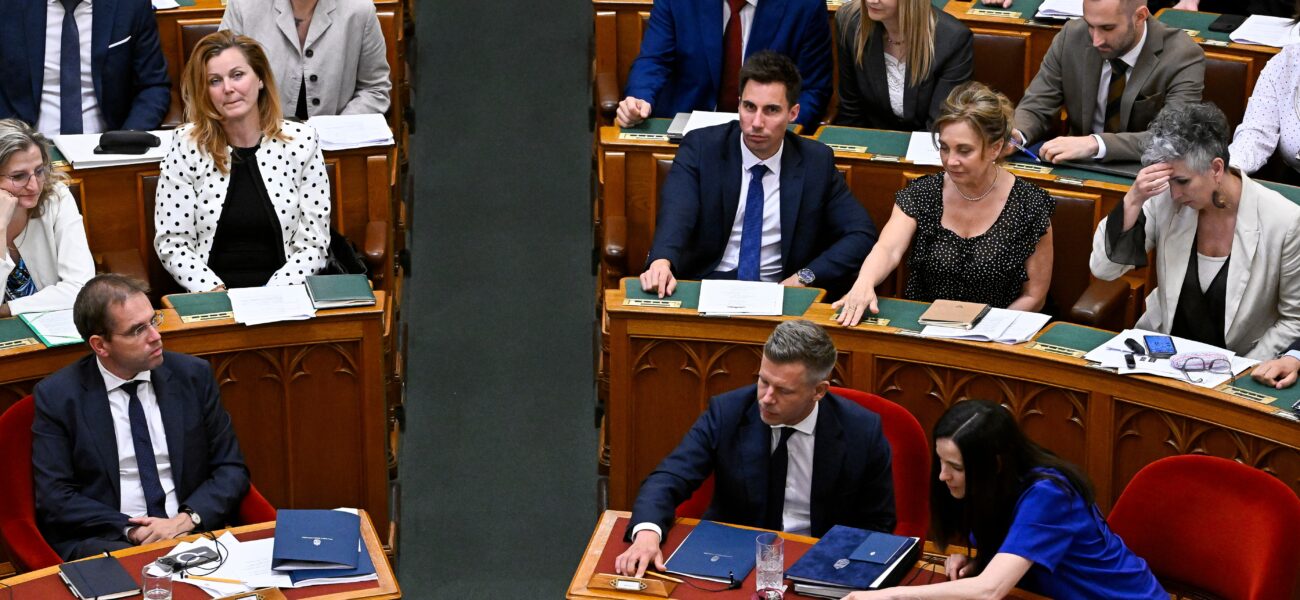
POLICY WIRE — Budapest, Hungary — Power, in its most refined form, isn’t always seized; sometimes, it’s simply legislated into place. It’s a trick Hungarian Prime Minister Viktor Orbán seems to know awfully well. Just this past week, in the quiet hum of parliamentary procedure, Budapest’s lawmakers enacted a constitutional amendment that feels less like reform and more like a carefully sharpened political tool, granting the ability to strip a president of their powers. This isn’t merely about an ex-president caught in a pardon scandal. No, this is bigger. This is about establishing a legal kill-switch for dissent, or at least for inconvenient incumbents, a mechanism the Orbán regime seems perfectly comfortable brandishing.
It began, as these things often do, with an uncomfortable public reckoning. Katalin Novák, once Hungary’s fresh-faced, first female president, had to step down. Her crime? Pardoning a man implicated in a child sexual abuse cover-up. An ugly business, no question. But here’s the rub: even after she’d resigned—done the decent, politically expedient thing—the parliament, dominated by Orbán’s Fidesz party, still went ahead and voted overwhelmingly to change the basic law of the land. Now, any president who ‘violates the interests of Hungary’ can essentially be sidelined by a supermajority vote. Think of it as a preemptive legal decapitation, just in case a future head of state gets too big for their britches.
Orbán, ever the pragmatist with an iron fist, wasted no time framing the amendment. “We act decisively when the nation demands it. This isn’t just law; it’s national resolve, ensuring that the highest offices reflect our values, not undermine them,” he reportedly told a closed-door Fidesz meeting, his words oozing a characteristic blend of populism and stern decree. He’s been the architect of Hungary’s unique brand of illiberal democracy for over a decade, methodically dismantling checks and balances with the precision of a master craftsman.
But there are those who don’t buy the ‘national resolve’ narrative. “Another brick chipped from the wall of democratic norms,” lamented MEP Péter Krekó, an outspoken critic from Hungary’s opposition. “It’s a calculated move, not a spontaneous reform to address a past error. They’re future-proofing their authoritarianism.” And you’ve gotta wonder, don’t you? Why legislate this power *after* the scandal’s principal figure has already gone? Because it’s not about accountability; it’s about control.
This isn’t just a quirky Hungarian anomaly either. Throughout the Muslim world and parts of South Asia, we’ve witnessed similar legal reconfigurations, constitutional tweaks, and parliamentary maneuvering that invariably consolidate power in the hands of the executive. From changes to presidential terms in Turkey under Erdoğan to the strengthening of executive decrees in some Gulf states, the playbook often mirrors itself: crisis management, then strategic legislative change. It’s a subtle, incremental slide. Like Moscow’s repeated flexing of its diplomatic muscle, there’s a pattern here. We saw it play out recently when the German envoy was summoned over recorded discussions about Ukraine aid – a classic strongman move to dictate narratives and project authority (Moscow’s Theater of Summons: Germany’s Envoy Caught in a Stiff European Rewriting). Same intent, different battleground.
Fidesz currently holds a two-thirds supermajority in Hungary’s parliament—a whopping 135 out of 199 seats, according to official election data from the National Election Office (Nemzeti Választási Iroda). That’s not just a working majority; it’s legislative dominance, a blank check to rewrite nearly any law or even the constitution itself. So, if Orbán decides a future president, elected or otherwise, is playing too fast and loose with the national agenda, he’s now got the mechanism to simply pull the plug. It’s pretty tidy, if you think about it.
📄 POLICY WIRE WHITEPAPER PUBLISHED: PAKISTAN'S NATIONAL SECURITY POLICY PRIORITIES
👉 READ BY CLICKING HEREIt’s no wonder then, that international observers, particularly from the European Union, are raising their eyebrows. Brussels and Budapest have been locked in an ideological staring contest for years, particularly over issues of rule of law and democratic backsliding. And this move, naturally, pours more gasoline on that particular fire. What will the next institutional sacrifice be on the altar of Orbán’s seemingly boundless political ambition?
What This Means
Politically, this constitutional amendment hands Orbán an unprecedented new tool to maintain absolute ideological alignment within the state apparatus. It reinforces his personal power and Fidesz’s grip, making any future presidential election less about an independent figure and more about rubber-stamping the prime minister’s choice, or risk immediate incapacitation. For a head of state, it’s akin to the price of imperfect justice; their perceived independence just took a massive hit. It also deepens Hungary’s ongoing democratic deficit, further eroding separation of powers and making the presidency largely ceremonial, except when it comes to being a potential scapegoat or an enforced loyalist.
Economically, this might not have immediate, direct impact, but the chilling effect on democratic institutions often has long-term repercussions for foreign investment and investor confidence. Countries with predictable, stable, — and independent institutions tend to attract more reliable capital. A system where fundamental laws can be so readily reshaped based on political expediency adds another layer of uncertainty, which many investors, frankly, aren’t too keen on. And that’s something even Orbán’s iron will might struggle to legislate away.