


England’s Unpolished Jewel: World Cup Dreams Built on Fortuity
POLICY WIRE — Miami, USA — When England’s Lionesses staggered off the Miami pitch this Saturday, sweat-soaked and half-relieved after their improbable quarter-final escape against Norway, the loudest...

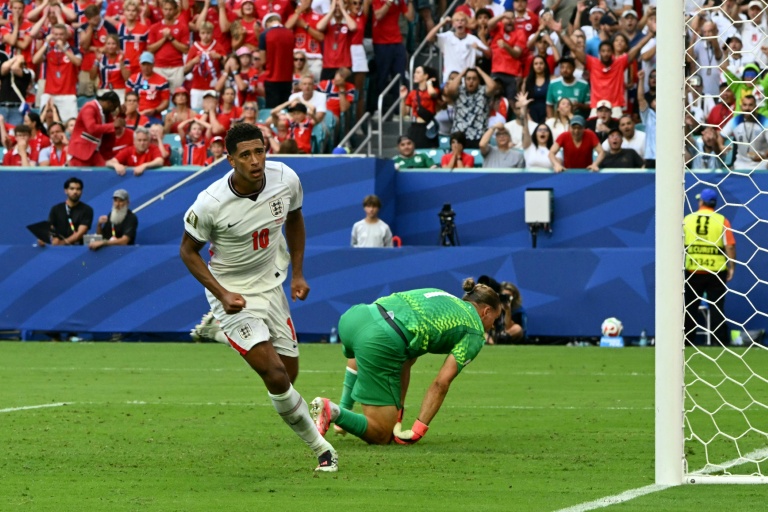
POLICY WIRE — Miami, USA — When England’s Lionesses staggered off the Miami pitch this Saturday, sweat-soaked and half-relieved after their improbable quarter-final escape against Norway, the loudest takeaway wasn’t tactical brilliance or sheer dominance. Nope. It was raw, unadulterated luck. It makes you wonder, doesn’t it, about the foundations of any perceived triumph, particularly on a global stage where optics often matter more than the grunt work? This wasn’t some masterclass; it was a scrape, a flailing-about victory that still puts them in the World Cup semi-finals.
It’s a peculiar thing, seeing a national side that consistently fields top-tier talent needing two major breaks—let’s be honest, downright gifts—to edge past an opponent. The match, settled by Jude Bellingham’s 93rd-minute goal, was hardly the pristine display one might expect from a contender. England, slated to butt heads with either Argentina or Switzerland next Wednesday, simply rode their luck like a cowboy on a bucking bronco, somehow staying aboard. Manager Thomas Tuchel, ever the pragmatist (or perhaps just unable to mask reality), put it plainly enough afterwards: [QUOTE_PLACEHOLDER] and, a beat later, [QUOTE_PLACEHOLDER]. He’s not wrong, you know. He conceded they [QUOTE_PLACEHOLDER]. Not exactly a ringing endorsement, is it?
Consider the circus: Bellingham’s initial equalizer came only because Norway’s goalie, Orjan Nyland, booted a goal kick right into an overhead television camera cable. Any sensible ref would’ve reset the play. They didn’t. And then, there was the moment Norwegian hopes soared and then cratered— Torbjorn Heggem’s 55th-minute strike, briefly giving them a 2-1 lead, yanked back by VAR. Reason? A perceived shove by Erling Haaland on Elliot Anderson. Decisions like these don’t just change games; they rewrite narratives, shifting millions in potential sponsorship and broadcasting rights. They’ve got a habit of sparking outrage from supporters who believe they’ve been robbed, particularly in parts of the world where sports fanaticism borders on national identity.
And let’s not forget the sweltering conditions. With temperatures reportedly hitting 108 Fahrenheit (42 degrees Celsius) on the heat index, you’d think stamina would be a more consistent factor. Instead, England looked weary, relying on Bellingham’s drive after Nyland fumbled a shot from substitute Morgan Rogers. This reliance on individual brilliance amidst collective fatigue, often fueled by external ‘breaks,’ isn’t so different from how smaller, less established nations — perhaps even those in the South Asian bloc — must navigate international forums or economic policies. They aren’t always blessed with the robust institutions or deep pockets of their Western counterparts; often, it’s about seizing an unexpected opportunity, hoping for a fortunate misstep by a rival, or, well, getting a lucky break.
The clash, hyped as a heavyweight bout between Harry Kane — and Erling Haaland, barely materialized. Haaland, surprisingly substituted in extra-time, watched Norway chase an equalizer in vain. He’d even had a chance before that, courtesy of Sorloth’s inexplicable decision to go solo rather than pass to an unmarked Haaland. Sometimes, the self-inflicted wounds sting the most. This wasn’t just about football, either. The winner, regardless of how they got there, stands to face Argentina – a match-up promising fireworks, particularly after their history.
Argentina, themselves no strangers to drama, have sailed through earlier rounds but displayed unexpected fragility since the knockouts, barely escaping against Cape Verde and then Egypt. Lionel Messi, at 39, remains their talisman, their ace in the hole, repeatedly pulling them from the brink. But the Swiss, led by their disciplined midfielder Granit Xhaka, aren’t intimidated. Xhaka’s message to his supporters: [QUOTE_PLACEHOLDER]. But, this dream takes an extraordinary effort. [QUOTE_PLACEHOLDER]. He thinks his squad is up for it. We’ll see.
What This Means
This kind of precarious victory, built on fortune and the vagaries of officiating, carries more than just sporting implications. For England, it might foster a dangerously overconfident belief in their inherent ‘luck’— a shaky foundation for any long-term success, whether in sports or foreign policy. It’s a classic case of results-orientation blinding decision-makers to process flaws.
Politically, such wins, however ungraceful, tend to generate feel-good narratives. A country feeling a bit down, or grappling with its own domestic turbulences, latches onto these sporting successes as proof of resilience. But for every nation basking in undeserved glory, there’s another—like Norway in this case—feeling the sting of what might have been, prompting a re-evaluation of its strategies and execution. Economically, while a World Cup run might offer a brief bump in consumer spending and national morale, relying on such high-variance outcomes for sustained positive impact is folly. It highlights the risk inherent in any venture where unpredictable factors heavily outweigh systematic advantages. Sometimes you get away with it; sometimes, the ball just doesn’t hit the TV camera. England got away with it, this time. But can that be a sustainable model?