


Wimbledon’s Unlikely Guest: India’s Teenage Prodigy Serves Up Sartorial Intrigue, Sparks Diplomatic Whispers
POLICY WIRE — London, UK — All England Club’s hallowed greens typically buzz with the polite thwack of rackets and the muted whispers of tennis aficionados, but this past Sunday saw an altogether...

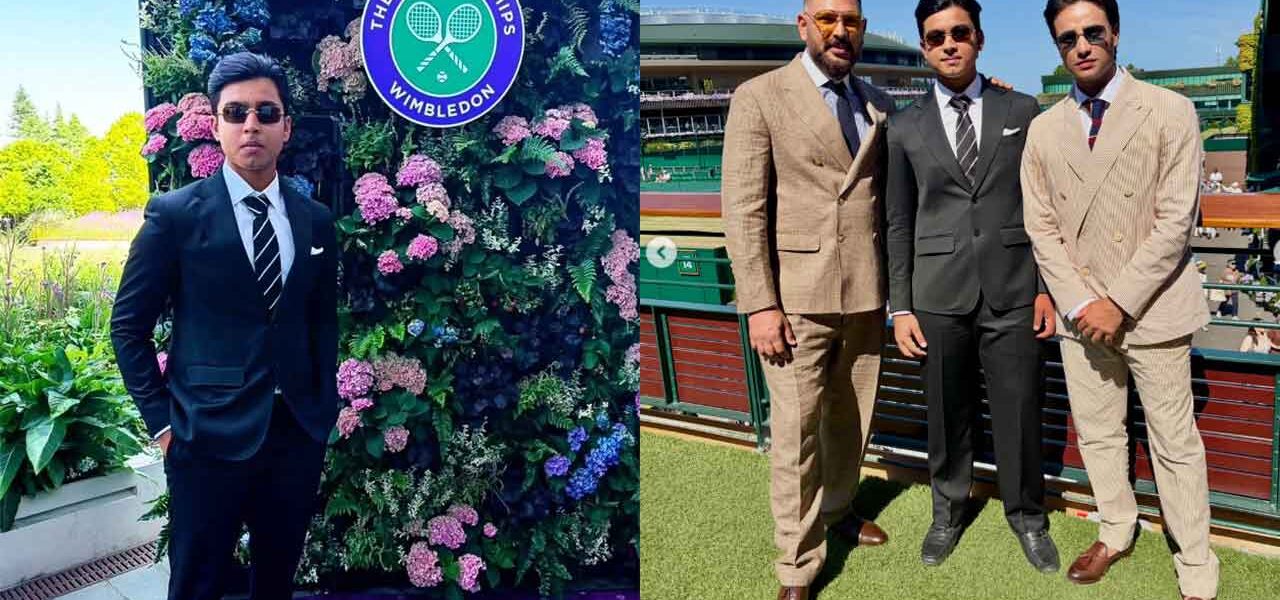
POLICY WIRE — London, UK — All England Club’s hallowed greens typically buzz with the polite thwack of rackets and the muted whispers of tennis aficionados, but this past Sunday saw an altogether different kind of buzz. It wasn’t merely the climactic Men’s Singles final between Jannik Sinner and Alexander Zverev that commanded attention; rather, it was the unexpected presence of Indian cricket’s newest wunderkind, Vaibhav Sooryavanshi, 15, sitting courtside. Dressed in borrowed plumes—literally—his Wimbledon debut, a universe away from dusty cricket pitches, offered a glimpse into a subtle, evolving tapestry of global sports and its unexpected geopolitical undertones.
It’s often said opportunity knocks. For Sooryavanshi, it seems opportunity dressed him. He arrived at the prestigious tournament with fellow India opener Abhishek Sharma, cutting a sharp figure in a black blazer, crisp white shirt, and striped tie, complete with tinted shades. Yet, beneath the veneer of effortless cool lay a tale of charming last-minute scrambling. “I didn’t plan anything; whatever I could find in the last minute, I asked Abhishek and he got it arranged for me, and I just wore it,” Sooryavanshi confessed later, an admission that pulls back the curtain on the carefully curated appearances of celebrity and reveals a boy barely out of school navigating unfamiliar terrain. Talk about a crash course in high society.
Because, really, a cricket prodigy — India’s youngest ever international debutant, eclipsing none other than Sachin Tendulkar’s long-standing record at a mere 15 years and 99 days, as reported by outlets like Star Sports — isn’t the usual Wimbledon staple. His sudden foray into a tennis grand slam, after a demanding T20I series in England, wasn’t just a day out. It was a cross-cultural statement, intentional or not.
This isn’t just about cricket or tennis anymore,” asserted BCCI President Roger Binny, whose organization has seen an explosion of interest across various sports. “It’s about our athletes transcending boundaries, inspiring a generation that sees global stages as their rightful arena.” Binny, speaking to Policy Wire, articulated a vision of India’s growing sporting diaspora.
And what of the sport itself? Sooryavanshi, despite his professional focus on the willow, follows tennis closely. He grew up watching Rafael Nadal and Novak Djokovic—the titans, you know—but showed a surprisingly sharp eye for current talent, picking Jannik Sinner to win the final. “I really like Carlos Alcaraz among the current generation of tennis players, but he’s not playing this year. As I followed the tournament, I was impressed by how Jannik Sinner dominated,” he mused pre-match. Turns out, his prediction was spot on.
But the true story here might not be the match or even the outfit. It’s the broader significance. A South Asian icon, albeit a very young one, moving freely — and confidently across the global sporting landscape. It speaks volumes, doesn’t it?
📄 POLICY WIRE WHITEPAPER PUBLISHED: PAKISTAN'S NATIONAL SECURITY POLICY PRIORITIES
👉 READ BY CLICKING HEREThis crossover, a young Indian star rubbing shoulders with tennis royalty, it’s a subtle yet potent form of cultural diplomacy,” observed Dr. Ayesha Khan, a geopolitical analyst specializing in South Asian affairs at King’s College London, during an interview with Policy Wire. “It reminds us that beyond the headlines, there’s a shared enthusiasm for global excellence, connecting populations often perceived through a lens of regional rivalries. And while cricket still rules supreme in places like Pakistan and Bangladesh, the aspirations for their youth aren’t just limited to one sport anymore; they too eye these broader stages.”
You’ve got to wonder what sort of opportunities this kind of cross-pollination generates. Perhaps a glimpse into a future where athletic stars aren’t confined by national or even sport-specific identities. Because let’s be frank, watching Wimbledon live for the first time is a monumental event for any sports enthusiast, let alone a global sensation like Sooryavanshi.
What This Means
Sooryavanshi’s attendance at Wimbledon, though framed as a personal outing, carries surprisingly layered implications. Economically, it showcases the increasing buying power and global mobility of South Asian athletes, often from backgrounds less privileged than their Western counterparts. India’s burgeoning sports market and rising disposable income mean these events are now accessible not just to the elite, but to the upwardly mobile youth. Politically, such appearances act as ‘soft power’ projectors. A well-groomed Indian prodigy in a global setting, predicting a champion, fosters a sense of national pride and engagement on an international platform—a stark contrast to, say, the domestic wrangling over sports financing seen elsewhere. It’s a testament to how football’s global calculus might also apply to other sports—the commercial viability of individual stars, transcending the sport itself. For South Asia, particularly for the youth in nations like Pakistan who revere cricket, this exposure to different sports genres from an Indian peer subtly broadens horizons and fosters aspirational thinking beyond traditional boundaries. It’s not just about what they’re watching, it’s about where they see themselves in the global arena.
So, the day Vaibhav Sooryavanshi sat at Centre Court, his borrowed blazer wasn’t just an item of clothing. It was, perhaps, a symbol of shifting demographics, evolving aspirations, and the quiet, unofficial diplomacy that sometimes happens away from ministerial meetings. The next generation isn’t just playing; they’re showing up. And sometimes, they’re dressed better than you’d expect, all thanks to a quick call to a buddy.