


Wales Trades On-Pitch Humiliation for Off-Field Windfall: A Post-Tournament Reckoning
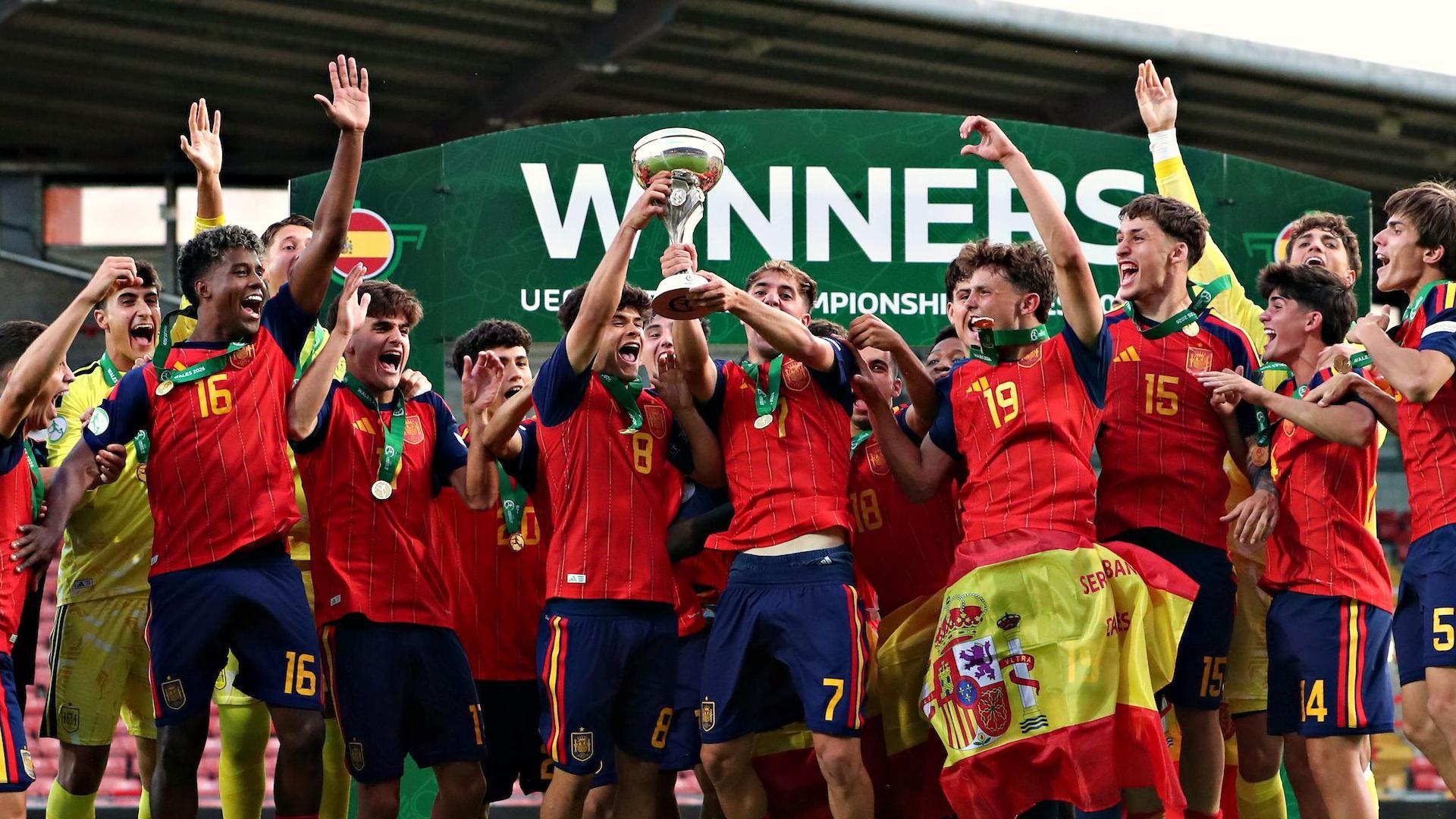
POLICY WIRE — Cardiff, Wales — The football pitch in Wrexham witnessed a familiar scene recently: Spanish youth, jubilant, hoisting a trophy, celebrating a decisive 2-0 victory over Germany....

POLICY WIRE — Cardiff, Wales — The football pitch in Wrexham witnessed a familiar scene recently: Spanish youth, jubilant, hoisting a trophy, celebrating a decisive 2-0 victory over Germany. Meanwhile, Welsh national players, who endured three crushing defeats—including a humbling 7-0 rout by those very Spaniards—quietly retreated. You’d think the host nation had suffered an unmitigated disaster, wouldn’t you?
But the true score for Wales, surprisingly, is looking a lot brighter off the grass. Beneath the sporting humiliation lies a canny play for long-term economic dividends and a facelift for regional infrastructure. The Uefa U19s Euros, hosted across northern Wales, wasn’t just about what happened between the white lines; it was a calculated move to reposition the nation as a global sports hub, tourism magnet, and— crucially—a model for others, including emerging economies like those in South Asia, aiming to punch above their weight on the international stage. [QUOTE_PLACEHOLDER]
It’s an interesting paradox, isn’t it? While Spain’s youngsters danced toward what their coaches hoped would be a senior call-up—mirroring Lamine Yamal’s trajectory—Wales was busy cashing in, making friends, and planning for an even bigger haul. Noel Mooney, chief executive of the Football Association of Wales (FAW), didn’t mince words. He spoke of a grander strategy, telling BBC Sport Wales, “The legacy of the tournament is massive.” He painted a picture of intent: “We had a vision for this tournament that we would leave a legacy of great facilities and something that would last for many, many years.”
And it seems they’ve largely pulled it off. UEFA, not usually shy about criticism, reportedly gave the hosts a clean bill of health. “Uefa have been absolutely delighted with how we’ve managed this tournament and the delivery of this tournament,” Mooney stated, perhaps with a touch of understatement, given the organizational hurdles such an event entails. We’re talking about venues stretching from Denbigh’s Central Park to Bangor City Stadium, all receiving much-needed upgrades.
Take Caernarfon Town’s ground, The Oval. It hosted three high-stakes Group B matches and received investment worth over £1 million for leveling its notorious slope, adding seating, and expanding dressing rooms. The improvements, taking over a year, paid off instantly. The club then saw a sell-out crowd of more than 1,200 for a Uefa Conference League game. Richard Davies, the club’s manager, summed it up perfectly: “What we’ve been able to do here and achieve so far has been unbelievable.” He’s right; for many locals, European football on their home patch was once just a wistful dream. And now, it’s reality.
Even lower-tier clubs like Denbigh Town — and Ruthin Town got a slice of the pie. Denbigh’s Central Park, opened way back in 1963, now sports new dugouts, a new stand, and what one official called a “crown jewel” clubhouse. These weren’t mere touch-ups. “The preparations have been going on for three years and more,” Wynne Davies from Ruthin’s committee noted, underscoring the long-game strategy.
This tournament wasn’t an isolated incident either. It’s a stepping stone. Wales is locked in for the senior Euros in 2028 (co-hosting alongside the UK and Ireland)— “one of the biggest events in the world” —and they’ve lined up the 2029 Women’s Champions League final, and a bid for the 2035 Women’s World Cup. “We’re very much trying to bring the world to Wales and to use football as a way to grow tourism, to grow jobs,” Mooney stressed. It’s a textbook play from the soft power playbook.
Chris Gunter, whose Welsh U19s suffered so badly, acknowledged the short-term pain but saw the bigger picture. “For the players, in the longer piece, it’ll be a really good thing because of the experiences that they’ve had,” he observed. His disappointment on the field didn’t blind him to the improvements off it. “As a wider thing, I think the tournament has been amazing. To see this level of players come to Wales and were hosting it’s fantastic.” It’s a classic consolation prize scenario, but in this case, the prize is substantial, and long-lasting.
What This Means
This Welsh gambit offers a stark lesson in strategic economic development wrapped in sporting ambition. Nations, especially smaller ones or those with developing economies like Pakistan, often eye global sporting events as catalysts. Pakistan, for instance, has leveraged sports, particularly cricket, for national identity, but struggles with the consistent infrastructure development that attracts a broader array of international competitions. The Welsh model demonstrates that even when the local team falters spectacularly, the sheer act of hosting—and executing that hosting to UEFA’s demanding standards—can yield a significant return on investment.
But the catch is political will — and funding. Mooney explicitly mentioned needing “more support from Welsh Government and we do need more support and partnerships with the 22 local authorities.” This isn’t just about grassroots development; it’s about national image and economic stimulus. The implicit message: sports isn’t just sport; it’s an engine for tourism, job creation, and international profile. Nations in South Asia, often contending with complex socio-political landscapes, could analyze Wales’s focused, incremental approach to infrastructure development and event procurement. It doesn’t happen overnight, and it requires sustained political commitment, especially when the scoreboard suggests otherwise. This approach is less about a brute force economic reckoning and more about a persistent, tactical buildup of assets.