

Welsh Champion’s Adelaide Gambit: A Fling with Discus Before the Final Farewell
POLICY WIRE — London, UK — There’s an old adage about opening Pandora’s Box. Most folks don’t invite chaos willingly, but then again, most folks aren’t three-time Paralympic gold...

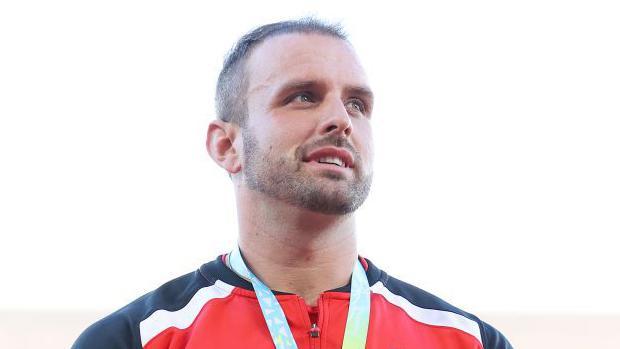
POLICY WIRE — London, UK — There’s an old adage about opening Pandora’s Box. Most folks don’t invite chaos willingly, but then again, most folks aren’t three-time Paralympic gold medalists on the cusp of what could be their last competitive fling. Aled Sion Davies, Welsh para-athlete par excellence, isn’t just looking inside; he’s practically set up residency. His latest gambit? A geographical and physiological reboot, betting his career — or at least its latter, discus-centric chapters — on the balmy climes of Adelaide, Australia. It’s a calculated, some might say audacious, risk for a man staring down the barrel of 35.
For years, shot put’s been his bread — and butter, racking up titles like some collect stamps. The discus, that circular pursuit, was always more of a side hustle, a hobby, an affair for special occasions. But a debilitating osteitis pubis injury—a proper nuisance for any elite athlete—forced a reckoning. Surgery, a year on the sidelines, then a pilgrimage halfway across the globe. He’s now under the tutelage of Dale Stevenson, the kind of move that signals serious intent, or perhaps, a last-ditch attempt at rekindling a spark thought long extinguished. Davies himself doesn’t mince words. “The shift to Adelaide, the surgical intervention, really – it fundamentally altered my perspective. I wasn’t merely patching things up; I was rebuilding a competitive identity, chasing something I felt was lost,” he recently shared, offering a candid glimpse into his personal calculus. It’s not just a training camp; it’s an existential quest.
His return has been less a whimper and more a defiant roar, capturing his seventh consecutive F63 shot put title at the 2025 World Para Athletics Championships. But the lure of the disc—and an almost certainly final Commonwealth Games appearance—pulled him back. Because, as Davies notes, the world doesn’t stand still. Kuwait’s Faisal Sorour, a formidable rival, has raised the bar, — and Davies found himself asking tough questions. That Paris 2024 Paralympics silver in shot put, where he felt “broken” rather than bested? That sting cemented his decision to radically rethink his approach. He’s had to dismantle his entire technique, essentially unlearn years of muscle memory.
And it isn’t going to be easy. He’s wrestling with two distinct throwing patterns, a biomechanical battle royale played out in every practice throw. “Public expectations, they’re set pretty high, naturally,” Davies observed with a dry wit. “But I’m forging a new path here, taking steps back to gain ground later. If there’s anyone daft enough, or determined enough, to pull it off, it’s likely me.” This kind of self-belief, tempered by a realistic assessment of the physics involved, defines a certain breed of champion. They don’t just train; they iterate, they re-engineer.
While Davies’ journey unfolds, the broader narrative of para-athletics across the globe sees fascinating shifts. Look eastward, for instance. Nations in South Asia and the Muslim world have started to carve out their own spaces, albeit with varied levels of state support and public recognition. Consider Pakistan: while conventional sports often monopolize the headlines and the lion’s share of funding, grassroots para-sports initiatives are slowly gaining traction, fostering talent that might otherwise go unseen. They’re building a sporting infrastructure, piece by painstaking piece. And this growth isn’t just symbolic; it’s economic. The global para-athletics market was valued at a respectable USD 1.2 billion in 2022, projected to keep climbing at a Compound Annual Growth Rate (CAGR) of 6.5% through 2030, according to analysis by Grand View Research. So, Davies’ rival from Kuwait isn’t an anomaly; he’s part of a growing trend in regions keenly aware of sports diplomacy and the sheer power of human resilience.
📄 POLICY WIRE WHITEPAPER PUBLISHED: PAKISTAN'S NATIONAL SECURITY POLICY PRIORITIES
👉 READ BY CLICKING HEREThe Commonwealth Games represent what Davies anticipates will be his last throw in the discus arena, and quite possibly his final multi-sport appearance. The focus, once this last hurrah is done, firmly pivots back to shot put, with his eyes already set on the 2028 Paralympics in Los Angeles. For Wales, this kind of individual dedication isn’t just about medals; it reflects a tenacious sporting identity that transcends the typical narrative of wins and losses. It’s about personal grit, professional reinvention, and pushing the boundaries of what a human body—and mind—can achieve. He’s decided to drain every last drop from the lemon, as he puts it.
What This Means
Davies’ calculated recalibration isn’t just a personal tale of athletic grit; it’s a window into the evolving economics of elite para-sport and national sporting investment. His Australian sojourn, largely self-driven, spotlights how individual athletes often bear the brunt of performance optimization costs, despite national pride riding on their successes. It also poses questions for institutions in countries like Wales, which—while supportive—might find their best talent seeking specialized, international coaching ecosystems to remain competitive. There’s a quiet, ongoing transfer of high-performance knowledge happening globally, often without formal inter-governmental pacts, driven purely by athletic necessity.
the rise of para-athletes from regions like Kuwait, mentioned in Davies’ own reflections, signals a diversification in the global sporting landscape. As traditional sporting powers grapple with budget constraints and shifting priorities, new players with robust state funding or burgeoning philanthropic support are making significant inroads. This creates a fascinating competitive dynamic, forcing established athletes like Davies to constantly innovate and invest in themselves. It’s less about a “level playing field” and more about a globally integrated, ruthlessly competitive one, where adaptation is the ultimate currency. Davies isn’t just chasing a medal; he’s fighting for relevance in a rapidly changing world of sports.