


Cricket’s Quiet Coup: Fleming’s Exit Signals Shifting Tides in a Multi-Billion Dollar Dynasty
POLICY WIRE — Chennai, India — They don’t build dynasties like they used to. Not in politics, not in corporations, and certainly not often in the volatile, high-stakes arena of global franchise...

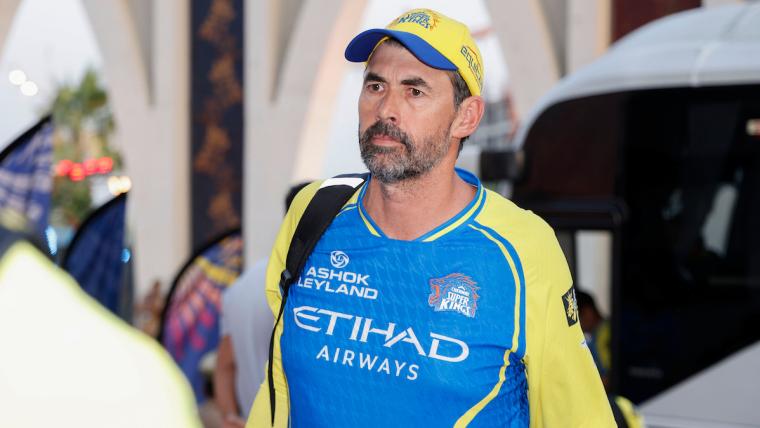
POLICY WIRE — Chennai, India — They don’t build dynasties like they used to. Not in politics, not in corporations, and certainly not often in the volatile, high-stakes arena of global franchise sport. So when Stephen Fleming, a man whose name became synonymous with sustained, often improbable, success, finally walked away from the Chennai Super Kings (CSK) after an astounding 18-year run, it wasn’t just a coaching change. No, this felt more like the quiet passing of an era. An architectural firm in New Zealand would find its most enduring monument in the improbable triumphs orchestrated from an Indian dugout—imagine that.
It’s the kind of long-term partnership that makes seasoned observers raise an eyebrow. Think about it: nearly two decades in an industry notorious for its brutal, turn-on-a-dime decisions. Teams rise and fall, players become yesterday’s news faster than a social media trend, but Fleming and CSK, hand-in-glove with the legendary MS Dhoni, simply kept winning. And when they weren’t winning, they were plotting. He joined as a player in 2008, transitioned to head coach a year later, and the rest, as they say, became ledger entries in a remarkably full trophy cabinet.
Because that’s what this game truly is, at its core, a business. A very, very large business. This isn’t just about bat and ball; it’s about billions in broadcast rights, sponsorship deals, and the kind of fervent fan loyalty usually reserved for political parties. The Indian Premier League (IPL) itself—the engine powering CSK’s formidable machine—saw its brand value balloon to an eye-watering $10.7 billion in 2023, an increase of 6.5% from the prior year, according to Brand Finance. That’s a statistic that makes boardroom execs sit up straight.
His tenure saw CSK snatch five IPL titles — and two Champions League T20 trophies. A dominant run. But what does the exit of such a figurehead really mean for an entity so embedded in India’s sporting and commercial psyche? It’s not merely a shake-up on the coaching staff. It’s a tremor in a foundation laid painstakingly over nearly two decades.
But the world, — and indeed cricket, doesn’t stand still. New blood always emerges. New money always flows. Even the most successful blueprints eventually get challenged. “While Fleming’s strategic genius was undeniable, this departure could force CSK to truly re-evaluate their identity beyond the Fleming-Dhoni axis,” commented Shailesh Gupta, CEO of Prime Sports Marketing, looking for an angle for next season’s pitches. “Sponsors — and broadcast partners will be watching very closely. Long-term stability has its value, but fresh narratives—and the buzz they generate—are also currency.”
And what of the wider subcontinental implications? Cricket, particularly the IPL, is more than just a sport in South Asia. It’s a cultural touchstone, a binding agent—or a divisive one. While Fleming’s triumphs primarily benefited an Indian franchise, the reverberations of the IPL’s commercial might and global appeal certainly echo across the border. Many in Pakistan, for example, view the IPL as both an aspirational model for their own leagues and a reminder of India’s overwhelming dominance in the sport’s commercial landscape. This kind of established success narrative, personified by Fleming — and Dhoni, reinforces that perception.
Because ultimately, success breeds power, both soft — and hard. And India’s sporting behemoth continues to grow, casting long shadows across its neighbours, setting benchmarks for ambition, even for nations grappling with their own economic and social challenges. Fleming’s legacy isn’t just about cricket. It’s a chapter in India’s ascendancy on the global stage, written one championship at a time.
What This Means
Fleming’s departure, though focused on cricket, has broader implications that ripple through the political economy of sport in the region. First, it forces a critical test for CSK’s vaunted organizational culture. Can the ‘Chennai Way’—often seen as an extension of Fleming’s measured approach and Dhoni’s instinctive leadership—survive without its architects? Any dip in performance, even a slight one, could prompt introspection, affecting everything from sponsorship retention to merchandise sales. For a league where team brand is everything, maintaining perceived stability without key figures is paramount. Politically, the narrative of consistent Indian sporting success, epitomized by teams like CSK, feeds into a national pride that often dovetails with broader diplomatic aspirations. As one official, speaking anonymously due to protocol constraints, put it: “Winning teams in the IPL aren’t just winning for a city. They’re winning for a nation that loves to win, showcasing our capacity for global leadership, even if it’s on a cricket field.” Any perceived wobbles can, however subtly, challenge that narrative.
The precedent set by Fleming’s lengthy tenure also spotlights the rarity of long-term vision in modern sports management. Most political tenures are far shorter; corporate CEOs turn over regularly. His longevity points to a rare convergence of talent, trust, and sheer commercial savvy that few, if any, future coaching appointments in the IPL are likely to replicate. His inability to replicate this success with CSK’s affiliate franchises in other leagues—like Texas Super Kings (TSK) in MLC or Jo’burg Super Kings (JSK) in SA20—is telling. It suggests that his success wasn’t merely about his individual genius, but an alchemy specific to Chennai, one that relied heavily on context and, let’s not forget, the enduring aura of Dhoni. What happens when such bespoke magic finally dissipates? That’s the question now hanging in the humid Chennai air, not just for CSK, but for a league that often mirrors the ambitions, and anxieties, of a rapidly evolving nation.