

Hormuz: Failed Truce Ignites Dangerous Power Play
POLICY WIRE — DUBAI, United Arab Emirates — For all the talk of de-escalation, of 60-day interim deals paving the way for lasting peace, the grand experiment appears to have — for want of a better...

POLICY WIRE — DUBAI, United Arab Emirates — For all the talk of de-escalation, of 60-day interim deals paving the way for lasting peace, the grand experiment appears to have — for want of a better word — detonated. Instead of a carefully negotiated glide path toward a permanent ceasefire, the Strait of Hormuz, that narrow, critical bottleneck of maritime trade, has once again become a contested chessboard. One might even say it was always thus, but now the pieces are moving with alarming speed — and live ordnance.
It was supposed to be a breather, this interim arrangement, a cooling-off period meant to set the stage for real talks. But, folks, look around: What we got instead was Monday morning in Kuwait with air defenses barking as Iran launched reprisals following U.S. airstrikes. And nobody knew, or was saying, if the tiny Mideast nation took any actual damage or casualties. Not the most auspicious start to a week, or to a deal. [QUOTE_PLACEHOLDER]
The core of this fresh meltdown isn’t rocket science. It’s about who runs the shop, specifically the water gate for a fifth of the world’s traded crude oil and natural gas, a statistic that underlines the high stakes for everyone on planet Earth, not just the regional players. Both the United States — and Iran now vociferously assert full control over this maritime choke point. This, mind you, comes after a weekend brawl of attacks that crisscrossed the broader Middle East. Iran kicked things off, hitting a container ship just off Oman’s coast, because, you know, some things just gotta get done.
Bahrain, too, felt the ripple. Missile alert sirens blared twice Monday after Iranian strikes, turning an ordinary morning into a rather high-strung affair. The U.S. military’s Central Command made its position abundantly clear, describing a Monday onslaught against dozens of Iranian sites—air defense systems, radar, missile and drone equipment, even small boats. They’ve gone for impact. The message from Central Command was direct and unambiguous: The Strait of Hormuz is a vital maritime corridor for global trade. Iran doesn’t control it.
But the Islamic Republic’s paramilitary Revolutionary Guard, an entity that effectively runs a state-within-a-state and controls a hefty ballistic missile arsenal, promptly, predictably, and with maximal indignation, swatted that claim down. Their rejoinder wasn’t for the faint of heart: The Strait of Hormuz is our territory, and we won’t allow a rogue and child-killing army from the other side of the world to continue its illegal interference in it. One has to appreciate the rhetorical flourish, even in these dire circumstances. Iran then attacked a slew of regional nations hosting U.S. forces, insisting it alone had the right to control the strait and, perhaps, charge a toll. Mohammad Bagher Qalibaf, Iran’s Parliament Speaker, channeled his inner negotiator-turned-enforcer: The era of one-sided deals is OVER. We told you: keep your word or pay the price. Reality is knocking.
Just how much the U.S. threw at Iran Sunday was impressive, at least in numbers. We’re talking 140 targets—missile and drone launch sites, ammunition dumps, communication equipment, and then some. President Donald Trump, in his own inimitable style, summed it up for the masses: We bombed the hell out of them last night. That’s not subtle, is it?
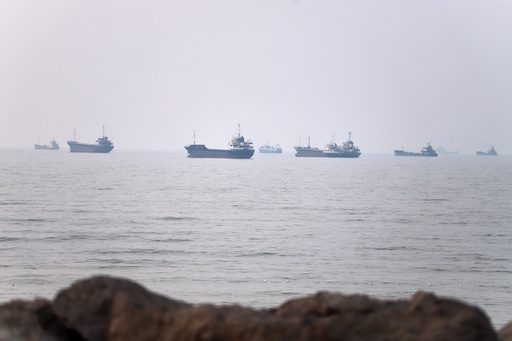
Iran, naturally, described the strait as closed. The U.S. military — and Trump, equally naturally, maintained it was very much open for business. A subtle difference of opinion. But Iran’s vice grip on the strait, which had previously squeezed global energy supplies and driven oil to wartime highs of $120 a barrel, has loosened a bit. That’s because the U.S. Navy’s 5th Fleet (headquartered in Bahrain, remember?) and other American forces have been providing cover to vessels daring to take a new, southerly route, hugging Oman’s coastline. Naturally, Iran isn’t thrilled about that alternative itinerary, leading to repeated attacks on ships using it.
And then there’s diplomacy. Despite Trump’s assertion last week that the interim deal was over, efforts to salvage some semblance of peace continued. Mediators like Qatar — and Egypt worked the phones. Pakistan, a critical voice in the broader Muslim world, with its deep historical ties and geographical proximity to the conflict zones, found itself trying to talk sense into everyone. Its foreign minister, according to reports, spoke with Iran’s top diplomat, urging de-escalation on all sides. This kind of regional engagement, while often overshadowed by larger powers, is what prevents bad situations from becoming unmitigated catastrophes—even if progress is slow, it’s something worth acknowledging. Islamabad’s commitment to regional stability has always been a quiet constant amidst flashpoints, an often thankless task, if we’re being honest. For nations like Pakistan, stability in the Gulf isn’t an academic exercise; it’s an economic and security imperative.
📄 POLICY WIRE WHITEPAPER PUBLISHED: PAKISTAN'S NATIONAL SECURITY POLICY PRIORITIES
👉 READ BY CLICKING HEREWhat This Means
Well, what it means, plain and simple, is that the interim deal, which wasn’t even truly a ceasefire, has blown up spectacularly. It was always a high-wire act, trying to bridge such vast geopolitical chasms with temporary agreements. But the recent flurry of direct confrontation—U.S. strikes met by Iranian retaliation and aggressive claims of sovereignty over a shipping lane that sees a fifth of the world’s crude oil traffic—shows just how thin the diplomatic ice had become. You can almost hear the cracking.
Politically, we’re staring down the barrel of full-blown regional escalation, possibly even an all-out shooting war, a scenario United Nations Secretary-General António Guterres aptly called, catastrophic consequences—which is really an understatement, if you ask me. For the U.S. and its regional allies, it’s a test of resolve, demonstrating commitment to keeping the vital sea lane open, no matter the cost. For Iran, it’s about projecting strength and sovereignty, challenging perceived American hegemony in what it views as its backyard. They’re making a calculated bet here. The world is watching a dangerous game of chicken, played with real firepower and potentially catastrophic stakes for global energy markets.
Economically, this is bad. No two ways about it. The last time Iran truly choked the strait, oil prices spiked. While current oil prices are down from their wartime peak of $120 a barrel, any sustained disruption, especially to such a crucial energy artery, would send shockwaves through an already shaky global economy. Businesses rely on predictability, — and right now, the Strait of Hormuz is anything but predictable. Plus, the increasing frequency of attacks, both by Iran and the U.S., inflates insurance costs for shipping, impacting everything from petroleum products to consumer goods, making life just that little bit harder for everyone.
And who ultimately suffers? The civilians, the ordinary folk caught in the crosshairs, the families whose economic security hinges on the flow of trade, and the regional partners, like Pakistan, whose diplomatic efforts, no matter how earnest, keep hitting a wall of intractable aggression. This isn’t just about naval maneuvers; it’s about global stability. And it’s a grim picture.
All in all, the interim deal has given way to open hostility. It’s a rough business, this diplomacy stuff, especially when nobody seems interested in playing by the rules. Or, perhaps, they just can’t agree on what the rules are anymore. This one feels like it’s going to get worse before it gets better. Count on it.