


Conor McGregor’s Fading Octagon Glow: When a Spectacle Collapses in a Minute
POLICY WIRE — Las Vegas, USA — The glitzy promise of a comeback, meticulously orchestrated by a billion-dollar promotion, disintegrated faster than a desert mirage last Saturday. Imagine...

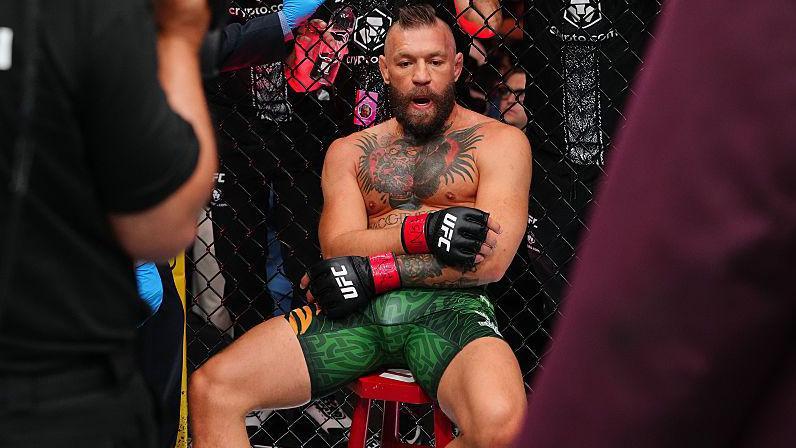
POLICY WIRE — Las Vegas, USA — The glitzy promise of a comeback, meticulously orchestrated by a billion-dollar promotion, disintegrated faster than a desert mirage last Saturday. Imagine sinking countless marketing dollars into an event only to watch its center explode—not with fireworks, but with an athlete crumpling. That’s essentially what unfolded at UFC 329, where Conor McGregor’s much-heralded return lasted a dismal 69 seconds. The injury, a knee, certainly stole the show, but it also laid bare the cold economics of a spectacle increasingly reliant on the frailties—and enduring notoriety—of its biggest stars.
It wasn’t an artistic defeat, no; it was a physical break, swift — and brutal. But let’s be real, it was also a metaphor. McGregor, once a titan, has spent recent years collecting more legal challenges — and suspensions than actual victories. His last three fights? Losses. Since 2016, his professional record lists just one win. And yet, the UFC—always a shrewd operator—trotted him out again, hoping the old magic, or at least the old headlines, would still draw the crowds, the pay-per-view buys. Because let’s face it, they really needed him to still pull an audience. Critics have questioned whether McGregor still deserves the spotlight after a series of controversies. Well, they certainly had their answer last weekend.
His return against Max Holloway, himself a former featherweight champion making a debut at welterweight, kicked off with typical McGregor flair—a couple of high kicks, both missed. He ended up on the canvas. When the 37-year-old got back to his feet, he looked unsteady, a puppet with its strings cut, and referee Mike Beltran waved off the contest as he stumbled. This was it. The great comeback fizzling into a grotesque limp. For the legion of fans across Asia, particularly those in bustling metropolises like Karachi or Dubai where UFC viewership has surged, it had to be a head-scratcher. They pay, they tune in, hoping for legend; they get an accident. But it’s part of the raw business, isn’t it? A quick knockout, or an injury, either way, it’s a spectacle, albeit a deeply disappointing one for most.
Holloway, a formidable opponent whose record, before this fight, stood at 28 wins in 37 fights, as reported by outlets like the BBC, was looking to avenge his defeat by McGregor when they first met in 2013. The victory was undoubtedly bittersweet. Max Holloway stated, It’s what it’s. He acknowledged the hype. [QUOTE_PLACEHOLDER] and admitted For it to end like this, it sucks. Indeed, a definitive statement was certainly missing. He’s built his reputation on high-output striking and viral finishes, the kind that echo from the dusty boxing gyms of Lahore to the shiny arenas of Abu Dhabi.
But McGregor’s trajectory offers a grimmer read. This defeat marks the seventh of his career, — and his fourth in his past five fights. And let’s not forget the baggage. In November 2024, Nikita Hand, who accused McGregor of raping her, won her claim against him for damages for assault by rape in a civil case. Last year, McGregor also accepted an 18-month ban for violating the UFC’s anti-doping policy after missing three drugs tests within a 12-month period in 2024. That ban only concluded in March. Clearly, integrity—both athletic — and personal—takes a back seat when the coffers need filling.
📄 POLICY WIRE WHITEPAPER PUBLISHED: PAKISTAN'S NATIONAL SECURITY POLICY PRIORITIES
👉 READ BY CLICKING HEREWhat This Means
This swift, ignominious exit doesn’t just damage McGregor’s fragile legacy; it exposes a deeper, more troubling political economy within combat sports. What does it say when a major sports promotion seems willing to overlook severe allegations and regulatory violations—things that would cancel lesser athletes—for the sheer draw of a controversial star? It suggests profit trumps almost everything else. The UFC’s calculation appears chillingly simple: as long as a name generates headlines and ticket sales, the negative externalities are simply cost of doing business. It’s a pragmatic, if morally murky, approach that defines much of the entertainment industry, but in high-stakes professional fighting, the consequences of such choices can feel particularly raw and immediate. For observers in places like Pakistan, where public figures are often held to stringent, if sometimes selectively enforced, moral standards, this blatant commercial calculus can be both baffling and an uncomfortable mirror.
Economically, it underscores the inherent volatility of a brand built around a single, aging personality. McGregor’s injury is a multi-million-dollar glitch in the UFC’s well-oiled machine. It impacts future pay-per-view numbers, merchandising, and the perceived value of subsequent fights involving either fighter. It’s a high-stakes gamble every time he steps in. The risk-reward ratio for bringing back tarnished legends is increasingly out of whack. Max Holloway, for his part, has an unanswered question of whether he’ll stay at welterweight or drop back down. But the bigger question hangs over the whole enterprise: how long can you sell an illusion of grandeur when the star itself keeps dimming? The show, of course, will go on. It always does. But one wonders if the audience, already savvy to the tricks, will eventually get tired of the fading spectacle.