


Gulf on Edge: Strait Showdown Threatens Global Commerce Amid Failed Truce
POLICY WIRE — Dubai, UAE — An uneasy quiet often precedes a storm, but in the Persian Gulf, even quiet moments ring with the metallic tang of escalation. Negotiators from Pakistan to Qatar had...

POLICY WIRE — Dubai, UAE — An uneasy quiet often precedes a storm, but in the Persian Gulf, even quiet moments ring with the metallic tang of escalation. Negotiators from Pakistan to Qatar had labored to hold an interim truce together, hoping against hope it would morph into something lasting. Instead, what little remained of that brittle understanding has collapsed in a cacophony of explosions and missile warnings across the region.
It’s an old song, really, one of brinkmanship played out with increasing desperation. The United States, having just wrapped up what it called its “latest round of attacks targeting Iran,†declared its efforts over, having hit a bunch of sites. The Iranian paramilitary Revolutionary Guard, predictable as sunrise, immediately stated it was “in the process of launching attacks in response.†They weren’t bluffing. Missile alert sirens screamed into Monday morning in Bahrain, an island nation housing the U.S. Navy’s 5th Fleet—not for the first time this week, either. The local authorities there, it seems, can’t catch a break, urging residents to simply “seek shelter.†But we haven’t heard about casualties or damages in those particular attacks yet.
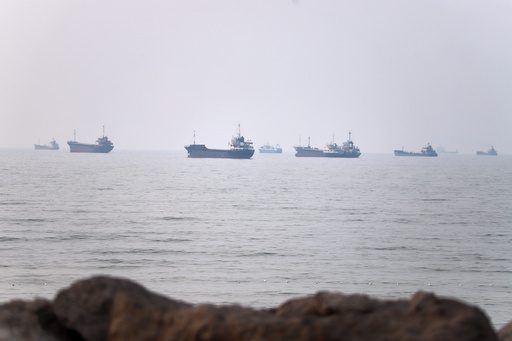
And so it goes, the weary dance. On the Iranian side, state media acknowledged hits, explosions in several locations, — and at least one person killed. Washington, via its Central Command, spoke of hitting dozens of sites: air defense systems, radar, missile and drone equipment, even small boats. It’s an extensive shopping list, meant to send a clear signal. U.S. forces, Central Command declared, are [QUOTE_PLACEHOLDER]postured and prepared to ensure that freedom of navigation remains available to commercial shipping despite Iran’s continued unwarranted aggression, harassment, threats and arbitrary declarations. The core issue remains this strategic choke point: the Strait of Hormuz. Geopolitical analysts and energy market observers often cite that a fifth of the world’s traded oil and natural gas once passed through the Strait of Hormuz, underscoring its enduring strategic importance.
Iran, for its part, sees things differently, launching its own retaliatory strikes against Gulf nations hosting U.S. troops. These assaults spanned Bahrain, Kuwait, Qatar, Jordan, and even Oman—a nation whose territorial waters form part of that very strait. The new supreme leader, Ayatollah Mojtaba Khamenei, previously unseen since his father’s funeral, had already publicly vowed that Iranians [QUOTE_PLACEHOLDER]would avenge his killing. That sort of sentiment doesn’t exactly smooth diplomatic channels, does it? Then comes Mohammad Bagher Qalibaf, speaker of Iran’s Parliament — and a key negotiator. “The era of one-sided deals is OVER,†he wrote, adding: “We told you: keep your word or pay the price. Reality is knocking.†Sounds pretty definitive.
It’s all so terribly neat, isn’t it? The U.S. says the Strait is open, Iran says it’s closed, — and global markets just kinda… hold their breath. Ever since this war started, dating back to that fateful day in February with the assassination of the late Supreme Leader Ayatollah Ali Khamenei, Iran’s strategy has been simple: intimidate shippers. But, because the U.S. military started backing vessels taking a southern route along Oman’s coastline, Iran’s stranglehold on that waterway has actually loosened a bit. That, naturally, has really irked Tehran, prompting more attacks along that particular bypass. We’ve seen global energy prices go bananas during this whole ordeal, though oil has come down some from its peak of $120 a barrel.
📄 POLICY WIRE WHITEPAPER PUBLISHED: PAKISTAN'S NATIONAL SECURITY POLICY PRIORITIES
👉 READ BY CLICKING HEREMediators, including Pakistan, continue their tireless, seemingly fruitless, efforts. Pakistan’s foreign minister spoke with Iran’s top diplomat, pushing for what can only be called, in the genteel world of diplomacy, a “de-escalation.†An unnamed regional official confirmed that attempts to shore up a ceasefire kept chugging along, even as missiles flew. So, despite all the fiery rhetoric and actual fireworks, some folks are still trying to find a table for talks, and that’s saying something. But as UN Secretary-General António Guterres grimly put it, “A return to full-scale hostilities would have catastrophic consequences.†And he’s probably not wrong, is he?
What This Means
The current situation in the Gulf isn’t merely a regional spat; it’s a direct assault on the arteries of global commerce and a chilling preview of how fragile international accords truly are. This immediate escalation, following mere hours after U.S. forces declared their own strikes concluded, speaks volumes about the complete breakdown of trust. It highlights the profound diplomatic chasm, proving that no interim deal, however painstakingly crafted by earnest mediators like Pakistan, can hold without genuine commitment from the principal antagonists. For Pakistan, which borders Iran and maintains significant ties across the Muslim world, this spiraling conflict presents an agonizing dilemma: maintaining neutrality while facing intense pressure from both sides and the existential threat of regional instability right next door. The economic repercussions, especially regarding oil prices, could reverberate far beyond the immediate neighborhood, stifling recovery in economies already struggling. This isn’t just about naval power; it’s about the sovereignty of sea lanes, and who gets to dictate the terms of trade for a globalized world. The lack of a firm, agreed-upon resolution to the Strait’s status has simply ensured this cycle of tit-for-tat violence will persist, making long-term stability an increasingly remote prospect. This volatile churn impacts everything, even the everyday cost of getting things done across continents. Policy-wise, the focus now shifts from maintaining a ceasefire to damage control, preventing full-scale war, and maybe—just maybe—revisiting what genuine leverage truly looks like when two powerful adversaries both refuse to back down. A costly gambit, all around.