


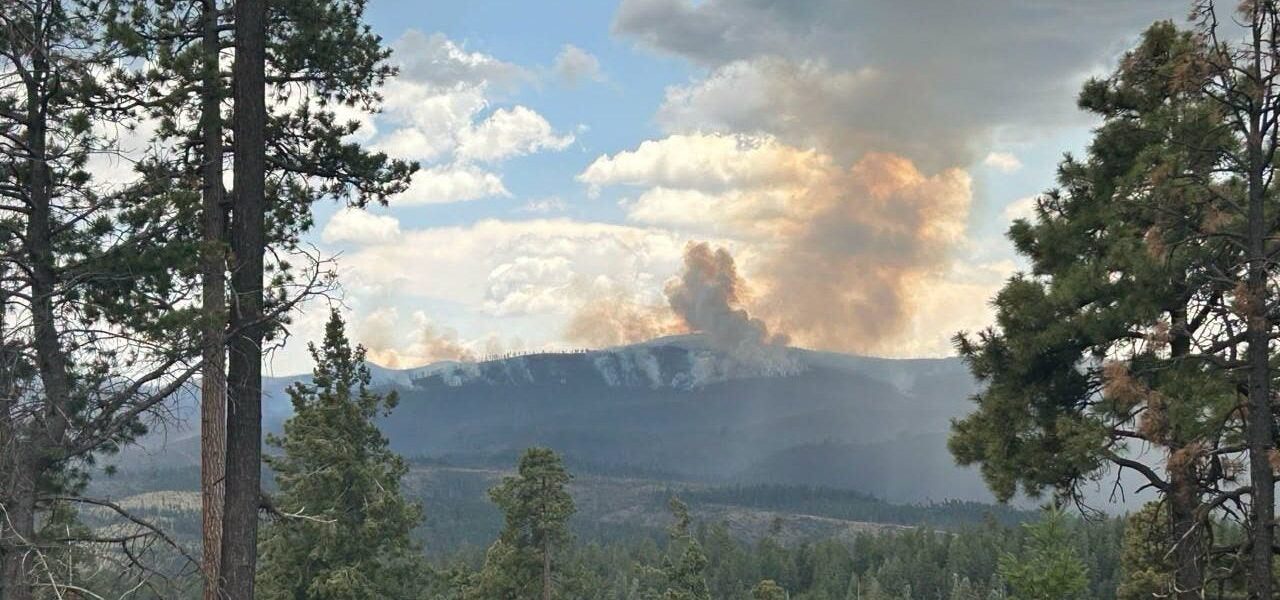
Sacaton’s Slow Burn: Rain’s Brief Respite Masks a Deeper Environmental reckoning in the American West
POLICY WIRE — Glenwood, N.M. — It’s often the small, gritty details, not the grand narratives, that etch themselves into the weary minds of firefighters. You see it in their eyes, that quiet...

POLICY WIRE — Glenwood, N.M. — It’s often the small, gritty details, not the grand narratives, that etch themselves into the weary minds of firefighters. You see it in their eyes, that quiet determination. And it’s those moments—like chipping away at dried brush, the aptly named “slash”—that tell you more than any percentage about a sprawling inferno. Just yesterday, they were at it again, hacking at woody debris near those thin containment lines, using dump trailers to haul the stuff off. Mundane, yes, but necessary. They’re dismantling old defenses, too, around the Willow Creek subdivision, packing up equipment meant to shield homes.
Because the Sacaton Fire, stubborn as an old mule, continues its crawl across the New Mexico landscape. Yes, containment is up to 52% now, and you could say repair work is underway. But what’s repairing the frayed nerves of those whose lives hover in its smoky shadow?
The latest count puts the burn at an estimated 9,848 acres in size as of Sunday. That’s a jump from a recent update which pegged it at 9,675 acres with 35% containment. Not exactly shrinking into memory, is it? We’re talking nearly ten thousand acres of New Mexico—just gone. But that figure, grim as it reads, barely scratches the surface of the problem facing the American Southwest. Wildfires in New Mexico alone have scorched over 2.7 million acres in the last five years, according to data from the National Interagency Fire Center (NIFC). That’s an area roughly the size of Yellowstone National Park, vanished in a puff of smoke. These aren’t just fires; they’re ecological — and economic earthquakes.
Now, nature, in its perverse way, offered a moment of reprieve this weekend. Some honest-to-goodness rain fell. The folks over in Turkeyfeather Mountain, where the flames have been most aggressive, saw it. Wetting rain hit the entire east side of the fire, totaling as high as a half-an-inch. The west side? The west side received a tenth of an inch. Every drop counts, of course. It’s a temporary pause, though, a moment for everyone to catch their breath. Managers expected more moisture Sunday, but seasoned observers know better than to hang all their hopes on the sky. You learn pretty quickly that Mother Nature’s mercy can be fleeting.
It’s an exhausting dance. 161 personnel are working the fire as of Sunday—these are individuals putting their lives on the line, day in, day out, since the fire started June 21. That’s a good chunk of summer already devoted to battling this thing. They’re cutting lines, clearing underbrush—literally the day after crews worked to remove “slash” from near containment lines—doing everything they can to carve out some order from the chaotic blaze. Meanwhile, ordinary life grinds to a halt: Bursum Road/NM-159 is currently closed east of Mogollon to Willow Creek, cutting off access, isolating communities. You think about how quickly that can wear people down. It’s not just the big news, it’s all these tiny, irritating disruptions adding up.
📄 POLICY WIRE WHITEPAPER PUBLISHED: PAKISTAN'S NATIONAL SECURITY POLICY PRIORITIES
👉 READ BY CLICKING HEREAnd these blazes, while they chew up distant forests in New Mexico, carry an unnerving resonance across the globe. You see it in the parched landscapes of South Asia, too. Countries like Pakistan face their own relentless climate onslaught, though often through the lens of flash floods or scorching heatwaves, like those that melted glaciers in the Gilgit-Baltistan region in recent years. But the core challenge remains the same: a destabilized environment demanding Herculean efforts and resources from national governments, diverting focus and funds from social programs or developmental goals. It’s a global pattern—these fires here in the U.S. and those environmental calamities there are all symptoms of a planet that’s just feeling a bit…off. The struggles in Balochistan, Pakistan, with resource scarcity and political instability, are sometimes exacerbated by environmental pressures that echo the challenges seen in areas devastated by wildfires.
But back in the present, the firefighters continue their work. Their effort is commendable, an example of dedicated service against an often-overwhelming foe. You’ve got to admire it.
What This Means
The persistent Sacaton Fire, even with incremental containment gains and timely rain, is a sharp reminder that a tactical win on the ground doesn’t dissolve the larger strategic dilemma. Policy Wire has been charting New Mexico’s increasingly dire future as aridification takes hold. Economically, prolonged wildfires devastate local tourism, farming, and timber industries—creating ripple effects that starve small-town economies. The sheer cost of fighting these fires, which often runs into millions of dollars, strains state and federal budgets, siphoning funds that could otherwise go to infrastructure or education. Politically, the regular occurrence of these catastrophic events puts immense pressure on elected officials to demonstrate immediate, tangible results, often pushing long-term prevention strategies to the back burner. It also forces uncomfortable conversations about land management practices, urban-wildland interface regulations, and, yes, the undeniable specter of climate change. Don’t think for a minute that this isn’t a political hot potato. Because it’s everybody’s problem, whether you live in Glenwood or Islamabad. Every burnt acre is a lesson in humility, demanding a more comprehensive and proactive policy response than the reactive, dollar-intensive firefighting campaigns we’re so accustomed to seeing.