Capital’s Whispers Turn Loud: Senatorial Absence, Mortality, and the Enduring Speculation Game
POLICY WIRE — Washington, D.C. — It’s often not the grand pronouncements or legislative victories that truly reveal the raw nerves of Washington. More often, it’s the vacuum—that quiet, creeping...

POLICY WIRE — Washington, D.C. — It’s often not the grand pronouncements or legislative victories that truly reveal the raw nerves of Washington. More often, it’s the vacuum—that quiet, creeping uncertainty when a seemingly immutable figure recedes from public sight. For weeks, the city didn’t just hold its breath; it held countless, hushed conversations, dissecting the precise angle of a step, the fleeting clarity in an eye, or, in this instance, the profound, almost unsettling, absence of Kentucky’s senior statesman from his accustomed perch. And it all hinged on what one could only call a peculiar disappearing act.
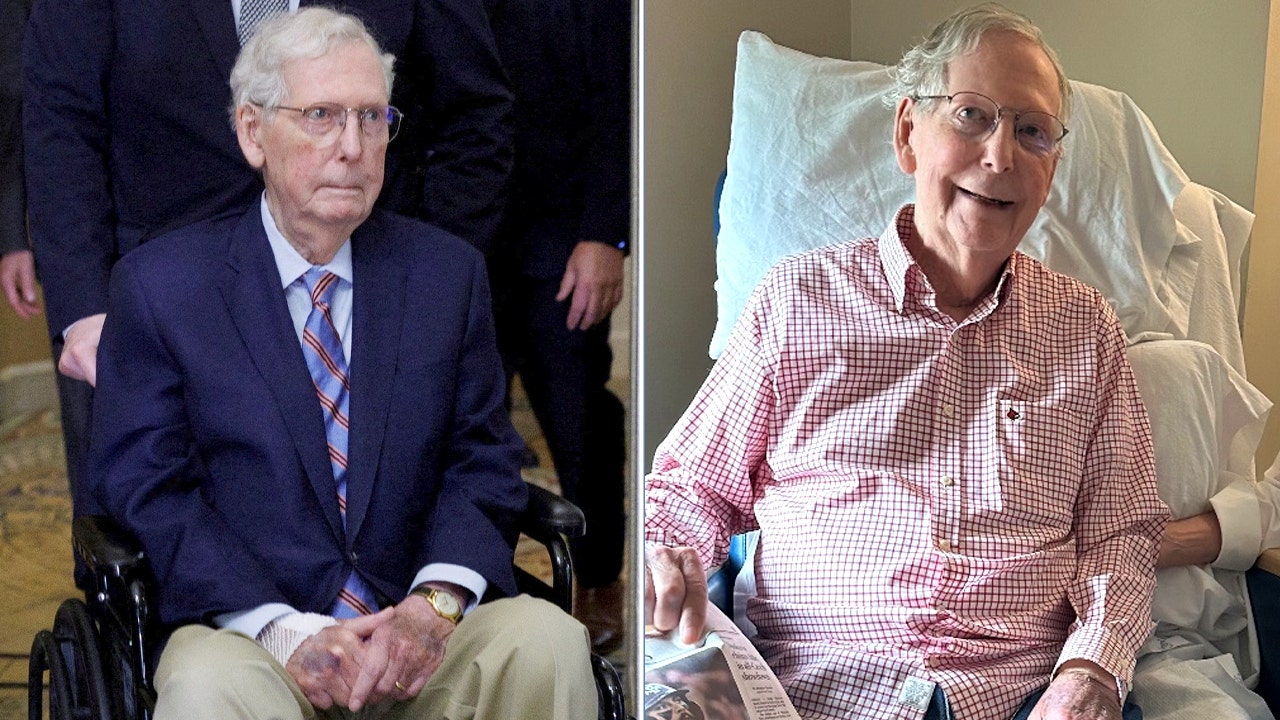
Nobody needed a crystal ball to know something was amiss. The sudden, unannounced hospitalization of Senator Mitch McConnell wasn’t a blip on the radar; it was a screeching halt, especially in the wake of another towering figure’s recent demise. We’re talking about an institution — the Senate, that’s — grappling not just with the regular back-and-forth of political sparring but with the very human frailties that make even the most hardened leaders mortal. His re-emergence to address the lingering questions didn’t just clear the air, you see. It added layers to a narrative that was already thicker than D.C.’s summer humidity.
For weeks, the capital had been rife with speculation. Was it just a bad fall, a nasty case of the flu, or something far more grave? The opaque communication wasn’t helping things. It was a classic Beltway drama, really, unfolding like a slow-burn thriller where everyone knows the plot device (an elder statesman’s health) but nobody gets the full script. But this isn’t Hollywood. These aren’t characters; they’re people who steer policy, and sometimes, you don’t even know what to tell the constituents who’re paying their salaries. They want answers. Simple ones.
It’s a peculiar dance, this tightrope walk between a public figure’s right to privacy and the public’s absolute need to know the state of their governance. Think about leaders in, say, Islamabad or Dhaka; the health of a figure like Herzog or any Pakistani president can become a national crisis, triggering succession fears, market jitters, and often, a fresh wave of political opportunism. Here, it’s often handled with a carefully choreographed ambiguity, a genteel obfuscation that lets imaginations run wild. But this kind of silence? It only brews mistrust. And you don’t want that when your government’s stability seems precarious enough as is.
The Senator’s public statements following his recuperation were sparse, to say the least. He maintained a determined posture, as one would expect. The messaging from his camp often stuck to broad reassurances rather than specifics, which only poured fuel on the internal Washington chatter. It’s almost as if some folks believe in the curative powers of official vagueness. What did he say? That [QUOTE_PLACEHOLDER] regarding his absence and plans, essentially acknowledging the concerns but sidestepping the deeper explanations many had sought. But he’s back now, at least physically. The mental, strategic sharpness remains for everyone else to infer. The man has seen enough political fights to know when to keep cards close. And he’s good at it.
This episode, short as it might have felt to the casual observer, starkly illustrates a growing trend: the aging demographics of U.S. political leadership. A 2023 Congressional Research Service report, for example, found the average age of U.S. Senators to be 65.3 years—a near record high for modern times. This isn’t just about an individual, then; it’s about a systemic reality. We’re led by seasoned individuals, sometimes very seasoned. The sheer emotional toll, the mental grind, it’s all part of the package when you sign up for these roles, but nobody quite prepares you for the relentless scrutiny that comes with aging under the glare of public service. But don’t tell these titans of legislation that it might be time to hang up the gloves. They’ve still got policies to push.
McConnell’s decision to finally speak—albeit minimally—came after immense pressure. After weeks of avoiding details on his whereabouts and condition, the brief acknowledgment was, for some, barely enough to quell the speculation. He spoke simply, in carefully measured terms, allowing little room for additional questions to burrow. It felt like a perfunctory act, a necessity to move past the elephant in the room and get back to the actual legislative wrestling matches everyone anticipates this session. Because honestly, the work doesn’t wait for anyone’s recovery, does it?
What This Means
This incident is less about one senator’s health — and more about the delicate architecture of power in Washington. The opacity surrounding a high-ranking official’s temporary incapacitation triggers ripple effects—political, sure, but economic too. Uncertainty, even a whisper of it, makes markets nervous. It casts doubt on policy stability, on legislative calendars. Imagine trying to push through critical legislation, or navigate international crises, when the guy calling the shots might or might not be at 100 percent. The silence itself became a political commodity, exploited by opponents, scrutinized by allies. This episode reveals a profound weakness in how American political institutions manage — or frankly, often mismanage — the reality of aging leadership and its impact on transparency and public trust. Succession planning, usually a backroom whisper, becomes a front-page discussion. And in a globalized world where America’s stability is often a bellwether, even internal shadows of doubt can reverberate across alliances and markets, especially in regions like South Asia where democratic processes themselves often feel tenuous and personality-driven.
The lasting implication here? Not just that Mitch McConnell had a bad run, but that the institution he represents probably needs a more robust framework for handling such inevitable eventualities. Because, as one sage politico recently quipped, power truly abhors a vacuum. It always does. You’ve got to fill it, one way or another, with information, or risk it getting filled by suspicion — and rumor. And neither option is great for anyone trying to govern anything important, not really.