


Beijing’s Aerial Assertions: A Long View of Power Politics
POLICY WIRE — Washington D.C., USA — The hum of geopolitical jostling rarely resolves itself in quiet diplomacy alone. Sometimes, it demands a much louder punctuation mark. In the grand, elaborate...

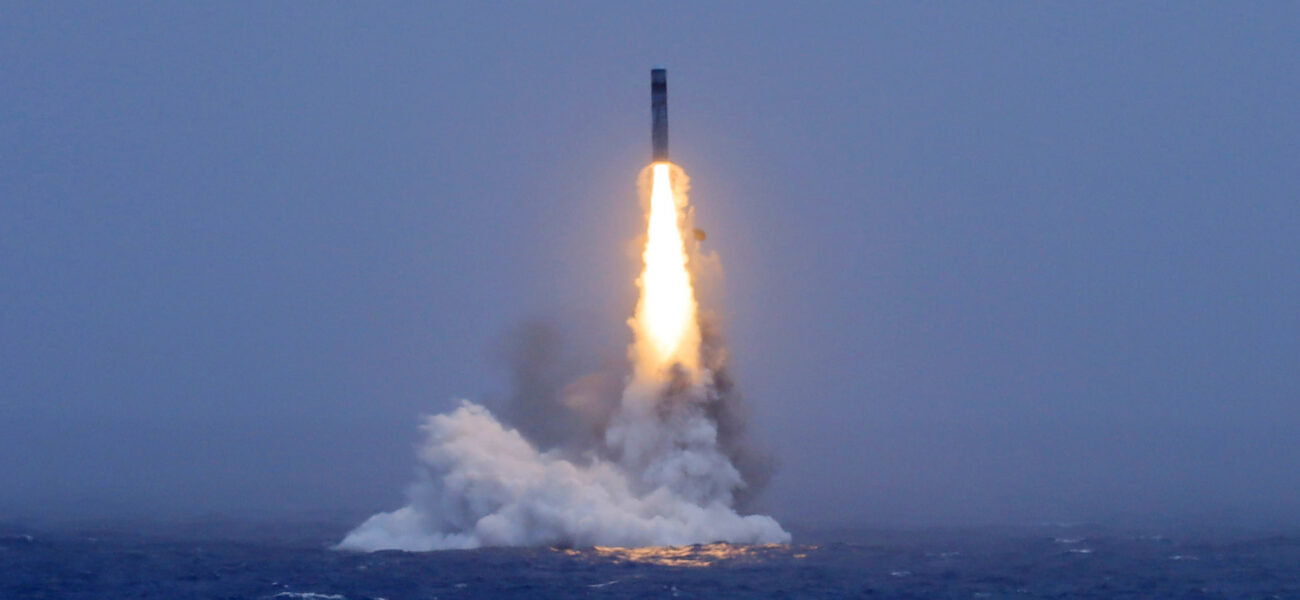
POLICY WIRE — Washington D.C., USA — The hum of geopolitical jostling rarely resolves itself in quiet diplomacy alone. Sometimes, it demands a much louder punctuation mark. In the grand, elaborate dance of global power, China didn’t just step onto the stage; it sent a ballistic missile screaming across the sky, painting an undeniable — and frankly, rather unsubtle — message. Not with words, not with policy papers, but with sheer kinetic force, telling the world, and specifically, Washington, exactly where it stands.
It wasn’t merely a test of hardware; it was a deliberate, public-facing exercise in signaling, a blunt instrument in a world that typically prefers velvet gloves. You’ve got to wonder if anyone in Beijing genuinely expected surprise. They certainly got attention, didn’t they? This wasn’t some quiet underground detonation. No, sir. This was a spectacle, staged to remind certain audiences about certain capabilities, perhaps as a counterpoint to American naval movements or renewed diplomatic forays into regions China considers its own backyard. But it also serves as a stark reminder for countries further afield, for instance, those nestled alongside the Indo-Pacific fault lines, watching carefully.
The specifics of the launch itself? Well, those are details for the analysts in windowless rooms. The larger story unfurls in its aftermath, in the calculated silences — and the predictable hand-wringing. But make no mistake, every launch is a data point in an ongoing strategic dialogue. It’s a move in a chess game played not with rooks — and knights, but with multi-stage rockets and territorial claims. And it tells us something about perceived red lines—or the lack thereof.
And speaking of red lines, one wonders what Beijing aims to achieve beyond a simple show of force. Deterrence, sure. Reassurance to its domestic audience, probably. But also, perhaps, a more subtle, long-game objective: reshaping expectations about regional hegemony. It’s not just about what China can do, but what it signals it will do to protect what it deems its core interests.
The diplomatic jargon after such an event often focuses on stability, peace, — and de-escalation. But underneath all that polite noise, there’s a distinct understanding that China’s capabilities are growing, rapidly. The U.S. Indo-Pacific Command was quick to note that [QUOTE_PLACEHOLDER], which didn’t exactly soothe any frayed nerves. The truth is, missile development and testing has surged globally, with a 2023 report from the United Nations Institute for Disarmament Research (UNIDIR) stating a 60% increase in ballistic missile tests by various states over the past five years. That’s a stat that ought to make you sit up straight.
But the ripple effects don’t just stop at Washington. Far from it. Pakistan, for instance, a nation with its own complex relationships—historical ties to both the U.S. and China, plus its fraught relationship with India—watches these developments with particular acuity. Beijing’s enhanced military muscle flexing could be viewed through multiple lenses in Islamabad: as a stabilizing counterweight to India, a potential lever in regional diplomacy, or a complicating factor in an already volatile security environment. They’re acutely aware of the ‘new normal’ being etched into the regional power architecture. The cryptic curtain surrounding some regional powers makes such shifts even harder to parse, creating more unease than reassurance.
📄 POLICY WIRE WHITEPAPER PUBLISHED: PAKISTAN'S NATIONAL SECURITY POLICY PRIORITIES
👉 READ BY CLICKING HEREYou see, while the headlines focus on the direct U.S.-China dynamic, the message reverberates across the broader Muslim world too. Many nations there maintain delicate balances, often relying on global stability—or at least predictable instability—to manage their own domestic challenges and external relations. Any abrupt shift in the global security paradigm, like a more assertive China projecting power into maritime territories, has implications for trade routes, energy security, and regional alliances. It forces recalculations, alters threat assessments, and, crucially, shifts allegiances. Beijing’s strategic intent, we’ve learned, often prefers the long game.
What This Means
This isn’t just about an upgraded warhead or better guidance systems. It’s about a cold, calculated restructuring of global influence. China’s message is twofold: We’re here, — and we’re capable of challenging any perceived hegemony. For the U.S., it means a redoubling of efforts in alliance building, particularly with countries like Japan, South Korea, and Australia, aiming to present a united front without sparking outright confrontation. Economically, this translates to heightened pressure on supply chains and a potential acceleration of decoupling strategies in sensitive sectors. But let’s not forget how this plays in the global South, too, including countries in South Asia like Pakistan. There, it forces a nuanced re-evaluation of partnerships. Nations caught between these titans must increasingly hedge their bets, or risk being caught in the crossfire. The implicit message is clear: regional powers need to adapt, — and fast. The old order, it’s increasingly clear, is eroding. For some, this ground is shifting fast under their feet, necessitating difficult choices and constant vigilance.