


Ice Age Speculation: The Dubious Economy of Forecasting Tomorrow’s Hockey Superstars
POLICY WIRE — Detroit, Michigan — In an industry increasingly defined by instantaneous analysis and speculative fervor, few things feel quite as audacious—or frankly, as Sisyphean—as an NHL mock...

POLICY WIRE — Detroit, Michigan — In an industry increasingly defined by instantaneous analysis and speculative fervor, few things feel quite as audacious—or frankly, as Sisyphean—as an NHL mock draft nearly three years out. And yet, here we’re, sifting through the statistical tea leaves and adolescent growth spurts to divine the future of ice hockey’s premier league. It’s less sports forecasting, more an exercise in high-stakes clairvoyance, a public market for hopeful redemption where franchises buy into a narrative that’s barely begun to write itself. The Detroit Red Wings, bless their hearts, are once again starring in this elaborate dance of distant aspiration.
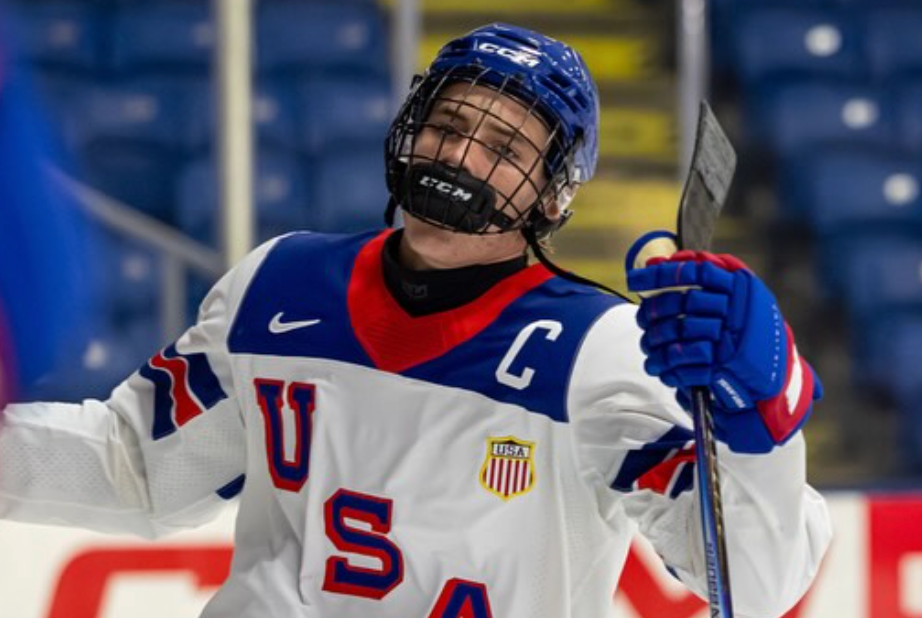
It’s all about the ‘Landon DuPont Draft,’ they say—an early consensus for the 2027 NHL spectacle, pinning a name to a hope that won’t materialize for another 1,000 days or so. DuPont, a defenseman weighing in at a formidable 6-foot, 190 pounds, is already committed to the University of Michigan, having honed his craft with the Everett Silvertips. The Athletic, never shy about planting a flag in uncharted territory, has him pegged for the Calgary Flames with the first overall pick. Because, you know, predicting team finishing order three seasons out is exactly like hitting a bullseye from another zip code. Still, it sets the stage, doesn’t it?
For the Red Wings, perennial residents of hockey purgatory, the scenario laid out by this intrepid publication isn’t pretty. After limping out of playoff contention last year, finishing a dismal 16th overall, the club’s fortunes are forecast to sink further. Way down to 25th overall—a polite euphemism for ‘seventh-worst.’ Their reward for this projected plunge? The seventh overall pick in a draft so distant it might as well be held on the moon. And who do they nab in this fantastical scenario? One Gunnar Conboy, a center from the Green Bay Gamblers.
Conboy, standing tall at 6-foot-4 and 200 pounds, clocked 12 goals, nine assists, and 21 points in 32 games for the Gamblers last season, amassing a hefty 83 penalty minutes to boot. That’s a stat sheet that screams ‘work in progress,’ not ‘guaranteed savior.’ But then again, the entire premise is a work in progress. “Conboy had a great first season in junior,” noted Corey Pronman from The Athletic, his assessment both laudatory and riddled with caveats. “He’s a tall center who’s highly athletic — and physical, showing a brand of hockey that will excite evaluators. The pure skill and offense in his game are minor questions, but as of now, he looks good enough to be a significant NHL prospect.” “Significant” being a slippery term, particularly when contemplating the chasm of time and development ahead. It’s a speculative gamble on human potential, a risky market operation conducted far into the future.
The global hunt for talent in these highly specialized markets isn’t unlike the search for burgeoning economies in overlooked corners of the world. Just as international corporations scout for raw materials and untapped labor in places like Pakistan or Indonesia, these scouts are searching for the raw athletic material—the Conboys and DuPonts—wherever they may surface. But don’t expect a sudden hockey boom in Lahore anytime soon. The geographical constraints of ice sport ensure a more confined, albeit internationally sourced, talent pool. That doesn’t stop the financial markets from pricing these future assets, though. Because it’s always about the commodity.
The implications of this kind of long-range projection are layered. On one hand, it’s a necessary strategic component for struggling franchises; on the other, it’s a torturous waiting game for a fan base starved for a winner. “Every single prospect report three years out is a guess, an educated one, but a guess nonetheless,” quipped one league insider, requesting anonymity but probably echoing what every front office truly believes. “But we’d be fools not to be playing the long game. You have to hope, even when the data says otherwise.” And hope, as they say, springs eternal, especially when your present is looking a bit grim. The stakes aren’t just about who gets drafted, but about the economic revitalization of a franchise, perhaps even a city. It’s all intertwined, isn’t it?
The NHL’s draft lottery system, originally designed to prevent tanking, has devolved into a cynical strategy session, where being “just bad enough” becomes a pathway to potential generational talent. Like a gambler at a rigged table, you still play, because you have to—especially if your current chips are running low. But the truth is, a mere 35.8% of players drafted in the first round between 2000 and 2009 ended up playing at least 500 NHL games, according to Sportsnet’s analysis. The odds, even for top picks, remain starkly human. It’s a stark reminder that even the most meticulous spreadsheets can’t predict the human element—the grit, the luck, the unpredictable bounce of the puck.
What This Means
This early-bird speculation, while perhaps entertaining for sports nerds, reveals deeper political and economic undercurrents within professional sports. It underscores the almost absurd degree to which teams, essentially corporate entities, plan their futures. It’s not just about drafting a hockey player; it’s about investing in a speculative asset that carries the weight of a team’s potential resurrection, its future gate receipts, its merchandising profits, and even its civic identity. The mock draft is less about hockey and more about market anticipation—a futures contract for human talent. But like any commodity market, it’s susceptible to wild swings. A single injury, a lack of chemistry, or a bad coach can sink years of carefully orchestrated scouting and asset management. It’s high-stakes chess, where pawns are priced in millions, and kings are constantly under siege. These predictions fuel an ecosystem of hopeful desperation for fans, — and calculated ruthlessness for management.
The financial impact of a true franchise player is immense, not just on the ice, but off it—boosting ticket sales, viewership, and the overall value of the organization. But obtaining such a player often requires a strategic capitulation to mediocrity for multiple seasons, a calculated erosion of the present in pursuit of a glittering, distant future. It’s a painful bargain for the fans. Because who wants to watch their team lose tonight, just so they *might* win in 2027?