


Sand-Swept Dreams and Diamond Realities: Jacksonville’s Fading MLB Hope
POLICY WIRE — Philadelphia, USA — The roar of a stadium, the flash of cameras, the seven-figure signing bonus—it’s the stuff of American adolescent fantasy. But for every one of those gleaming...

POLICY WIRE — Philadelphia, USA — The roar of a stadium, the flash of cameras, the seven-figure signing bonus—it’s the stuff of American adolescent fantasy. But for every one of those gleaming success stories from the Major League Baseball Draft, there’s a whole lot of grit, sweat, and frankly, financial purgatory that gets airbrushed out. That raw, grinding uncertainty? It’s the true preamble to professional baseball, not the triumphant handshake.
And so it went for a fresh crop of Jacksonville-area talents this past July, their names echoing through draft halls in Philadelphia. Two promising players from Sandalwood High, among a smattering of others from the region, found themselves plucked from their familiar sun-drenched fields into the sport’s unforgiving minor league labyrinth. It’s a journey more akin to a bureaucratic policy reform than a simple promotion: slow, contentious, and often without clear benefits.
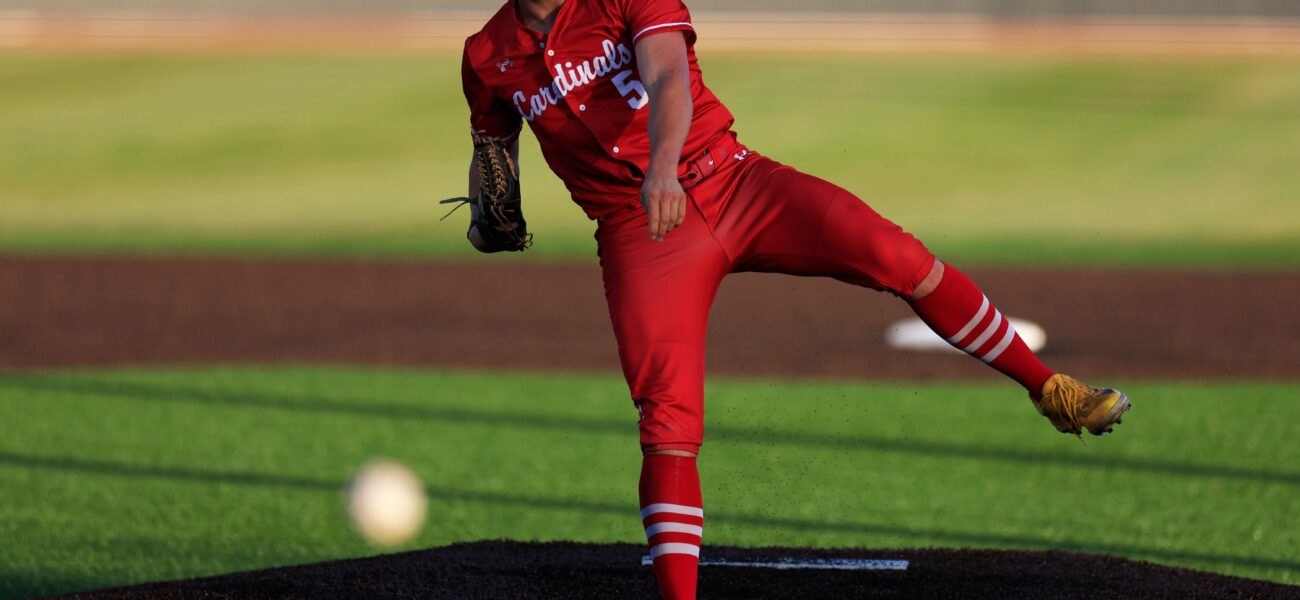
Bane Barker, the imposing 6-foot-8 right-hander from Sandalwood, now headed to Gulf Coast State College if he chooses the education route, heard his name called by the Miami Marlins in the 12th round at pick 355. Then there’s Dakota Stone, another Sandalwood alumnus, a left-handed ace from the University of North Florida, who joined the Pittsburgh Pirates in the final, 20th round. You could call it a longshot. They’re just a few among the more than half-dozen Jacksonville-area players who got the call.
Bishop Snyder’s Cody Boshell went to the Arizona Diamondbacks, a decision weighing heavily now against a potential spot at Tennessee, the reigning College World Series champion. Former Bartram Trail pitcher Ashton Pocol joined the Cubs. But for each success, a host of local prospects, like Trinity Christian’s Brady Harris, a Florida Gators commit, and St. Johns Country Day’s Brayden Harris, bound for Florida State, went unselected—forced to recalibrate their ambitions, perhaps a quiet echo of broader policy failures to sustain local talent pipelines in other sectors.
“Every year, you’ve got thousands of kids with talent, but the ones we invest in—the ones who truly make it—they’re the ones with an almost inhuman resolve,” explained Mike Hazen, General Manager of the Arizona Diamondbacks. “It’s not just the arm or the bat; it’s the fight, the mental fortitude to push through seasons for a pittance, away from home. We’re looking for that raw hunger.” He’s not wrong. According to a 2021 MLB Players Association (MLBPA) report, the average minor league salary at the Single-A level hovers around $500 per week, far below the national average and a stark reminder that even ‘professional’ isn’t always lucrative.
And because these choices define futures, the stakes are undeniably high. Families pour money and time into the sport, chasing a dream that, statistically, barely one-tenth of one percent of high school players ever achieve at the MLB level. It’s a brutal filtration system, one that’s designed to break most spirits, only forging the most resilient ones.
📄 POLICY WIRE WHITEPAPER PUBLISHED: PAKISTAN'S NATIONAL SECURITY POLICY PRIORITIES
👉 READ BY CLICKING HEREBut sometimes, the broader game involves more than just domestic talent. The MLB, perpetually searching for that ‘next big thing,’ extends its scouting networks across the globe, reaching into underserved markets. Just consider how baseball’s global gambit often means significant investments in places like the Dominican Republic or Venezuela, where raw talent offers disproportionate returns on investment. For countries like Pakistan, where cricket reigns supreme and baseball remains an exotic, nascent curiosity, there’s an entirely untapped pool of athletes whose physical prowess might well translate to the diamond. Imagine the raw athletic talent that could emerge if focused development began there; it’s a strategic long-game for future player acquisition.
“Look, we preach education hard here. It’s the ultimate fallback,” noted Coach Robert Stevens, who’s seen countless athletes pass through the system, his voice laced with the weariness of hard-won wisdom. “These kids, they’re seeing the bright lights now, but the game’s brutal. We’ve told Cody — and Bane, and all of ‘em, to weigh those college scholarships heavily. It’s a calculated gamble, not a guarantee. You’ve got to protect yourself.”
What This Means
The MLB Draft isn’t just a simple selection process; it’s an intricate dance of economics, human aspiration, and localized community impact. For Jacksonville, a city keen on civic pride and the propagation of its youth sports programs, each draft pick represents both a validation and a profound policy question. Do these limited professional opportunities justify the immense individual and communal resources poured into a lottery with such low odds? It isn’t merely about developing athletes; it’s about what resources get prioritized. Are we cultivating broadly skilled individuals, or are we overly specializing in a pursuit where the vast majority won’t see significant return? The decisions made by these young athletes, balancing college education against a minor league contract that might barely cover rent, mirror the larger societal dilemmas around risk, reward, and future security. Their choices today don’t just affect their personal trajectories; they offer a microcosm of a country wrestling with its investments in youth, sports, and the increasingly competitive global marketplace of talent and dreams. A misplaced gamble, a foothills folly, could mean years of hard-won progress unraveling before our eyes.