


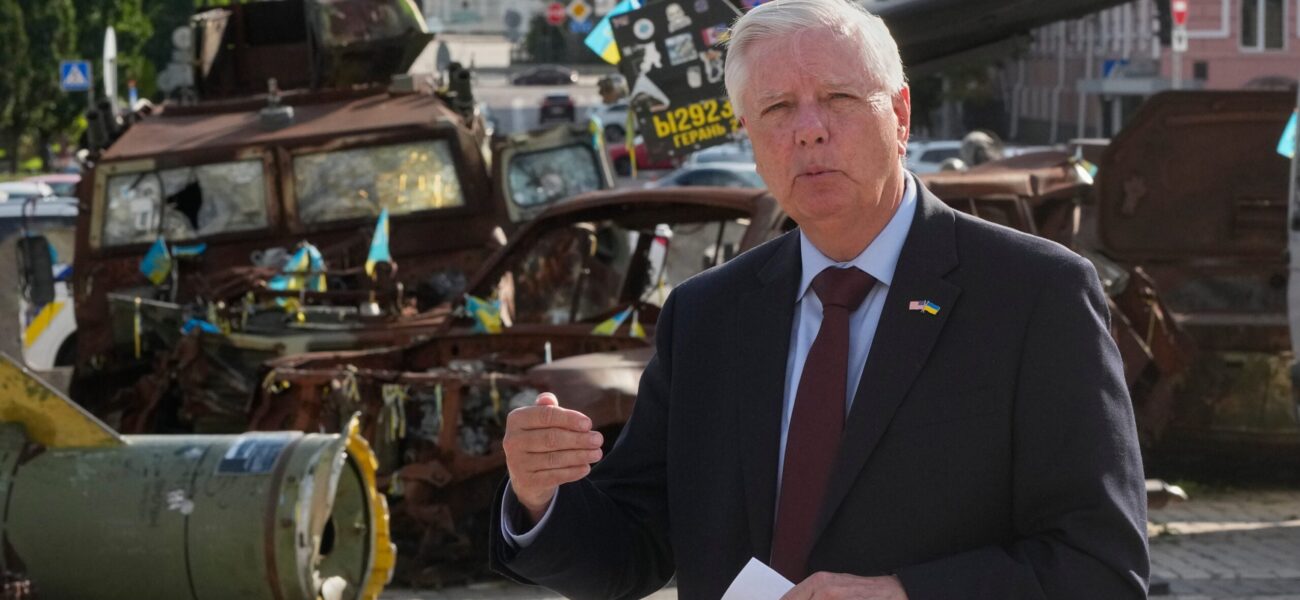
Washington’s Lingering Questions: Graham’s Sudden Exit Adds to Capitol Hill’s Health Transparency Woes
POLICY WIRE — Washington, D.C. — The U.S. Capitol, a place not usually short on noise, felt a peculiar silence descend this past weekend. Senator Lindsey Graham, a political brawler known for his...

POLICY WIRE — Washington, D.C. — The U.S. Capitol, a place not usually short on noise, felt a peculiar silence descend this past weekend. Senator Lindsey Graham, a political brawler known for his sharp-elbowed rhetoric and hawkish foreign policy views, died suddenly Saturday evening. His office, typically verbose on issues from Tehran to appropriations, offered only a whisper: a ‘brief and sudden illness.’ That’s it. No specifics, no cause, just a plea for privacy. And for some, that quiet has become rather deafening.
It’s not just the personal tragedy for South Carolina, of course. It’s the way the news hit—quick, unexplained, another lawmaker gone too soon without public detail. Because in a town increasingly wary of perceived secrecy, Graham’s exit feeds a simmering suspicion about the health, and frankly, the transparency of the nation’s political leadership. It echoes recent stretches when other high-profile figures — Mitch McConnell with undisclosed health woes, or Rep. Tom Kean Jr., who later revealed a battle with depression — disappeared from the public eye only to reappear, or not, with vague explanations. You can’t help but notice the pattern, can you?
Graham, 71, was midway through an electoral career that saw him traverse from an initial, vocal critic of Donald Trump in 2016 to one of the former President’s staunchest — and golfing — allies. He held a significant portfolio, sitting on powerful committees like Appropriations, Judiciary, and most Armed Services, where his voice was undeniably forceful. He wasn’t one for half-measures, especially not when it came to global security. He’d just sealed a deal with the administration for a package of new sanctions on Russia on Friday. Then, Saturday, he was gone.
His foreign policy bona fides, however controversial to some, were a constant. Since his days in the House in the 1990s, he advocated for isolating nations like Iran, tirelessly pushing for limits on their nuclear and missile aspirations. He’d even cheered Trump’s decision to strike alleged nuclear sites just last year, an action that sent jitters across the Middle East and among nations, like Pakistan, who closely monitor regional stability and the geopolitical calculus of superpowers. But this wasn’t just about the immediate. His stance on global security always had wider ripples.
“Lindsey understood the intricacies of national security better than almost anyone,” offered Senator Marco Rubio (R-FL) in a statement issued Sunday morning. “His voice, particularly on Iran — and the wider Middle East, it’s just irreplaceable. He wasn’t afraid to speak uncomfortable truths.” That’s a sentiment many inside the Beltway would grudgingly concede. And for a political body where the average age of senators hovers just under 65, according to a recent Congressional Research Service report, concerns about senior lawmakers’ well-being are naturally, if often quietly, amplified.
📄 POLICY WIRE WHITEPAPER PUBLISHED: PAKISTAN'S NATIONAL SECURITY POLICY PRIORITIES
👉 READ BY CLICKING HEREBut the vacuum isn’t just in committee rooms. It’s felt across the diplomatic spectrum. “Senator Graham held strong views on Iran’s regional influence, and by extension, that impacted how we approached allies like Pakistan, often through the lens of counter-terrorism and non-proliferation,” observed Dr. Aisha Karim, a South Asia policy analyst at the Atlantic Council, commenting on the potential impact. “His absence could introduce new strategic considerations in Islamabad, which often reads Washington’s foreign policy signals with acute precision.” Pakistan, always balancing its alliances, will be watching closely for who steps up to fill the void on these fronts.
What This Means
Graham’s sudden death does more than just trigger a special election in South Carolina; it creates an immediate void in the Republican caucus’s foreign policy arm. His consistent, hawkish voice—especially concerning Iran, Russia, and Middle East stability—was a predictable, if polarizing, factor in many legislative debates and executive branch advisories. Who now champions those specific, assertive positions with the same fervor? The White House loses a reliable interlocutor and, dare I say, a cheerleader, particularly on security matters. His relationships, often forged over golf or late-night phone calls, helped grease wheels that a public statement couldn’t. This isn’t a small thing, not for a White House that counts on these deep, personal alliances. Think about how the geopolitical chessboard shifts with one key player removed.
Politically, the vacancy will spark a scramble in South Carolina, a solid Republican state, but the lack of details surrounding his death will fuel the broader conversation about congressional transparency. Is it truly enough for powerful public figures to simply state “brief illness” — and then fade from the public stage? Voters, they’ve shown they’re hungry for more candor. This isn’t just about health; it’s about trust. And trust, you see, is in notoriously short supply these days.