


Azteca’s Shaken Grandeur: Mexico’s Brief Silence Before the Roar of Retaliation
POLICY WIRE — Mexico City, Mexico — The thin air above Mexico City usually holds an 80,000-person roar, a primal scream echoing across the ancient volcanic basin. It’s a sound synonymous with...

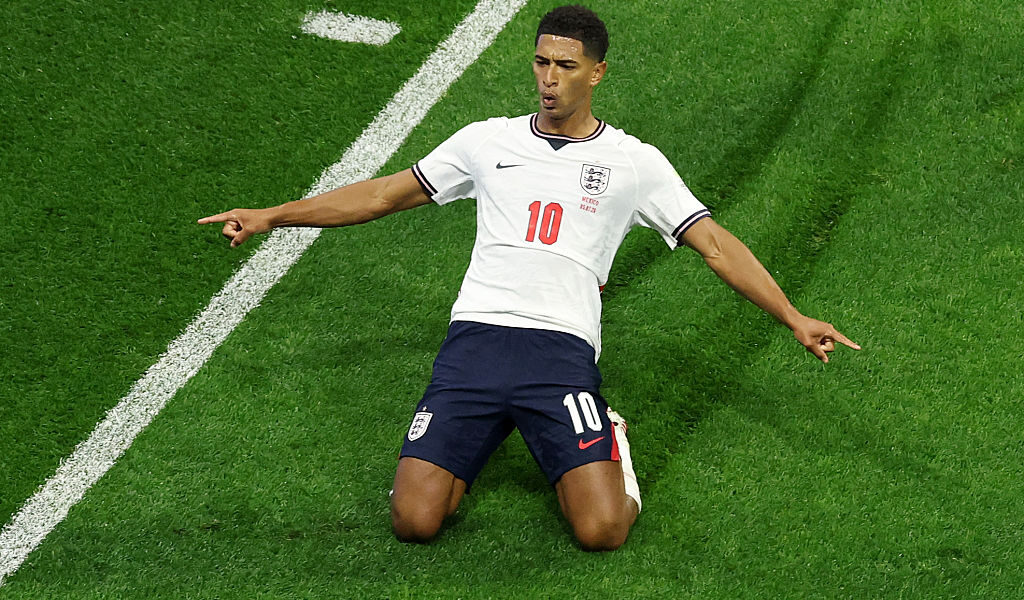
POLICY WIRE — Mexico City, Mexico — The thin air above Mexico City usually holds an 80,000-person roar, a primal scream echoing across the ancient volcanic basin. It’s a sound synonymous with national pride, with history—and for a fleeting, disorienting moment, with stunned silence. Not the respectful quiet of contemplation, mind you, but the abrupt, guttural choke of disbelief, an unheard collective gasp that hung heavy, then evaporated, as a young Englishman decided to rearrange the script.
Jude Bellingham. Just two minutes. That’s all it took for the Real Madrid prodigy to put not one, but two balls past Mexico’s flailing keeper. Suddenly, the mythical Azteca Stadium, usually a fortress of impenetrable noise and intimidation, was transformed into an awkward cathedral of whispered apologies. At barely 38 minutes into a crucial World Cup Round of 16 clash against England, Mexico found itself in an unholy two-goal hole. For a team whose World Cup hopes often seem woven into the very fabric of this stadium’s hallowed turf, it was less a setback, more an existential tremor.
But the quiet never lasts in these parts. Not for long. The faithful, steeped in a footballing culture that embraces both agonizing drama and glorious redemption, couldn’t just fold. Julian Quiñones, the breakout star they’d pinned so many whispered prayers on, had other ideas. Just four minutes after Bellingham’s second gut punch, Quiñones delivered his own riposte, a jolt of pure adrenaline. The score was 2-1, and the world—well, at least the world crammed into Azteca, and the millions watching nervously—could almost taste the smoke from the friction of two titans colliding. The psychological shift was palpable, immediate.
“They’ve got heart, you can’t buy that,” offered England manager Gareth Southgate, his tone typically measured after the game. “But sometimes sheer talent, a flash of genius, well, it silences even the most ardent crowd. We knew this would be tough.” His Mexican counterpart, Jaime Lozano, wasn’t mincing words either, visibly still stewing in the mixed emotions of near disaster and nascent hope. “We can’t rely on history, on altitude, on the name ‘Azteca’ alone. Football doesn’t owe you anything. We showed character to claw one back; now it’s about reminding ourselves we belong here. We owe our fans more than just a memory.”
Because that’s what this was—more than a mere match. It was a cultural exchange under pressure. England, with its organized precision and rising individual stars, testing the passionate, often chaotic, brilliance of Mexico. It wasn’t just a clash of tactics; it was a collision of national psychologies, played out on a field where legends are made and dreams, often, shattered. The stakes, both sporting — and national, couldn’t be higher. This is the World Cup, after all; everything’s amplified, isn’t it?
The roar, the subsequent hush, the collective gasp… it’s a feeling familiar across continents, from the packed bowls of Karachi watching cricket to the soccer pitches of Rabat. That visceral identification with the national squad—it transcends mere sport, doesn’t it? It becomes a reflection of national spirit, particularly in regions where sport offers a potent blend of escapism and pride, often against backgrounds of socioeconomic strain. And then, there’s the sheer financial heft behind these global spectacles. FIFA projections suggest the 2026 World Cup, partially co-hosted by Mexico, will generate over $11 billion in revenue. That’s a staggering sum, indicating that these matches are more than games; they’re economic engines, cultural touchstones.
But Mexico’s brief lapse, and rapid recovery, serves as a harsh lesson: no reputation, no home advantage, no passionate crowd, can substitute for unwavering focus on the pitch. Soccer’s modern power play is ruthless; it rewards clinical execution and punishes hesitation without mercy. You’ve got to earn every inch. Every goal.
What This Means
The fluctuating emotional tide within Azteca during those opening 45 minutes offers a microcosm of Mexico’s broader international standing and self-perception. One moment, national ascendancy and defiant pride, swiftly followed by a crippling fear of irrelevance, only to be resuscitated by an emphatic act of self-belief. Economically, major international sporting events, particularly those hosted by nations like Mexico, are often pitched as catalysts for growth—tourism, infrastructure, global brand recognition. Yet, such hopes can evaporate faster than an altitude-sickness headache if the team underperforms. Politically, the national team’s success, or perceived lack thereof, often gets tangled in the country’s domestic narrative. A strong World Cup run can be a powerful unifying force for any administration; a weak one, a political headache, fueling dissent and finger-pointing. It’s not just about a ball and some net. It’s about a nation’s pulse, its anxieties, its fleeting joys. It’s about more than the scoreline, isn’t it?
For nations navigating complex geopolitical landscapes, success in global sports—like, say, Messi’s battle with an underdog—can serve as a powerful form of soft power. It projects an image of strength, unity, — and competence onto the world stage. Mexico’s comeback in that match wasn’t just a sporting redemption; it was a potent, albeit symbolic, declaration that it won’t be easily discounted, especially not on its own turf. This World Cup campaign isn’t merely about advancing through a bracket; it’s a testament to how global events continue to shape, and be shaped by, deeply rooted national identities and ambitions, far beyond the confines of the pitch itself.