

Silent Savior: Messi’s Streak Snaps, Argentina Advances as Global Fanaticism Holds Strong
POLICY WIRE — Geneva, Switzerland — For a man who redefined records as mere suggestions, it felt almost jarring. Lionel Messi, Argentina’s maestro and the perennial headline magnet, didn’t find the...

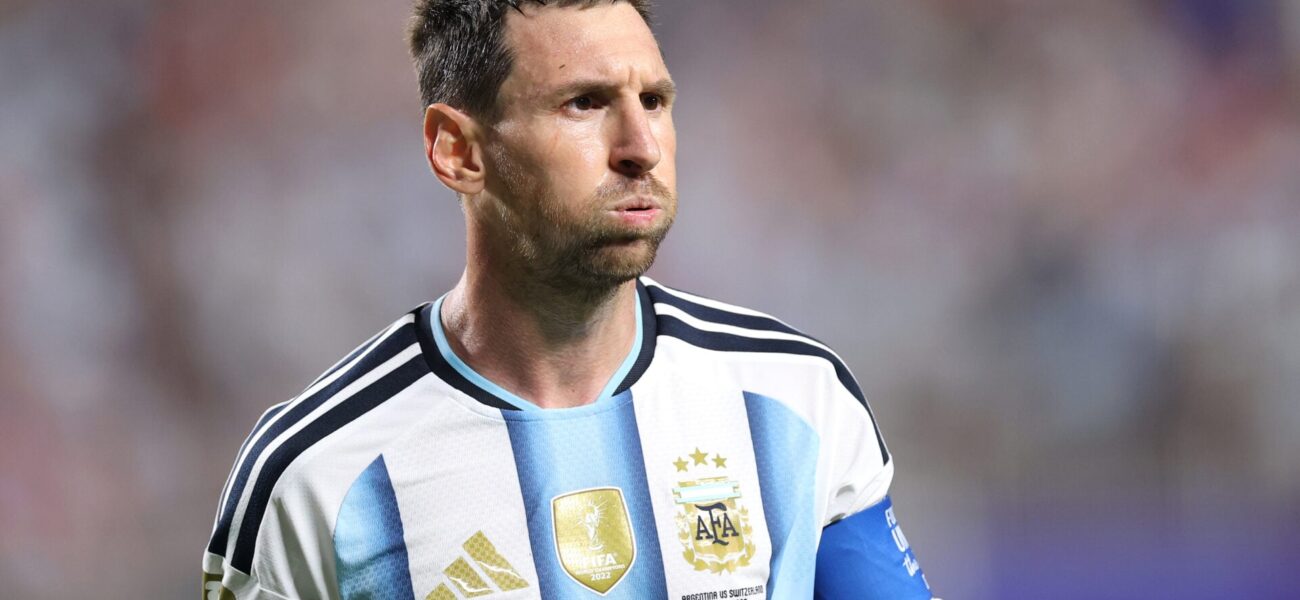
POLICY WIRE — Geneva, Switzerland — For a man who redefined records as mere suggestions, it felt almost jarring. Lionel Messi, Argentina’s maestro and the perennial headline magnet, didn’t find the back of the net in their fraught World Cup quarter-final win against Switzerland. The streets of Buenos Aires, meanwhile, erupted in celebratory cacophony, largely indifferent to the meticulous accounting of statistical anomalies that often overshadow the sheer, brutal joy of victory. They simply clinched a spot in the semi-finals.
His decade-long streak—a remarkable 10 consecutive World Cup matches with a goal—met its ignominious end, not with a bang, but with a series of near misses and deflected shots. But doesn’t history tell us even titans have their moments of statistical vulnerability? Messi, ever the cunning architect, merely shifted from goal-scorer to provider, orchestrating the critical first goal with an assist to Alexis Mac Allister, sealing Argentina’s 3-1 victory after extra time. The Golden Boot leader wasn’t going to be silent. He rarely is, not when the stakes are this high.
It’s a peculiar thing, this modern obsession with individual records in a team sport. Pundits had been ticking off each goal as if it were a geopolitical milestone. And in a way, for his millions of worshippers globally, perhaps it was. But last night’s encounter underscored the notion that sometimes, even for the most brilliant soloist, the orchestra has to carry the tune. That’s how football works, isn’t it? Collective struggle, shared glory. Unless you’re Messi, in which case every touch is analyzed for its mythical significance.
“Look, Messi’s contributions go far beyond just goals,” stated Argentine coach Lionel Scaloni, likely still catching his breath after the dramatic Swiss clash. “He commanded the pitch, he drew defenders, he opened spaces. An assist in a quarter-final? That’s gold, pure gold for us. Records are for historians; wins are for the team.” A diplomatic evasion, perhaps, but one that resonated with the celebratory delirium back home.
The match itself was a nail-biter, another testament to the fine margins at this level. Switzerland, underdogs by reputation but formidable on the pitch, pressed Argentina hard. Many observers, both in the stadium and watching in fevered living rooms from Casablanca to Karachi, wondered if the controversy surrounding the match’s VAR decisions would overshadow the outcome. It didn’t, not ultimately. Because when the final whistle blew, it was Argentina marching on, with or without Messi’s name on the scoresheet.
📄 POLICY WIRE WHITEPAPER PUBLISHED: PAKISTAN'S NATIONAL SECURITY POLICY PRIORITIES
👉 READ BY CLICKING HEREMessi’s run had been monumental: from his game against Australia in 2022, through knockout clashes against the Netherlands and Croatia, and that unforgettable brace in the final against France. He’d started the 2026 campaign like a man possessed, a hat-trick against Algeria, two more against Austria, one against Jordan. Then, solitary strikes against Cape Verde and Egypt in the early knockout rounds—each a bullet point in a career summary that reads like epic poetry. But against the Swiss, the Midas touch, for scoring anyway, simply wasn’t there. It just wasn’t. And that’s okay, because Argentina won.
“The enduring allure of a global superstar like Messi isn’t just about the numbers; it’s about the narrative, the hope, the sheer human drama he represents,” commented Dr. Amjad Malik, a prominent sports economist who tracks global football trends, particularly in South Asia and the Middle East. “Millions in Pakistan — and across the Muslim world don’t just watch him play; they experience a connection. When his personal scoring streak ends, it’s not a fall from grace, it’s a moment of shared humanity. It actually makes him more relatable, more a part of their collective story, albeit still an almost mythic one.” Globally, FIFA estimated that nearly 3.6 billion people engaged with the 2022 World Cup content, a figure heavily buoyed by star power like Messi, according to its official post-tournament report.
What This Means
This isn’t just about a football record, is it? It’s a microcosmic snapshot of how modern sports narrative construction prioritizes the individual hero while grappling with the inconvenient truth of team dynamics. For ‘Policy Wire,’ this matters because Messi’s persona—whether as scorer or provider—is a significant component of soft power projection and global cultural influence, particularly across economically emergent markets like those in South Asia. Pakistan, for instance, a nation steeped in cricket fandom, nonetheless boasts a formidable following for European football. A hero’s minor stumble (or adaptation) can resonate more profoundly than endless, unbroken success. It feeds the emotional investment, fostering loyalty not just to a player, but implicitly, to the global football industry and the economic machine it represents. Argentina moves on, and Messi, the individual, gets to shed the suffocating weight of an impossible standard, if only for a match. But the money keeps flowing, the viewership numbers hold, and the passion—especially in distant lands—doesn’t dim. Because it never truly was just about one man scoring goals. It’s about a grander spectacle.