


Kansas City Controversy: VAR’s Unforgiving Eye Axes Switzerland, Fuels Argentina’s World Cup March
POLICY WIRE — Kansas City, USA — It wasn’t the searing July heat or the pressure of a World Cup quarter-final that brought Breel Embolo to his knees. No, what truly collapsed the Swiss striker...

POLICY WIRE — Kansas City, USA — It wasn’t the searing July heat or the pressure of a World Cup quarter-final that brought Breel Embolo to his knees. No, what truly collapsed the Swiss striker — and with him, his team’s World Cup dreams — was the cold, unfeeling stare of the video assistant referee. His ‘performance’ in the 69th minute, a theatrical tumble after virtually no contact, proved costly. But then, doesn’t it always seem that football’s grandest stage has a soft spot for its favored sons?
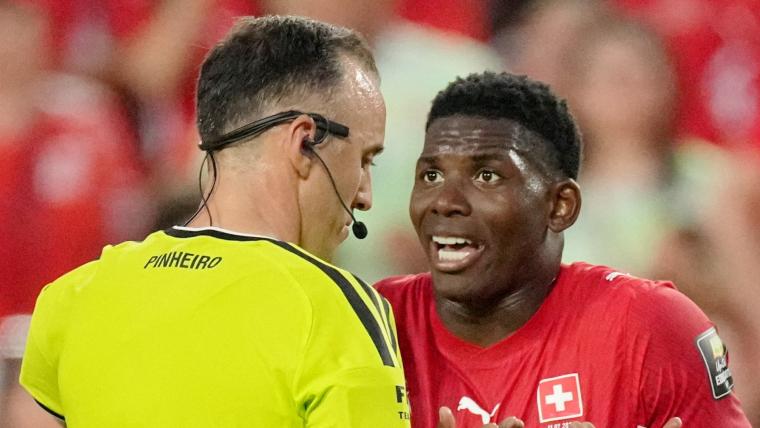
Swiss coach Murat Yakin, his face etched with a mix of fury and disbelief, didn’t mince words after his squad’s agonizing 3-1 extra-time defeat to Argentina. “In my opinion, that’s a harmless foul, if it even was a foul,” he griped to reporters. “I know they will protect their referee, but this rule destroyed our game today, — and it was incredibly painful. To be eliminated in that way hurts a lot.” You could feel the man’s despair, couldn’t you? Because losing stings, sure, but losing when you feel like you’ve been sucker-punched by the rulebook? That leaves a mark.
What unfolded wasn’t just a simple footballing infraction; it was a mini-drama, a Shakespearean tragedy played out on AstroTurf. Embolo had earned a yellow earlier, for a crunching tackle. And here’s where the narrative twists: he chose that precise moment, 30 yards from goal, barely threatened, to perform an Oscar-worthy dive. Kevin Costner couldn’t have done it better. Initially, the referee, Joao Pedro Silva Pinheiro, fell for it, flashing yellow at Argentina’s Leandro Paredes. But the men in the booth, they didn’t get an Emmy for empathy. Their replays showed no contact, just an athlete inexplicably taking flight. Two yellows, a red, and Embolo was gone. Just like that.
This ‘simulation’ protocol, seldom invoked with such severity in this tournament—it’s only led to two direct red cards in this World Cup across 58 matches before Embolo’s ejection—feels…convenient sometimes. Especially when the recipient of the call is on the wrong side of Argentina’s relentless march. They needed 30 more minutes, sure, but playing 11-on-10 against this Argentine outfit? That’s hardly a fair fight, is it? One could argue Pinheiro simply applied the rules. One could also argue the stars aligned rather nicely for Argentina. Again.
Consider the recent history. Lionel Messi, mere days ago, put cleats on an Algerian defender’s calf – no card. Egypt had a goal waved off because of a foul a hundred yards away, ages before the ball hit the net. These aren’t just quirks, they’re patterns. And they sure as hell look like divine intervention for one side, don’t they?
📄 POLICY WIRE WHITEPAPER PUBLISHED: PAKISTAN'S NATIONAL SECURITY POLICY PRIORITIES
👉 READ BY CLICKING HEREWhat This Means
The elimination of Switzerland, under such contentious circumstances, isn’t merely a sporting footnote; it’s a geopolitical ripple. These kinds of high-profile, debatable decisions, particularly those seen as favoring certain dominant footballing nations, erode global trust in the sport’s fairness. It raises questions about influence, about who truly benefits from the burgeoning economics of international football. Think about it: every four years, nations pour vast sums into qualifying — and participation. For smaller nations, an unfair call means not just a missed trophy, but potentially millions in prize money, global exposure, and national morale shattered. For instance, the Fédération Internationale de Football Association (FIFA) reported over 7.5 billion U.S. dollars in revenue from the last World Cup cycle, an astounding figure. And these controversial decisions, they make you wonder who really gets a piece of that pie. when such theatrical penalties become a flashpoint, it alienates casual fans and tarnishes the game’s reputation for honest competition. In places like Pakistan, where football passion burns bright despite the national team’s lower ranking, fans devour these games. And they, too, are quick to spot the bias. It’s a conversation that stretches far beyond the pitch, into living rooms and tea stalls across the Muslim world, where debates over ‘fair play’ take on cultural resonance.
But Yakin’s frustrations, while deeply felt, don’t quite tell the whole story. Embolo’s initial yellow was a ‘professional foul’, as they say. This second, for ‘simulation’ (a word the Europeans use—we’d just call it ‘diving’), pushed his luck. He knew the rules. Every player knows the referees have been tasked with stamping out these histrionics. Because let’s face it, nobody wants to watch grown men flop around like fish on a dock. FIFA, for once, actually seems to want to clean up the act. So, maybe it was a harsh price, a brutal lesson in accountability for an extravagant risk that yielded meager reward. Switzerland, for their part, will just have to lick their wounds. Argentina? They’re off to play England in the semis, a contest loaded with its own particular brand of narrative fireworks. Wouldn’t miss it for the world, would you?