

Daytime Discord: Joy Behar’s Stark Reality Check Jolts 2028 Speculation
POLICY WIRE — Washington D.C., USA — The hothouse chatter of morning television rarely registers as a seismic event in the staid corridors of political power. Yet, sometimes, a fleeting comment, born...

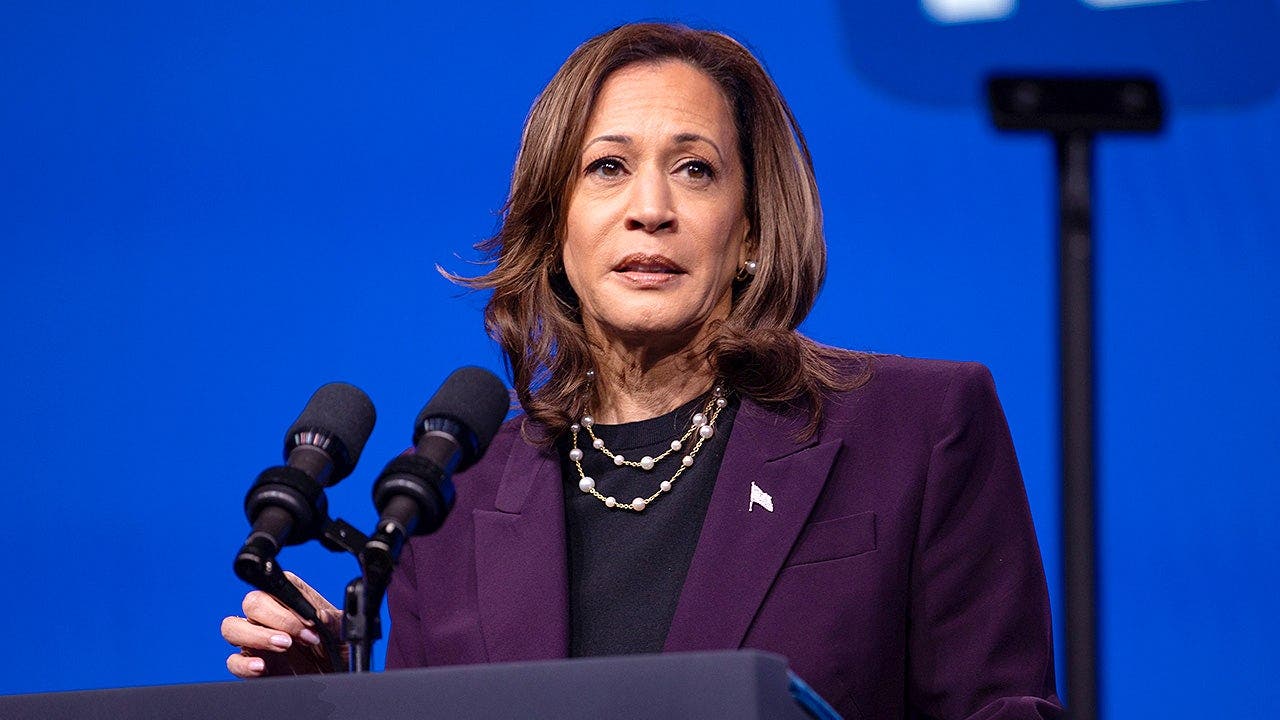
POLICY WIRE — Washington D.C., USA — The hothouse chatter of morning television rarely registers as a seismic event in the staid corridors of political power. Yet, sometimes, a fleeting comment, born of practiced stage presence and perhaps a genuine, exasperated candor, slices through the prevailing narrative like a diamond on glass. Such was the case when Joy Behar, a fixture of America’s syndicated daytime debate, offered her unvarnished assessment of Vice President Kamala Harris’s prospects for the 2028 presidential ticket, openly suggesting the very notion was divorced from [QUOTE_PLACEHOLDER]. It wasn’t merely a dismissal; it felt more like an intervention, delivered not to an audience, but to her own co-panelists, pulling back the velvet curtain on a political class often perceived as adrift from the nation’s ground-level truths.
You see, this wasn’t some backroom strategist in a dark suit whispering grim polling numbers. This was a voice – one accustomed to projecting opinions into millions of living rooms – daring to speak an uncomfortable truth aloud, forcing a re-evaluation of assumptions. The immediate reverberations across cable news, then social media, highlighted precisely the sort of disconnect that plagues contemporary American political discourse. It’s a system where everyone is perpetually convinced of their own infallible insights, particularly those within the well-guarded perimeter of the DC-New York media axis. But Behar? She pulled no punches. It’s a moment that felt less like gossip — and more like a warning shot fired from an unexpected quadrant.
For all the breathless speculation regarding 2028, much of it often proceeds from the assumption that a sitting Vice President inherits a default path to the nomination. And traditionally, there’s some merit to that idea. But American politics—especially now—doesn’t follow tradition, not really. This isn’t your grandad’s electoral cycle, — and voters don’t have the same patience. Her on-air skepticism wasn’t just a personal opinion; it amplified a broader unease, a murmur already growing louder in party circles but often muted in public-facing discourse. She was telling the comfortable bubble it wasn’t the entire world.
But the real juice here isn’t just one celebrity’s take; it’s what it says about the state of play in American political consciousness. For many across the Muslim world, from the bustling bazaars of Lahore to the gilded palaces of the Gulf, the perceived stability and decisiveness of American leadership matters, perhaps now more than ever. Washington’s internal political wrestling—who’s up, who’s down, who’s truly viable—is tracked with a precision often surprising to Westerners. They see these internal critiques as windows into American resolve — and reliability. A weak prospective nominee, or one plagued by public doubt from her own ideological camp, translates into a potentially less effective, less predictable Washington. This isn’t abstract; it informs diplomatic calculations, investment decisions, — and even regional power dynamics. When America sneezes, the global south often catches pneumonia.
A 2023 Gallup poll indicated that approval ratings for Vice President Harris stood at approximately 40% among U.S. adults. This figure, though often debated in terms of methodology and partisan split, nonetheless paints a picture of significant public hesitation—a ‘meh’ at best—which any pragmatic politician, or talk show host with her finger on the pulse, just can’t ignore. She knew what she was doing. It’s an acknowledgment that the perception of a candidate isn’t merely shaped by press releases and campaign ads, but by the gut feeling of the electorate, even when those feelings are inconvenient for party loyalists.
The current political environment feels volatile. Any cracks in the facade of party unity are exploited by opponents — and parsed by allies. For a figure like Behar to express such candid doubt, particularly within the friendly confines of a progressive platform, underscores a mounting concern among Democrats: who can truly galvanize the base and appeal to independents come 2028? They’re looking for a winner, plain — and simple, and right now, she isn’t seeing one there. It makes you wonder if others in the party, away from the cameras, share this ‘reality’ but lack the chutzpah to say it aloud. The message was clear: the path to the White House isn’t some predetermined walk, especially not for those struggling to gain widespread enthusiasm even within their own party’s rank and file.
And the irony isn’t lost on observers: a comedian-turned-talk-show-host providing a more grounded, albeit brutal, political assessment than many professional pundits. Sometimes, it takes an outsider, or someone who’s made a career out of calling things as she sees ’em, to burst the carefully constructed bubble of Washington optimism. Maybe it’s not about grand strategy documents; sometimes it’s just about folks watching their screens and asking, can this person really fight in the political octagon? The answer, at least for some, seems pretty definite.
What This Means
Behar’s unsolicited intervention isn’t just television chatter; it’s a symptom of deeper unease within the Democratic Party. Her comments pull the rug out from under the conventional wisdom that a sitting vice president enjoys an automatic heir apparent status. This public skepticism—broadcast to millions—could legitimize internal challenges to Harris’s potential nomination in 2028, perhaps encouraging other candidates who might have otherwise hesitated to test the waters. Politically, it signals a potential fracturing of the progressive consensus around Harris, complicating fundraising and coalition-building efforts years out. Economically, prolonged uncertainty about future leadership, especially for a key global player like the U.S., often makes international markets nervous. Pakistan, a nation already navigating a complex economic — and political landscape, watches these signals closely. Any perception of American political instability can translate into wavering foreign investment, reduced diplomatic leverage, and increased regional volatility. For Washington, managing these domestic perceptions of leadership viability becomes an even more urgent task, because what plays out on daytime TV isn’t just about ratings; it’s about the perceived strength and future trajectory of an entire global power. You can bet heads are shaking and furrowing brows all across the DNC—and a few foreign ministries besides. And don’t forget, these aren’t just polite suggestions; they’re blunt realities for folks needing a win.