

The Collapsing Colossus: UFC 329’s Main Event a Blunt Reminder of Spectacle’s Fragility
POLICY WIRE — Las Vegas, Nevada — Sometimes, you spend a small fortune, queue for hours, and brace yourself for a transcendent, violent ballet. Other times, you get the distinct feeling someone’s...

POLICY WIRE — Las Vegas, Nevada — Sometimes, you spend a small fortune, queue for hours, and brace yourself for a transcendent, violent ballet. Other times, you get the distinct feeling someone’s played a cruel joke—a sort of meta-performance art on the ephemeral nature of hype itself. UFC 329, which rolled into T-Mobile Arena, served up precisely that unsettling experience.
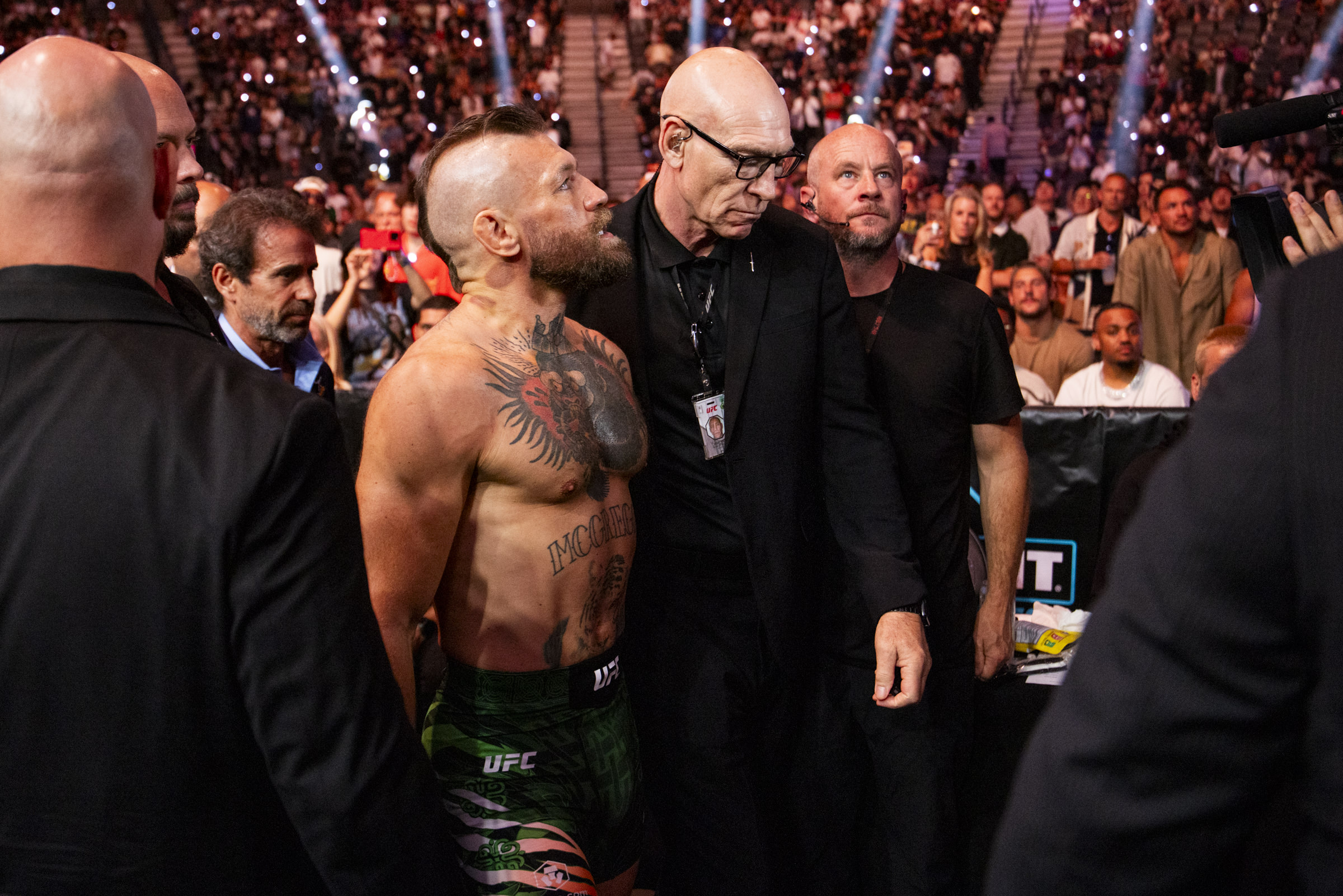
It wasn’t just a disappointment; it felt like a betrayal of the basic transactional premise: you pay, we deliver. The supposed centerpiece, a much-hyped rematch, unspooled into an anticlimax so swift and decisive it left a sour taste in the collective mouth. Conor McGregor, the sport’s audacious showman, went down without so much as throwing a meaningful punch, his leg seemingly betraying him almost immediately in his rematch with Max Holloway. It’s an abomination, I tell you. What a mess. What a disastrous attempt at a comeback. [QUOTE_PLACEHOLDER]
The roar of anticipation curdled into boos, a stark symphony for a fanbase that felt, quite rightly, swindled. We’ve watched McGregor’s career evolve from audacious ascent to a cautionary tale on the corrosive effects of fame. For years now McGregor’s life — and career have felt like a living parable on the dark side of fame. But this—this was a new nadir, being booed out of the same building that had cheered him just minutes earlier.
But while the main event stumbled, turning the marquee into a farce, other narratives wrestled for relevance on the undercard. Max Holloway, McGregor’s brief opponent, simply had to show up, wait for McGregor to topple like a Jenga tower, then collect his check. He didn’t have to cut weight. Can’t hate on the man for that. But please, spare me with that trilogy talk. Telling a crowd that just paid so much for tickets that they pushed the UFC to a record live gate that you plan to do it again in order to get that money? It’s like a restaurateur poisoning you — and then offering a repeat booking at full price. Read the room, big dog. The Las Vegas Athletic Commission reported the event’s live gate exceeded $20 million, setting a new non-heavyweight record for the promotion. For a record nothing fight, imagine that.
And then there was Paddy Pimblett. He really, really, really needed that. Not just a win, you see, but a dominant showing against a name opponent to silence the doubters. Benoit Saint Denis sure did his part to help, making what many saw as a baffling tactical decision. I can’t understand how someone could see Pimblett’s striking game in that Justin Gaethje fight back in January and then decide that the thing to do is shoot on him right away. Pimblett capitalizes on that one opening, and just like that, the hype train gets new steam. The matchmaking for a grudge match with Ilia Topuria now feels less like an option — and more like an inevitability.
Because there’s Gable Steveson. He’s a heavyweight, which helps, especially when the division often feels like it’s starved for athletic, coordinated talent. His win over the totally unheralded — and unknown Elisha Ellison brought his pro record to just 4-0. Every opponent he’s faced was a nobody, chosen for his sheer squash match potential. He hasn’t seen the final minute of a single first round, let alone a second. And yet… he does look good in there. He’s fast and athletic. He’s got a rapidly widening striking skillset to add to the wrestling skills he showed up with. We’ve not seen enough of him against credible opposition to declare him the next big thing, but the raw ingredients are undeniably there. You can’t keep setting him up with 20-1 odds forever, though. He’s going to have to face someone with a Wikipedia page soon.
But the true grit of the night belonged, perhaps unexpectedly, to Robert Whittaker. His foray into light heavyweight against Nikita Krylov felt initially like a mismatch—Just standing next to Nikita Krylov, it looked wrong. Whittaker, a middleweight fighting a light heavyweight, indeed got pushed around a little bit early on. He’s smaller, of course. Yet, he settled into the fight — and reminded us all that he’s still quite good at this fighting stuff. His speed — and precision made the heavier Krylov look clumsy and ponderous, ending in a fight-ending crack on the jaw. He can beat some of these light heavyweights. But this fight did show us that weight classes are probably there for a reason. Still, it’s fun to watch him try.
What This Means
The saga of UFC 329, especially its abrupt and unsatisfying main event, isn’t just about a spoiled Saturday night for fans; it’s a vivid microcosm of the broader economy of spectacle. When the product is pure entertainment, driven by personalities and narratives as much as athletic prowess, a sudden failure can reverberate financially and culturally. Think about the nascent sports industries in emerging markets, from Pakistan to Saudi Arabia, trying to attract global audiences and invest in grand sporting events. They eye the enormous revenues, like the aforementioned record live gate, — and imagine their own economic boom. But this event? It’s a harsh reminder that such ventures carry immense risk. Celebrity culture, particularly in regions where hero worship is deeply ingrained, needs constant reinforcement through success; a public collapse like McGregor’s, where a supposed legend barely lasts a minute, chips away at the mystique essential for selling the dream. It’s a bitter pill, serving as a cautionary tale for those hoping to build an entertainment powerhouse on charisma and fragile bodies alone. This isn’t just a bad fight; it’s an economic forecast, writ small but clearly, on the unreliability of individual celebrity to sustain massive investments.