


Alif Atoll: The Geopolitical Price of Paradise, Policy Wire Exclusive
POLICY WIRE — Islamabad, Pakistan — It wasn’t on most maps, wasn’t whispered among seasoned travelers, and certainly didn’t appear in the glossy brochures. Yet, for years, the...

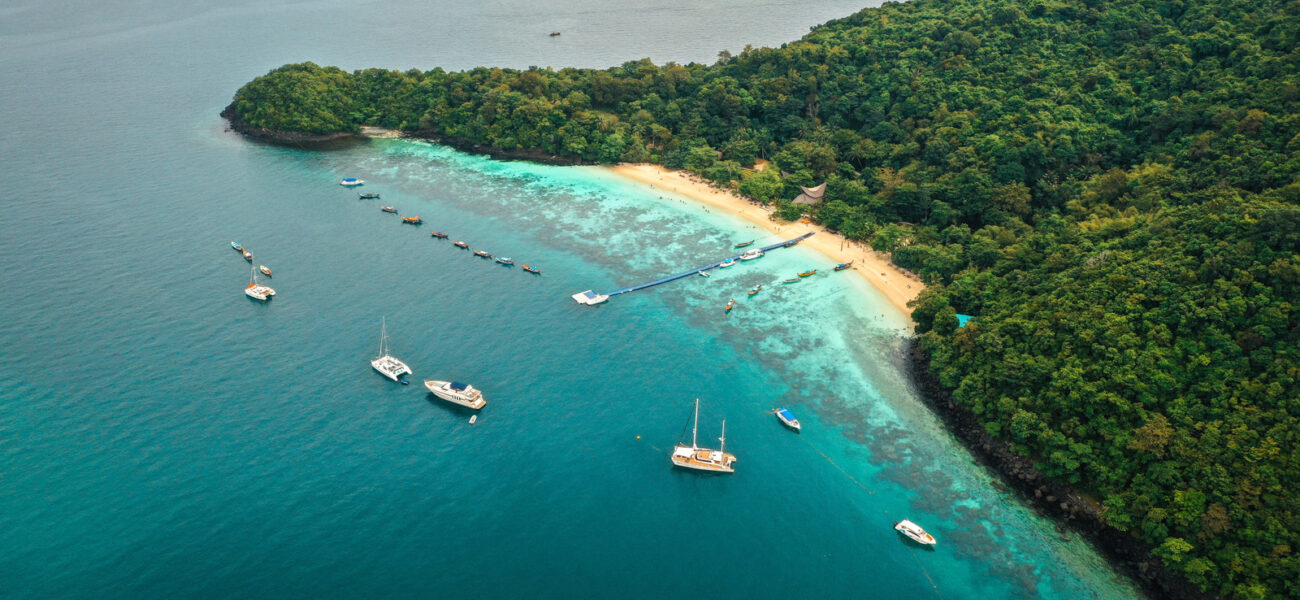
POLICY WIRE — Islamabad, Pakistan — It wasn’t on most maps, wasn’t whispered among seasoned travelers, and certainly didn’t appear in the glossy brochures. Yet, for years, the minute speck known only as Alif Atoll has existed—a stretch of unimaginable sapphire waters and sand so fine it defies description, an island paradise hiding in plain sight in the vastness of the Indian Ocean. Now, as intrepid — or perhaps, simply bored — globetrotters claim to have “discovered” Asia’s most pristine beach on this obscure, uninhabited islet, the real story emerging isn’t about natural beauty. No, it’s about strategic oversight, environmental fragility, and the awkward reality of what happens when a piece of geographic poetry suddenly enters the cold, hard world of policy.
It’s almost comedic, isn’t it? The planet, charted, mapped, parceled out, yet still holds secrets so compellingly simple. And because of that simplicity, this remote atoll becomes less a destination — and more a flashpoint. Its long-held obscurity wasn’t just happenstance. Its geographical isolation has always skirted ambiguous maritime zones, rendering it economically unappealing for development and politically complex for clear assertion of ownership by any single major power in the region—at least, not with open hands.
But the world, as it often does, is getting smaller. The global tourism sector, despite its recent wobbles, is projected by the World Travel & Tourism Council to contribute 11.4% to global GDP by 2034. That’s an enormous engine, always on the hunt for new, unexploited frontiers. And Alif Atoll, with its rumored teeming marine life and untouched terrestrial ecosystems, now represents precisely that kind of high-stakes frontier for nations desperate to diversify their economies and project influence.
“The allure of Alif Atoll isn’t just about untouched sands; it’s a complex equation of conservation, economic potential, and territorial oversight,” remarked Qamar Bashir, Pakistan’s Minister for Maritime Affairs, his voice betraying a hint of impatience with purely aesthetic concerns. “We’re not in the business of discovering new ‘paradises’ just for photo ops. We’re talking about sovereignty — and sustainable stewardship. That’s the real policy challenge.” He’s got a point. You don’t just ‘discover’ land in the 21st century; you accidentally stumble upon neglected geopolitical claims, don’t you?
For nations like Pakistan, navigating the volatile waters of the Indian Ocean is nothing new. With its deep-sea port of Gwadar strategically positioned, and its extensive coastline, maritime governance—whether for trade, defense, or increasingly, tourism—is a central plank of foreign and domestic policy. An ‘unclaimed’ or minimally managed piece of real estate, especially one rich in biodiversity like Alif Atoll, instantly becomes a headache, and perhaps, a potential opportunity.
“The irony is palpable,” noted Dr. Anya Sharma, a South Asian security analyst at the Royal Institute for International Affairs. “In an age where satellites map every desert dune and deep-sea trench, for an entire archipelago, however tiny, to remain genuinely ‘undiscovered’ by official policy—that’s a policy failure in itself, or, more darkly, a strategic oversight deliberately maintained until now. It shifts conversations, you know?” She meant it too, her expression dead serious. And she’s right; these ‘discoveries’ have a habit of doing just that, changing the game.
📄 POLICY WIRE WHITEPAPER PUBLISHED: PAKISTAN'S NATIONAL SECURITY POLICY PRIORITIES
👉 READ BY CLICKING HEREAnd because these remote locations are so pristine, they’re incredibly fragile. Uncontrolled tourism could wipe out the very beauty that draws people in. So, the question isn’t just ‘who owns it?’ but ‘who protects it?’ These are questions without easy answers, especially when there’s money on the line, and international prestige, for nations seeking to claim new tourist hotspots in an increasingly competitive global market. What looks like a holiday photo is actually a battle flag.
What This Means
The sudden prominence of a place like Alif Atoll, previously a mere footnote (if that) on maritime charts, isn’t about escapism; it’s a stark indicator of intensifying regional competition and environmental pressure in South Asia and the broader Indian Ocean. For Islamabad, or indeed New Delhi, Colombo, or Malé, any perceived shift in access or control over such a territory—however small—has immediate policy implications for naval patrols, resource rights, and even exclusive economic zones. It’s a land grab, essentially, albeit a slow-motion, subtle one framed by environmental preservation rhetoric and tourism potential. the imperative to ‘protect’ such a delicate ecosystem could easily be leveraged by nations to establish or expand maritime jurisdiction, setting precedents for other ambiguous territories. Expect an uptick in ‘scientific expeditions’ — and ‘ecological surveys’ from various regional players. It’s not about the sand, it’s about the sea around it, the routes nearby, — and who gets to call dibs. Expect diplomacy to get surprisingly intense over a place most people couldn’t find on a globe yesterday. The tranquil blue waters hide turbulent political currents.
Discoveries like Alif Atoll also put a spotlight on the wider challenges of regional stability. In a zone already fraught with geopolitical tensions, adding a new, previously undelineated parcel of land only complicates matters. This isn’t just about tourists; it’s about power projection and control in an increasingly interconnected and resource-scarce world. Suddenly, a tiny piece of paradise could become a pawn in a much bigger game. Or it could be a chance to rewrite some rules, finally, to truly commit to international collaboration over conservation, free from the usual squabbles.