


Three Lions, Sixty Years: England’s Persistent Pursuit of Elusive Glory
POLICY WIRE — London, England — They say England invented the beautiful game. Yet, the nation’s enduring relationship with football’s highest honor, the World Cup, often feels more like a cruel,...

POLICY WIRE — London, England — They say England invented the beautiful game. Yet, the nation’s enduring relationship with football’s highest honor, the World Cup, often feels more like a cruel, protracted flirtation than a passionate embrace. For a country that consistently casts itself among the elite, its record on the biggest stage offers a starkly less romantic truth—a truth brought into sharp relief as the Three Lions once again claw their way into the semifinals.
It’s not just a game; it’s a national obsession, a repository for collective hope and, more frequently, profound disappointment. This year, the 60-year anniversary of England’s last World Cup trophy in 1966 looms large. Think about that for a moment: sixty years. Most of the globe’s population wasn’t even born then. But this isn’t about just dusty records or sepia-toned memories.
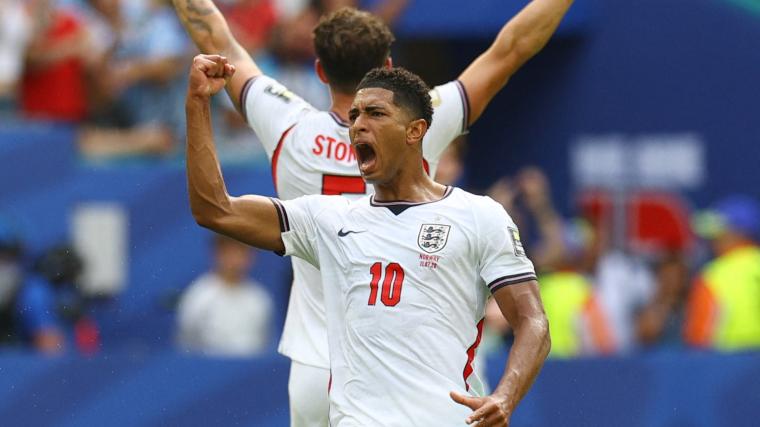
Because England’s latest surge into the final four, secured with a hard-fought 2-1 extra-time win against Erling Haaland’s Norway—fueled by two Jude Bellingham goals, mind you—isn’t simply a sporting narrative. It’s a recurring drama that speaks to deep-seated cultural anxieties and, if one looks closely, echoes in political and economic arenas. We’re constantly told England has [QUOTE_PLACEHOLDER] one of the best national soccer teams in the world. And yet, this isn’t exactly matched by sustained global dominance. Its trophy cabinet, compared to, say, Brazil or Germany, feels rather… understocked. That chasm between self-perception — and empirical reality is fascinating, don’t you think?
Their historical journey through World Cup semifinals has been less a triumphant march — and more a tentative shuffle. Historical football records show that throughout their World Cup history, England has reached three semifinal matches. In those games, the Three Lions have achieved a 1W-0D-2L record. One win. One. That’s an almost brutal efficiency of failure on the precipice of glory.
Let’s cast our minds back. Not to some distant, forgotten tournament, but just six years ago. The last time England was in the World Cup semifinals came at the 2018 tournament in Russia. That year, they faced Croatia, [QUOTE_PLACEHOLDER] many didn’t take too seriously prior to the tournament. But doesn’t that always seem to be the case when England plays? The narrative often involves an underestimated opponent suddenly morphing into an unstoppable force.
England did score first, as you’ll recall, thanks to a stunning free kick from Kieran Trippier in just the fifth minute of play. The right back unleashed a curling beauty that made a beeline straight to the top-right corner of Croatia’s net. A moment of pure, unadulterated hope. Then, the inevitable began its slow creep. England led until the 68th minute, when Ivan Perisic equalized for the Croatians. From this moment on, the match became a lot tighter, and Croatia held England scoreless for the duration of the match. And in the 109th minute of extra time, the axe fell. Mario Mandzukic darted down the inside of England’s box and notched the game-winning goal to break the Three Lions’ hearts.
It’s a story told too often in English football. Near misses. Glorious failures. Heartbreak. It’s a psychological narrative that pervades—a lingering question mark over the country’s capacity to truly close out monumental moments. Contrast this with the unflappable demeanor expected on the global stage from, say, Germany, a nation which despite its own modern complexities still projects an image of unwavering competence, a sort of efficient finality. England, conversely, tends to invent novel ways to snatch defeat from the jaws of a plausible victory, sometimes with a theatrical flourish that would make Shakespeare proud.
📄 POLICY WIRE WHITEPAPER PUBLISHED: PAKISTAN'S NATIONAL SECURITY POLICY PRIORITIES
👉 READ BY CLICKING HEREAnd because the team now awaits the winner of Saturday night’s Argentina vs. Switzerland match, their path to potential glory remains as uncertain as ever. It’s a path laden with expectation, burdened by a history that’s both sparse in victory and rich in agonizing near-triumphs.
What This Means
Beyond the simple ebb and flow of a football tournament, England’s World Cup saga speaks volumes about national identity, soft power, and the weight of legacy. The incessant clamor for sporting glory isn’t just about entertainment; it’s a symbolic barometer for a post-colonial nation still navigating its place in a complex, multipolar world. Just look at the millions in South Asia—from Lahore to Mumbai—who passionately follow English football. Their fervor isn’t just for the skill on display, but often, subtly, for the enduring cultural footprint of a former imperial power. The successes and failures of these English teams are vicariously experienced globally, shaping perceptions of resilience, competence, and even humility.
This enduring footballing struggle, this perpetual striving that culminates in predictable semi-final exits or agonizing defeats, offers a peculiar lens through which to view England’s broader policy challenges. It’s not unlike the often-complex, drawn-out negotiations surrounding trade agreements or the seemingly Sisyphean task of finding consensus on pressing international issues. There’s a perceived status, an assumption of leading global roles, but often, the actual execution proves more arduous, filled with unforeseen hurdles and eleventh-hour reversals.
From an economic standpoint, the deeper England progresses, the greater the intangible boost to national morale—a psychological shot in the arm that can, however fleetingly, translate into consumer confidence or a temporary distraction from pressing domestic issues. Conversely, a heartbreaking defeat—a specialty of theirs—can cast a pall that lingers, much like a protracted economic downturn or an ill-conceived foreign policy venture. These aren’t mere games; they’re microcosms of national narratives, playing out on a meticulously manicured patch of grass for a global audience. The expectation is immense; the delivery, more often than not, falls just shy of the spectacular. It’s an inconvenient truth that, sixty years on, still haunts the English game, — and perhaps, the English psyche itself.