


Sacred Matchmaking: When Love’s Pursuit Puts Monks on the Hook
POLICY WIRE — Colombo, Sri Lanka — Monks are usually occupied with contemplation, chanting, and the pursuit of nirvana. But even the serene cloisters of a Buddhist temple aren’t immune to the...

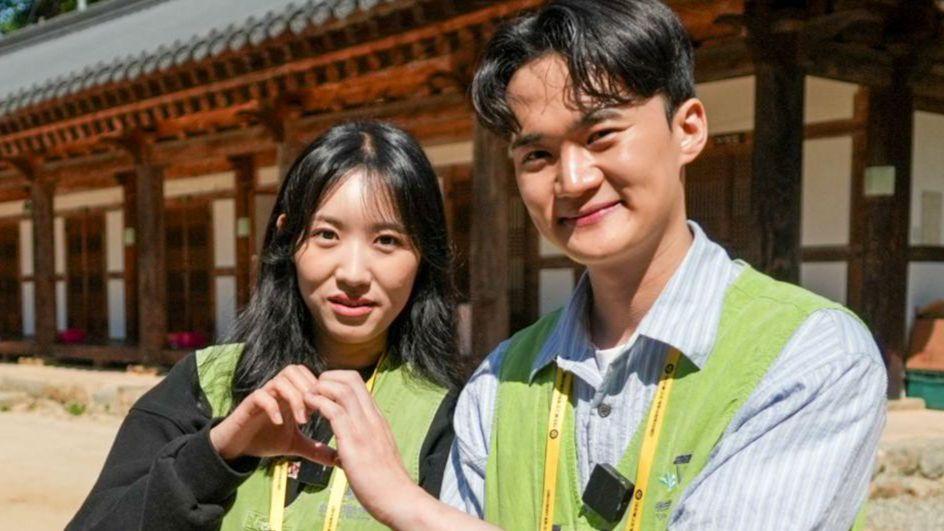
POLICY WIRE — Colombo, Sri Lanka — Monks are usually occupied with contemplation, chanting, and the pursuit of nirvana. But even the serene cloisters of a Buddhist temple aren’t immune to the relentless, often peculiar, demands of modern life. Turns out, finding ‘the one’ has become such a collective headache that two dozen souls—twelve men and twelve women, mind you—have reportedly sought divine intervention in a manner most unconventional: by asking saffron-robed ascetics to help them find spouses. Yes, you read that right. Matchmaking monks. It’s quite the pivot from spiritual guidance, wouldn’t you say?
This isn’t some quirky spiritual retreat; it’s a stark reflection of societal shifts reverberating across Asia. Gone, or at least greatly diminished, are the days of traditional arranged marriages or casual meetups in village squares. Now, economic pressures, career aspirations, and an increasingly isolating digital existence have left many adults—particularly in the 30-to-45 age bracket—struggling to connect. Because, frankly, who’s got the time anymore?
Dr. Anil Sharma, a leading sociologist at the South Asian University in New Delhi, wasn’t entirely surprised by the temple’s novel approach. “Societies across the subcontinent, from bustling Dhaka to modern Mumbai, are experiencing profound changes in courtship rituals,” he told Policy Wire. “Families are shrinking, communities are atomizing, and the expectations placed on a life partner have grown exponentially. We’re seeing a global trend, really, where informal networks are dissolving, forcing people to seek out alternative avenues for companionship. Sometimes, it means apps. Other times—and this is genuinely fascinating—it means a pilgrimage to an unlikely source of relationship advice.” Sharma elaborated, explaining how traditional support systems, often familial or communal, have weakened. But his gaze also extended to a broader canvas, suggesting this phenomenon isn’t solely confined to predominantly Buddhist nations. “Consider our neighbors in Pakistan or the broader Muslim world, where conservative societies are grappling with evolving gender roles and dating norms; the solutions they seek might differ culturally, but the underlying anxieties over finding a suitable partner are strikingly similar across diverse faiths.”
The temple’s involvement, while perhaps born of a community’s quiet desperation, presents a fascinating moral quandary for religious institutions. Are they simply filling a void left by disintegrating social structures, or are they—consciously or not—commercializing spiritual spaces? The answer isn’t clear-cut. For participants, the temple offers a perceived layer of sanctity and trust, something often lacking in the rough-and-tumble world of online dating. And for the monks? Well, it’s an exercise in compassion, apparently. Even if it does feel a bit like spiritual speed-dating.
The specifics of the temple’s program remain shrouded in that delightful mix of mystique — and mundane paperwork. Do they perform compatibility assessments? Is there an ‘enlightenment quotient’ required for entry? One can only imagine the selection criteria. What’s clear is that the organizers are trying to foster connections built on more than superficial attraction, presumably through shared spiritual practices or—gasp!—actual conversation.
“We’ve always been a sanctuary for our community, offering guidance on life’s biggest challenges,” remarked Minister of Cultural Affairs, Anya Perera, in a surprisingly candid off-the-record chat. “And what’s a bigger challenge these days than finding a compatible life partner? We don’t necessarily endorse a religious institution taking on the role of a marriage bureau, but you can’t fault the sentiment, can you? It’s an interesting—if somewhat unusual—example of community adaptation.” It’s a pragmatic, if not entirely conventional, stance from an official whose portfolio usually concerns ancient artifacts, not modern love lives.
📄 POLICY WIRE WHITEPAPER PUBLISHED: PAKISTAN'S NATIONAL SECURITY POLICY PRIORITIES
👉 READ BY CLICKING HEREBut how deep does this trend go? A recent survey conducted by the Asian Demographics Institute indicates that in several South Asian nations, the median age for first marriage has risen by an average of 3.2 years over the past two decades. That’s a substantial shift, meaning more single adults navigate longer periods of their lives alone, often battling societal pressures and evolving economic realities that make traditional courtship difficult. It’s not just a personal struggle; it’s a demographic challenge with wide-ranging implications, a phenomenon touched upon when discussing topics like Asia’s fissured trade routes and their impact on globalized lifestyles.
What This Means
This unlikely tale of spiritual matchmaking isn’t just an oddity; it’s a symptom of deeper societal restructuring with considerable political and economic ripples. When traditional family structures and community networks—long considered the bedrock of social stability—begin to fray, governments and non-state actors alike step in, sometimes in unexpected ways. For governments, a declining birth rate (often linked to later marriages) means future labor shortages and strains on social welfare programs. It also implies a weakening of community ties that historically served as informal safety nets. And this situation is certainly forcing the conversation about how policymakers address demographic shifts and cultural preservation, alongside fostering healthy societal development.
Economically, the rise of such unconventional matchmaking services, or even the underlying desperation they address, points to shifting consumer behaviors. More resources might be poured into personal development, psychological support, and novel dating platforms—even those managed by religious entities. But there’s a risk too. A government could, for instance, see this as an opportunity to brand or subsidize such cultural initiatives, merging spiritual spaces with public policy goals in ways that might make some uncomfortable. For instance, imagine a future where a nation’s tourism board advertises ‘spiritual matchmaking retreats’ alongside ancient ruins. It’s a blurred line, isn’t it? A society that pushes its citizens to seek love advice from celibate monks—it tells you quite a bit about the world we’ve built for ourselves.