

Orioles’ Measured Dominance: A Glimpse into the Nuances of Modern Athletic Capitalism
POLICY WIRE — Baltimore, USA — One could certainly do worse than spending a late summer evening watching a predictable win unfold. It’s a feeling—a certain quiet confidence—that eludes many,...

POLICY WIRE — Baltimore, USA — One could certainly do worse than spending a late summer evening watching a predictable win unfold. It’s a feeling—a certain quiet confidence—that eludes many, particularly those invested in volatile endeavors, whether they’re sports franchises or emerging market economies. Saturday night’s encounter between the Baltimore Orioles and the Kansas City Royals at Oriole Park offered just such a peculiar brand of assuredness, a commodity rarer than a no-hitter in today’s high-stakes landscape. The final score, a seemingly innocuous 6-1, masked an underlying strategic exercise in managed power, the kind accountants might appreciate.
Kyle Bradish, the Orioles’ right-hander, provided a pitching demonstration that, for all its occasional moments of precariousness, proved astonishingly effective. He nearly achieved the ultimate solo distinction, taking a no-hitter into the seventh inning—a singular feat for any hurler. His stuff wasn’t electric, not his absolute best, even. And his velocity was down slightly. His whiff rate (20%) — and strikeout rate (five across 6.2 innings) were also less than career-defining. But the Royals struggled to square the ball up. This, observed veteran baseball scribes, is the mark of a top tier pitcher: to turn in an impressive showing with less-than-ideal stuff. It’s an exercise in maximizing limited resources, a perennial challenge for policymakers globally, navigating complex variables with imperfect tools. [QUOTE_PLACEHOLDER]
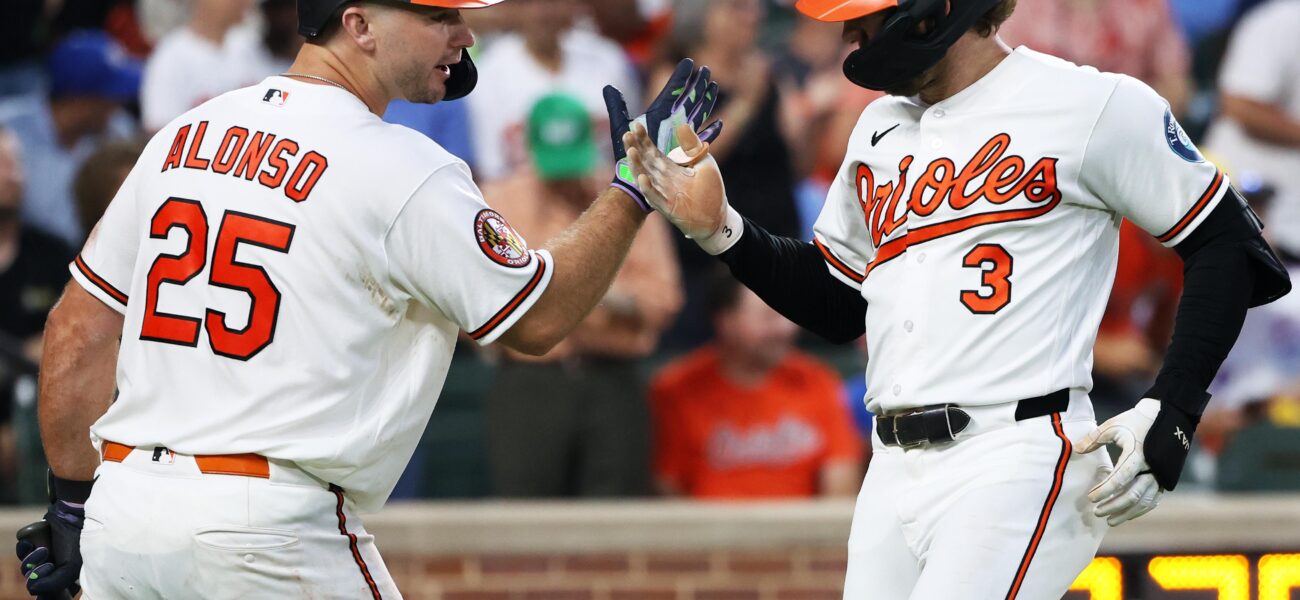
On the other side of the ledger, the Orioles’ bats orchestrated a clinic in efficient, almost clinical, power. They bashed a quartet of home runs, scoring five of their six runs through this explosive, if economically concentrated, method. They had just one at-bat with a runner in scoring position — and cashed in on that single opportunity. Pete Alonso connected for his 21st long ball of the season, a two-run shot in the fourth. Coby Mayo, demonstrating an almost gravitational pull toward high-velocity contact, launched a ball 440 feet at 110.4 miles per hour for his 12th homer. The approach speaks to a specific modern baseball philosophy: optimize for the grand, rather than the granular.
But the true marvel—or perhaps, the subtle commentary on consistency—lay in the collective psyche of the club. The original internal analysis, seen by this outlet, describes it as an odd sensation to watch this team play a relatively easy game like this. They were in control throughout, and it never felt like things were about to go sideways. It was a novel experience for many long-suffering Baltimore faithful, usually accustomed to more dramatic, often frustrating, twists. And, on top of that, the Orioles gained a full game in the wild card race tonight. Their season ERA, a measure of pitching effectiveness, is down to 3.61, the lowest it has been since May 31, according to official league statistics. This metric alone offers a glimmer of sustained improvement, a sort of measured, rather than meteoric, rise.
What This Means
This kind of contained dominance, a blend of pitching efficiency and power-hitting selectivity, offers a peculiar parallel to global economic and political dynamics. Teams, much like nation-states, strive for stability while constantly battling internal inconsistencies and external pressures. The Orioles’ front office, spearheaded by figures like Mike Elias, explicitly engineered this lineup was designed to win with power. And sometimes they’ve nights like this and make it very easy to understand what all of the spreadsheets and analysis were illustrating to Mike Elias back in the winter. It’s a stark reminder that even in competitive arenas, data-driven decisions underpin what appears, on the surface, to be mere athleticism.
Consider the strategic implications: the calculated reliance on home runs isn’t just about spectacle; it’s about reducing variables, simplifying outcomes. In a globalized marketplace, nations similarly seek to control the terms of engagement, often through technological leverage or by dominating specific industries. For the Orioles, this involves generating those ‘three true outcomes’—home runs, walks, or strikeouts—that streamline an offensive approach, minimizing the chaotic potential of balls put in play.
And then there’s the broader narrative of anticipation. The Orioles find themselves just one game out of a playoff spot, fueled by the win tonight also made it three in a row. They’re yet to win four in a row this season. This quest for sustained momentum—breaking past the current ceiling of three consecutive wins—resonates beyond the diamond. Nations across the Muslim world, and indeed across South Asia, often grapple with similar ‘streaks’—of economic growth, political stability, or social progress—that hesitate at a critical threshold. They need to turn momentary successes into enduring trends. Pakistan, for instance, frequently faces periods of reform and economic uplift, only for historical patterns or geopolitical headwinds to interrupt the sustained trajectory.
If they reach that threshold on the final day before the all-star break, it will give all of us some very different vibes with trade season on the horizon. This speaks to the financialization of success in modern sport. Beyond the pure competitive drive, a sustained winning streak ignites consumer interest, justifies higher valuation for player assets, and strengthens the brand, feeding the insatiable appetites of an economy that sees everything, from sports heroes to nation-states, through a transactional lens. But the psychological component? It’s just as real. Just ask those fans—or, perhaps, the electorates in emerging democracies like India—craving a taste of unburdened, consistent triumph. Kiwi Diplomacy Lands India Pact Amidst Geopolitical Chessboard illustrates the constant jockeying for position that extends beyond the field of sport, underscoring the universal aspiration for a ‘smooth win’ that holds for more than just one Saturday night.