

The Global Grind: Alpinestars Toucan, Adventure Gear, and Asia’s Economic Contours
POLICY WIRE — Milan, Italy — Another specialized piece of gear enters the fray, promising imperviousness to the elements, an unspoken pact between human aspiration and engineered durability. It...

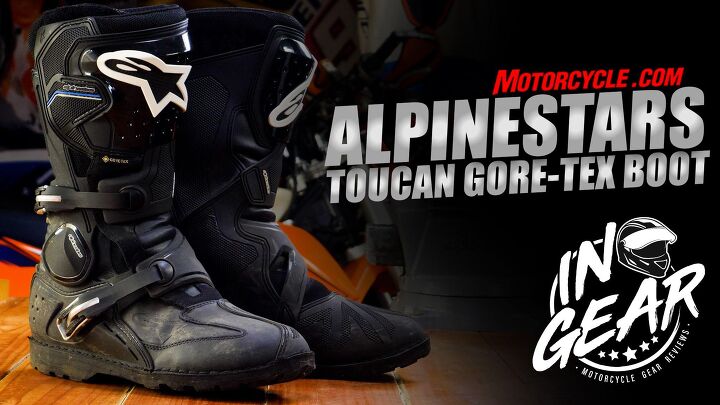
POLICY WIRE — Milan, Italy — Another specialized piece of gear enters the fray, promising imperviousness to the elements, an unspoken pact between human aspiration and engineered durability. It isn’t just about a pair of boots, not really. It’s about a highly specific, niche desire, manifesting as a complex product — a product that, in its journey from concept to consumer, traces some surprisingly intricate geopolitical and economic lines, far removed from any mountain trail or dusty desert road it might eventually tread.
One might scoff, but these things don’t materialize out of thin air. They’re the product of vast supply chains, design philosophies honed in the chill of Northern Italy, and materials sourced globally. But here’s the rub: for all their high-tech, GORE-TEX promises, the sheer effort required to get these very particular boots to the eager adventurer somewhere in Europe or North America, that effort often echoes through labor markets in places many wearers can only imagine.
It’s this often-unseen infrastructure that keeps the adventure alive, fueling the myth of unfettered exploration. You’ve got companies like Alpinestars, originating in the boot-making heartland of Asolo, Italy. They’ve long since transcended their local origins, becoming global juggernauts in motorsports — and outdoor gear. And yet, the underlying manufacturing processes, the precision stitching, the complex assembly, frequently pull on an Asian workforce. For instance, the demand for sophisticated textile components, coupled with competitive labor costs, has meant countries like Pakistan and its neighbors in South Asia are integral to this global ecosystem. We’re not talking about just basic items; it’s about skilled labor crafting complex technical garments and, yes, advanced footwear.
But the road from conception to execution is seldom smooth, especially when dealing with such exacting standards. They’re designing for resilience, after all—to withstand whatever Mother Nature, or a particularly spirited motorcycle, throws at you. You might expect some sort of profound revelation about their comfort, maybe about how their [QUOTE_PLACEHOLDER] offers [QUOTE_PLACEHOLDER] but the real story, the one you don’t always hear, lies in the material science and logistics. Because of the sophisticated layers and specialized membranes, like GORE-TEX, the component supply often means coordinating diverse global facilities.
The manufacturing process itself is no small feat. Getting those GORE-TEX liners integrated perfectly? That requires precision engineering, skilled hands, — and rigorous quality control. For the discerning rider, the claim that the Toucan offers [QUOTE_PLACEHOLDER] or provides [QUOTE_PLACEHOLDER] are statements of absolute faith in a supply chain stretched across continents. We’re discussing a world where raw materials might traverse oceans multiple times before they coalesce into a finished product, reflecting how thoroughly globalized manufacturing has become, even for such specialized niche items. The finished boots then enter the global distribution networks, often via hubs that represent significant, albeit unsung, nodes in worldwide trade infrastructure.
Consider the broader context, too. This isn’t just about protecting a rider’s feet; it’s also about a lifestyle, an industry built on dreams of freedom and the open road. Riders expect their gear to perform, come hell or high water, whether they’re tackling Himalayan passes or traversing the deserts of Arabia. The marketing is steeped in rugged individualism, but the reality? It’s a collective effort of thousands, often in unseen factories, supporting a singular journey. We expect the gear to just *work* — and for that, a meticulous process has to unfold. And for all the discussion of what it’s like to wear them, or their ability to offer [QUOTE_PLACEHOLDER] in severe conditions, it’s the underlying economic forces that allow these products to exist and thrive.
📄 POLICY WIRE WHITEPAPER PUBLISHED: PAKISTAN'S NATIONAL SECURITY POLICY PRIORITIES
👉 READ BY CLICKING HEREAnd let’s not forget the sheer economics of it. The global motorcycle gear market, for instance, reached a valuation of approximately $10.5 billion in 2022, according to reports by Grand View Research. That’s a staggering sum for something many might consider a recreational accessory, underlining a robust global consumer appetite. This financial weight ensures that companies invest heavily in R&D and manufacturing optimization, perpetually chasing that perfect blend of protection, comfort, and, yes, a certain rugged aesthetic. It’s a pursuit of perfection that impacts trade policies and manufacturing standards across the world, directly affecting how high-tech footwear reaches global consumers.
Then there’s the inevitable question of comfort — and wearability. When the boot is described as offering [QUOTE_PLACEHOLDER] or providing [QUOTE_PLACEHOLDER] it hints at extensive user testing and iterative design. They’re trying to marry industrial strength with ergonomic finesse. But, candidly, every rider has their own anatomy and preferences; what works for one person’s trekking tariffs and biomechanics might not for another’s. Ultimately, even with sophisticated construction, the real test of something like the Toucan Gore-Tex boots only comes on the road, miles away from the initial product brief or the factory floor where its very intricate sole was molded.
It’s a story of expectation, then, meeting the grind of reality—both in product development and real-world application. No gear review truly captures the breadth of effort involved, the global dance of capital and labor, to deliver something so deceptively simple as a boot that’s designed to keep your feet dry and safe, anywhere on the planet. And frankly, that’s just fine with most riders. They care about the performance, not the economics. But someone has to. Someone always does.
What This Means
The humble motorcycle boot, particularly one as specialized as Alpinestars Toucan Gore-Tex, serves as a surprisingly potent symbol for the intricate webs of globalized commerce and shifting political economies. From an economic standpoint, it highlights the ‘designer’ origins in high-cost labor markets (like Italy) while leveraging the cost efficiencies and manufacturing capabilities of developing nations, especially in South Asia. This geographic dispersal isn’t just about cost savings; it’s about access to specialized industrial skills, particularly in textile and leather industries that have historical roots in countries like Pakistan. The supply chain itself becomes a barometer of geopolitical stability and trade relations; any friction, say in maritime shipping lanes or through specific tariffs, directly impacts the availability and cost of components or the finished product. These boots aren’t just bought for adventure; they reflect a consumption trend driven by disposable income in developed economies, whose fulfillment ironically depends on a tightly coordinated, often invisible, network of labor and resources drawn from regions whose political landscapes are often in flux. It also demonstrates the economic elasticity of high-end consumer goods — people will pay a premium for specialized performance, cushioning them, at least personally, from the raw economic realities of global production. The implicit understanding is that comfort — and protection come at a global, interconnected price.