

Silent Microbes, Global Institutions: Guggenheim’s Unintended Legacy
POLICY WIRE — New York City, USA — The spiral ramp of Frank Lloyd Wright’s Guggenheim Museum isn’t typically seen as a potential breeding ground for infectious agents. Nor are the grand, aspirational...

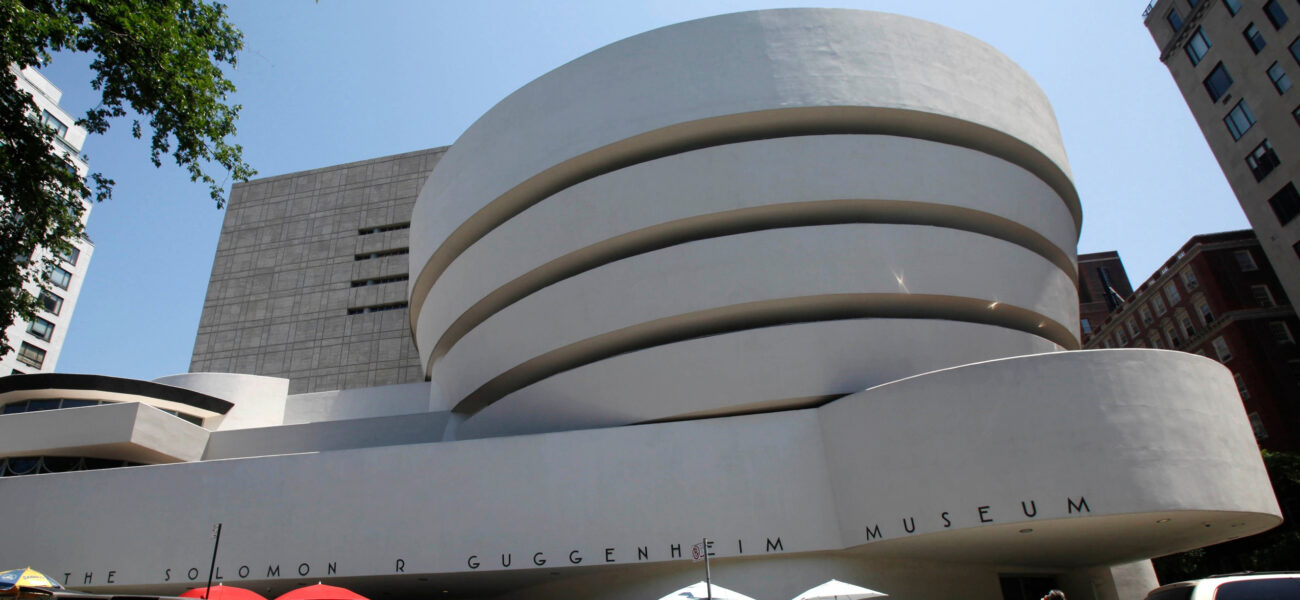
POLICY WIRE — New York City, USA — The spiral ramp of Frank Lloyd Wright’s Guggenheim Museum isn’t typically seen as a potential breeding ground for infectious agents. Nor are the grand, aspirational facades of other esteemed Manhattan institutions. But when microscopic life intervenes, architectural majesty means precisely nothing. The news isn’t about some bold new acquisition or a groundbreaking exhibition. Instead, it’s a quieter, more insidious story: New York City’s cherished cultural landmarks, among other buildings, have found themselves in the unglamorous spotlight of a public health scare, testing positive for the very bacteria that causes Legionnaires’ disease. It’s a sobering reality check for a city that prides itself on perpetual motion — and resilient defiance.
Nobody expects a modern art museum—an icon of human ingenuity and artistic ambition—to become entangled in an outbreak of a potentially fatal respiratory illness. Yet, the bacterium, Legionella pneumophila, doesn’t discriminate between a forgotten HVAC unit in a dusty warehouse and the cooling towers perched atop a globally recognized architectural marvel. The sheer banality of the problem—malfunctioning or inadequately maintained water systems—stands in stark contrast to the extraordinary stature of the buildings implicated. We’re talking about institutions that pull in millions of tourists annually, symbols of peak human achievement. And now, they’re just another part of the municipal plumbing system under scrutiny.
It’s an awkward narrative for a city constantly marketing its vibrant urban life. But when you scratch beneath the surface of soaring skyscrapers and bustling avenues, the foundations are still, well, foundational. The city’s health department, bless their methodical hearts, initiated an investigation. They’re doing what they’re supposed to do. There was a declared disease outbreak, you see, a cluster of pneumonia cases attributed to the notorious bacteria. The exact scale of public exposure remains nebulous—they say [QUOTE_PLACEHOLDER], and that’s their line. But consider the implication: how many people, how many unknowing visitors, staff, and contractors, have inhaled aerosolized water droplets from cooling towers? It’s not a question you’d ask when admiring a Kandinsky.
The situation isn’t isolated. It rarely is in a sprawling metropolis. We’re told the Guggenheim is among NYC buildings that tested positive for Legionnaires’
. This isn’t a one-off structural failing; it points to a wider urban vulnerability. One might recall similar environmental challenges in cities across the globe. Think about the struggles to ensure potable water or maintain effective waste management in rapidly expanding urban centers like Karachi or Lahore. Their challenges are often seen as systemic issues of developing nations, rooted in limited resources and governance gaps. But here, in the world’s financial and cultural capital, it’s a stark reminder that even the most advanced urban environments aren’t immune to the basics of public health infrastructure, and sometimes, those systems get overlooked. We’re all just fragile beings breathing the same air, sometimes from the same unfortunate aerosols.
Because, really, what’s more alarming? A museum that briefly closes for renovation, or one that quietly harbors invisible pathogens? There’s an expectation of safety in these public spaces, a tacit agreement that the air conditioning won’t double as an invisible menace. New York City, a global hub, draws people from every corner, including a significant influx of tourists and business travelers from South Asia and the Muslim world. They arrive seeking opportunity, culture, — and connection. Any whisper of a health risk, however contained, can ripple far beyond city limits, subtly eroding the perception of safety and cleanliness vital to a tourism-dependent economy.
📄 POLICY WIRE WHITEPAPER PUBLISHED: PAKISTAN'S NATIONAL SECURITY POLICY PRIORITIES
👉 READ BY CLICKING HEREThe city’s health department records indicate approximately 10,000 cases of Legionnaires’ disease were reported to CDC in 2018
, with that figure likely underestimating the true incidence nationally. In New York, the local data fluctuates, but the presence of any active clusters signals that the threat is persistent. It isn’t going away on its own. Regulators here in New York demand strict maintenance of building cooling towers—those massive, often unseen units on rooftops that cool entire structures. When maintenance lapses, or when environmental conditions are just right, the bacteria can bloom. It’s a perennial fight against an invisible enemy, demanding constant vigilance from building owners — and operators. Or, you know, things like this happen.
What This Means
The discovery of Legionnaires’ bacteria within one of New York’s signature institutions isn’t just a localized public health footnote; it’s a loud clang in the ongoing, often silent, discourse about urban resilience and infrastructure integrity. Economically, even the specter of a disease outbreak, regardless of its ultimate scale, can introduce an element of hesitation for international tourists and conference organizers. We’ve seen how global crises can ripple through cultural institutions, affecting visitor numbers and sponsorships. But this is more personal, more immediate. When your vacation itinerary potentially includes a microscopic health risk, confidence wanes. It forces city administrations, especially in high-density areas, to confront the mundane reality that world-class status isn’t solely built on glittering skylines but on meticulously managed plumbing and air systems. Failures here compromise a city’s competitive edge just as surely as rising crime rates or crumbling subways.
Politically, incidents like these can provoke questions about oversight — and accountability. Who’s responsible when a landmark becomes a vector? Building codes exist, but enforcement is another beast entirely—one often underfunded and overburdened. For a city that projects an image of cutting-edge efficiency, finding its premier cultural assets implicated in such an outbreak isn’t just embarrassing; it’s a tangible blow to its global brand. It also inadvertently spotlights disparities: if even institutions with significant resources are susceptible, what does that say about less glamorous buildings? And how do similar urban environments, from London to Dhaka, manage these ceaseless battles against invisible threats?
And yes, the global lens. Countries like Pakistan, battling their own endemic health challenges, often look to established Western democracies for benchmarks in public health governance. When a sophisticated city like New York grapples with an easily preventable environmental disease, it presents a complex picture. It highlights that the fight against disease isn’t exclusively a ‘developing world’ problem, nor is it ever definitively ‘won.’ Public health is a constant, expensive, and often thankless grind. But it’s also absolutely essential, particularly for the global reputation and continued economic dynamism of a city that lives by its visitors. They come to admire the art, not the bacteria.