
Venice’s Brush with Politics: Biennale Funding Hangs in Ukraine’s Shadow
POLICY WIRE — Venice, Italy — History, it seems, isn’t just written by victors; it’s curated by them, too. Especially when the lights are on Europe’s oldest — and most prestigious cultural...

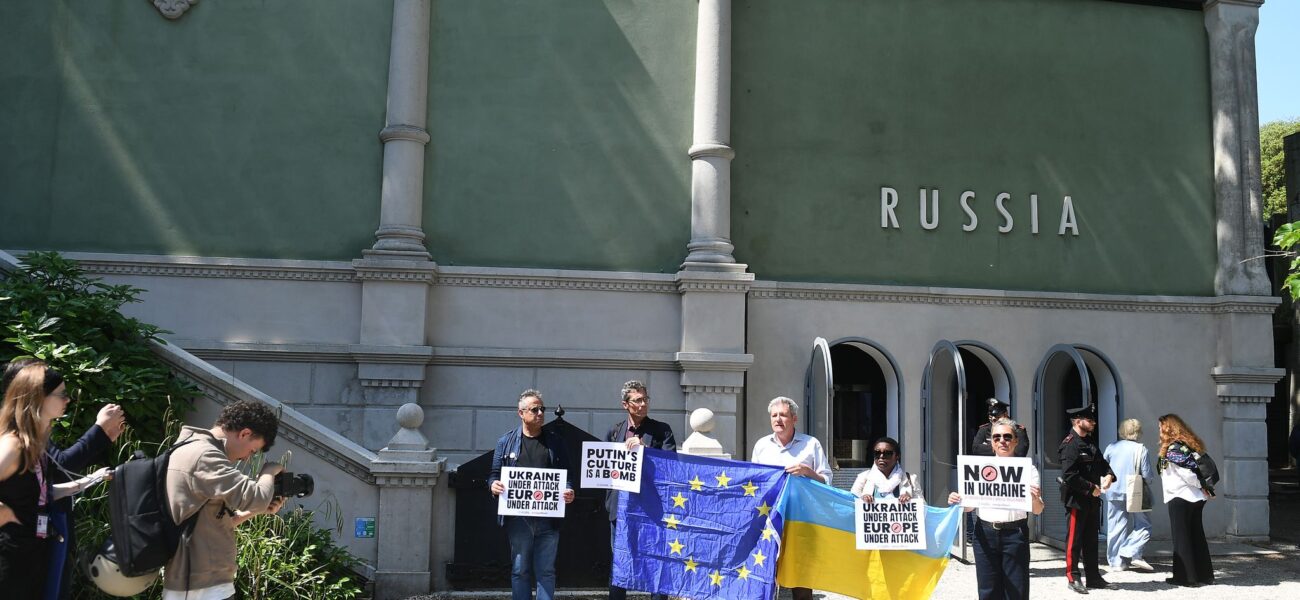
POLICY WIRE — Venice, Italy — History, it seems, isn’t just written by victors; it’s curated by them, too. Especially when the lights are on Europe’s oldest — and most prestigious cultural showcase, the Venice Biennale. What started centuries ago as a serene celebration of global artistic expression has, inevitably, found itself entangled in the grubby gears of geopolitical maneuvering. And now? Brussels, with its often heavy hand, is making it quite plain: artistic neutrality, when Russian tanks are rolling, isn’t exactly in vogue.
The murmurs turned to outright demands. EU officials have, with characteristic bureaucratic efficiency, suggested that continued financial support for the Biennale is contingent upon a clearer stance regarding Russian participation. Not necessarily outright bans on individual artists—that’s a sticky wicket—but a moral alignment, a performative solidarity that some argue goes beyond the arts’ remit. It’s no longer just about paint on canvas or a provocative installation. Now, it’s about a cold, hard line in the sand, drawn with taxpayer euros.
“Cultural institutions receiving European funds can’t operate in a moral vacuum,” stated Eleonora Rossi, a rather forthright spokesperson for the European Parliament’s Committee on Culture and Education, her voice resonating through a virtual press briefing. “We expect—and indeed, our citizens demand—that entities benefiting from the Union’s coffers reflect the Union’s values. And those values don’t, currently, include business-as-usual with an aggressor nation. This isn’t censorship; it’s principled engagement.”
But what does ‘principled engagement’ actually mean for the grand old dames — and dappers of the art world? For the Venice Biennale, which has prided itself on being a global cross-section, it presents a conundrum. Giuseppe Mancini, the somewhat exasperated President of the Venice Foundation for Artistic Heritage, offered a different take. “The Biennale has always been a forum for dialogue, sometimes difficult dialogue. Shutting doors, silencing voices—even those we fundamentally disagree with—it fundamentally changes what we’re,” he mused, leaning into the mic during a local radio interview. “Our role isn’t to enforce political boycotts. It’s to present art. Full stop. Funding cuts risk making us a tool, not a mirror.”
The stakes are higher than mere artistic debate. The EU’s Creative Europe programme, a significant financial engine for cultural activities across the continent, holds a colossal budget of EUR 2.4 billion for 2021-2027. Venice undoubtedly dips its cup into that well. For the Biennale, losing even a fraction of such patronage could mean rethinking ambitious projects, curtailing outreach, or—God forbid—shrinking its notoriously complex logistical footprint. And nobody wants to see that. It’s a pragmatic squeeze on an institution already navigating tight budgets — and fickle donor interests.
📄 POLICY WIRE WHITEPAPER PUBLISHED: PAKISTAN'S NATIONAL SECURITY POLICY PRIORITIES
👉 READ BY CLICKING HEREThis whole situation echoes loudly in other corners of the world, where art and geopolitics have long made uneasy bedfellows. Think about countries in South Asia, like Pakistan, where artists and performers often navigate tricky state patronage and external pressures, constantly calibrating their public stance against deeply entrenched historical narratives and immediate political realities. Or consider the debates around cultural boycotts affecting artistic exchanges with nations like Israel—the accusations of double standards, the uncomfortable silences. For instance, the discussion around when to talk, or not to talk, extends far beyond Europe’s canals. Should India and Pakistan Talk on the Table Now? Preconditions for Peace remains a perpetually burning question, illustrating how entangled such considerations are, globally.
Because, really, art isn’t a universal language; it’s a hundred thousand dialects, each subject to interpretation. When powerful entities like the EU begin dictating who gets a microphone and who doesn’t—based on the foreign policy conduct of their home government—it raises uncomfortable questions about artistic freedom. And, let’s be honest, about the long-term integrity of global cultural exchange. But it’s not as if Kyiv’s internal scrutiny, for instance, isn’t itself impacted by how such debates play out on the international stage.
What This Means
This isn’t just a squabble over Venice’s pocket money; it’s a stark demonstration of how geopolitical crises are reshaping cultural diplomacy. The EU, in essence, is demanding its cultural partners fall in line with its foreign policy agenda. That’s a bold move, blurring lines that artists — and intellectuals have long fought to keep separate. Economically, this could mean less diverse programming at major European festivals, forcing them to become more politically homogenous. Politically, it strengthens the idea that cultural expression, even when state-funded or sponsored, can never be truly independent of state foreign policy. This sets a dangerous precedent. It allows for the selective application of sanctions, turning cultural spaces into ideological battlegrounds. Expect to see similar pressures on other large-scale events, testing the commitment of global institutions to true universality, or their willingness to become instruments of national or bloc-level interests. It’s an interesting dance, to be sure, this clash between abstract aesthetics — and concrete political power.