
Red Card Reset: Political Intervention Rocked World Cup, Straining Global Game’s Credibility
POLICY WIRE — Seattle, United States — It isn’t often that a World Cup officiating decision lands squarely on the desk of a head of state, but then again, little about this global spectacle...

POLICY WIRE — Seattle, United States — It isn’t often that a World Cup officiating decision lands squarely on the desk of a head of state, but then again, little about this global spectacle feels entirely routine anymore. The controversy swirling around U.S. striker Folarin Balogun’s reinstated eligibility for Monday’s crunch match against Belgium didn’t originate on the pitch; it brewed in the rarefied air of political Washington before spilling onto the international sporting stage with all the grace of a badly-timed tackle.
Because the initial call – a straightforward red card for what was deemed an accidental stomp on a Bosnian opponent – was already settled law. Under FIFA’s own regulations, a direct send-off carried an automatic one-game suspension, without recourse for appeal. U.S. Soccer hadn’t even bothered to contest it. But world football’s governing body decided Sunday to wave its own rulebook goodbye, suspending Balogun’s ban for a full year. No clear explanation given, mind you. Just a clean slate, courtesy of what many observers now term as high-level political arm-twisting.
It’s a curious look for FIFA, a notoriously opaque organization, to suddenly find transparency optional. This about-face came only three days after U.S. Secretary of State Marco Rubio, appearing at the White House, opined that the U.S. team had been “screwed” by the decision. He even mused about the lack of an appeal process. Well, apparently, there’s an appeal process, but it just looks an awful lot like presidential endorsement.
President Donald Trump, no stranger to public endorsements—or interventions, for that matter—chimed in enthusiastically. “Thank you to FIFA for doing what was right, and reversing a great injustice!” he crowed on Truth Social, framing the move as an act of cosmic balance rather than unprecedented administrative bypass. Belgian officials, naturally, weren’t quite so charmed.
“The Royal Belgian Football Association (RBFA) is astonished by FIFA’s decision to declare suspended United States player Folarin Balogun eligible to play in the USA-Belgium match on Monday,” read a statement from the RBFA, their exasperation practically audible through the formal prose. “We’re investigating all potential options,” they added, which, in the polite language of international sports diplomacy, means they’re considering everything from lodging official complaints to perhaps just burning some tires outside FIFA headquarters. It doesn’t inspire confidence in the global football setup, does it?
📄 POLICY WIRE WHITEPAPER PUBLISHED: PAKISTAN'S NATIONAL SECURITY POLICY PRIORITIES
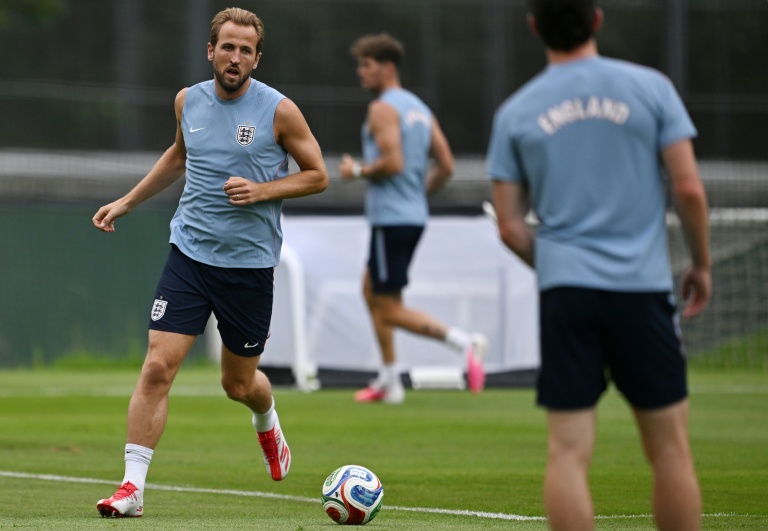
👉 READ BY CLICKING HEREMeanwhile, across the globe, other teams are still stuck playing by the old, quaint rules. In Mexico City, England’s Harry Kane trains for a brutal last-16 tie against Mexico at the legendary Azteca. They’ve got the altitude (2,240 metres, if you’re keeping score) to contend with, plus a storm forecast for kickoff. And Brazil’s formidable squad, ranked fourth globally, preps for Norway, knowing they’ll face off against Erling Haaland – a striker with five goals already in the tournament – without the benefit of any late-breaking administrative miracles. Their match also faces severe storm warnings in New Jersey.
What This Means
This episode casts a long shadow, much like the Estadio Azteca itself (if you’ve been, you know). It’s not just about one player, or one game; it’s about perceived fairness and the rule of law within arguably the planet’s most popular sport. When decisions of this magnitude are reversed under vague pretenses, especially after thinly veiled political pressure, it makes fans everywhere—from the bustling streets of Karachi to the crowded cafes of Cairo—wonder who’s actually calling the shots. It’s hard to tell your son in Lahore that football is fair when FIFA itself looks more like a political instrument than an impartial arbiter. But what’s good for some, it seems, isn’t always good for others, an inequity that resonates deeply in parts of the world often subjected to the uneven scales of international power dynamics.
For FIFA, it’s yet another body blow to its already tattered reputation. Their previous scandals often involved financial impropriety; this time, it’s about governance — and impartiality. It reinforces the image of an organization susceptible to external influence, undermining the integrity of its competitions. Such acts contribute to a broader distrust in global institutions. Remember past controversies that questioned the very nature of sporting fairness? This is squarely in that unfortunate tradition. Because, ultimately, if a red card can be rescinded at the flick of a political switch, what does that say about every other call? It certainly complicates the narrative about rising sporting dominance for any nation.