

Local Clinic’s Free Jab Initiative Highlights Fractured Trust, Global Health Disparities
POLICY WIRE — RIO RANCHO, N.M. — A singular weekend event at a hospital in New Mexico—a prosaic offering of free pediatric vaccines—wouldn’t usually command much attention beyond its immediate postal...

POLICY WIRE — RIO RANCHO, N.M. — A singular weekend event at a hospital in New Mexico—a prosaic offering of free pediatric vaccines—wouldn’t usually command much attention beyond its immediate postal code. But sometimes, the smallest acts of public welfare inadvertently shine a spotlight on bigger, messier truths about societal trust, resource allocation, and how the simplest healthcare interventions still trip up modern governance, here and abroad. We’re not just talking about shots in arms; it’s about the underlying, unspoken battle for collective responsibility, even in an era when most major childhood diseases have been (mostly) relegated to the history books.
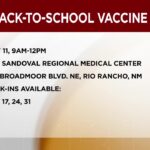
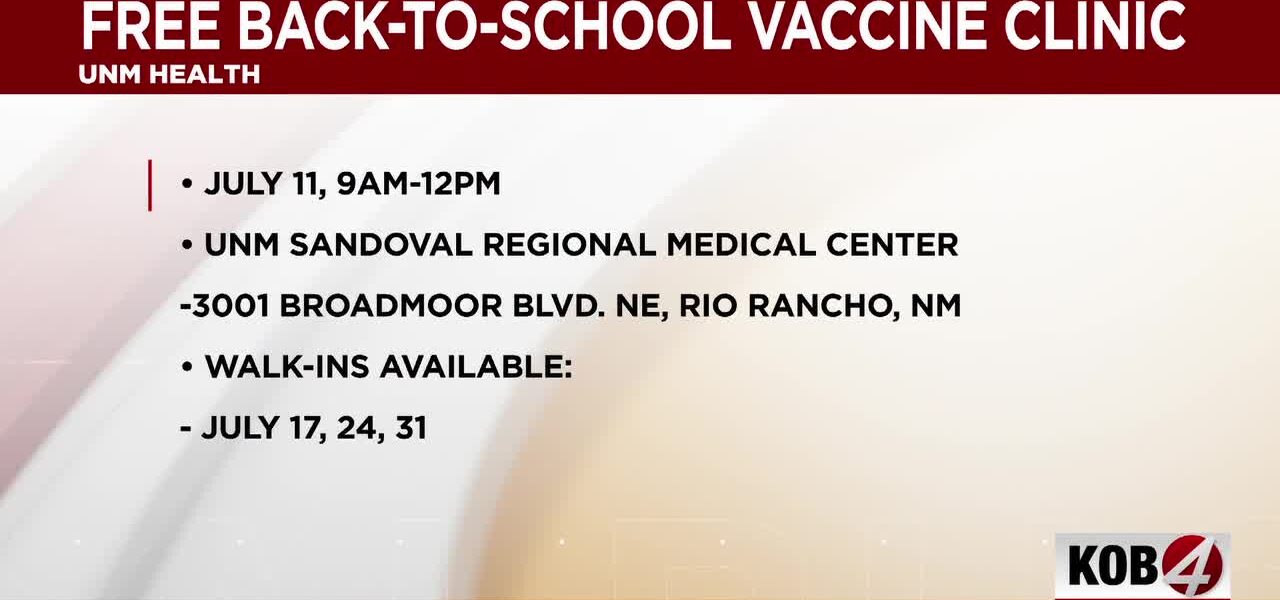
It’s kind of stark, really. The UNM Sandoval Regional Medical Center is putting on this little drive. Just a local hospital, right? They will offer [QUOTE_PLACEHOLDER] this weekend. And they’re not stopping there, oh no. The facility intends to continue walk-in shots on the next three Fridays. It’s a seemingly straightforward mission: give kids their jabs before school kicks off, because heaven forbid a communicable disease tear through a third-grade class.
This initiative, set to unfold in the family practice clinic on the third floor of the hospital, aims squarely at parents scrambling to fulfill back-to-school mandates. Parents can bring children there for free vaccines, the original announcement notes, as many families start working through back-to-school plans. A smart move, you’d think, given the perennial last-minute rush that defines American parenthood. But you’ve gotta wonder why these ‘free’ initiatives are still necessary. It’s not a fringe phenomenon. In fact, CDC data from 2021 shows that while kindergarten vaccination coverage remains high overall, significant disparities exist, with coverage for measles, mumps, and rubella (MMR) vaccine standing at roughly 93% nationally, just shy of the recommended herd immunity threshold, with notable variations across states and demographic groups.
This particular hospital, located in Rio Rancho, New Mexico, has basically said, Look, we get it, folks are busy, funds can be tight, anxieties are high. UNM Sandoval Regional Medical Center is offering the shots as another option for families getting ready for the school year. They’re trying to meet people where they’re at. And you can bet your last dollar it’s an acknowledgement that some parents aren’t getting this done otherwise. But, you know, this small-scale local push also tells a bigger story.
Because, here’s the rub: even in nations boasting advanced medical infrastructure and broad access, public health can sometimes feel like pulling teeth. It isn’t just a matter of clinics and syringes; it’s the sheer complexity of public confidence, the chatter from the anti-vaccine corner, and the sometimes maddening logistical hurdles that prevent families from getting what they need. It’s not just about cost—it’s about trust, convenience, and sometimes, a deep-seated suspicion of official pronouncements.
Consider the echoes from other corners of the globe—like Pakistan, a nation where public health drives routinely encounter not just logistical nightmares, but sometimes outright, violent resistance. There, polio vaccination teams, comprised largely of brave women, have been targeted and killed, their life-saving missions tragically conflated with Western espionage or sinister plots. The challenges are obviously on a completely different scale, shaped by geopolitical forces, literacy rates, and stark economic divides. Yet, the underlying human element—the doubt, the fear, the struggle for accurate information—isn’t so foreign. Whether it’s a routine booster shot in suburban America or a door-to-door polio drive in Khyber Pakhtunkhwa, the fight against preventable disease often becomes a battle for hearts and minds, a wrestling match with rumor and misdirection.
And so, while a few free jabs in New Mexico might seem insignificant on the global stage, it’s a testament to the fact that basic health needs, even today, require deliberate, thoughtful intervention. It suggests we haven’t quite nailed this ‘public health’ thing perfectly, not even close. We’re still improvising, patching holes. But maybe, just maybe, these smaller, persistent efforts are what keeps the whole system from unraveling completely.
What This Means
This unassuming local event, ostensibly about preventing schoolyard sniffles, offers a stark commentary on broader political and economic currents. It indicates that despite decades of public health campaigning and medical advancements, basic preventive care isn’t universally, seamlessly accessible even in an affluent nation like the United States. This situation—where a hospital needs to specifically dedicate staff and resources for ‘free’ weekend and walk-in options—suggests systemic inefficiencies, either in public awareness, insurance coverage, or family access to primary care. The political implication here isn’t about partisan fights over vaccine mandates; it’s about a quieter, persistent failure to embed preventive health as a default, easily attainable service. It hints at a landscape where bureaucratic hurdles, individual anxieties, and sometimes, outright misinformation create fissures in the public health system that even well-meaning local initiatives can only partially bridge.
Economically, these free clinics represent a cost-shift. Someone’s paying for these jabs; it’s simply absorbed by the hospital, funded through government programs, or perhaps philanthropy, rather than direct patient cost. While beneficial to individual families, it’s a Band-Aid over a larger structural wound, potentially obscuring the true cost of neglected preventive care down the line. Such initiatives, much like broader humanitarian efforts often directed towards countries like Indonesia or elsewhere in Southeast Asia —where digital infrastructure or other social goods are being pushed to overcome systemic challenges—are about bridging gaps, however small or vast they may appear. It highlights a perennial struggle to balance individual liberty with collective health, a dialogue that plays out differently everywhere, from the Rio Grande to the Indus, but never fully resolves. The act of making vaccines free and convenient isn’t just charity; it’s a political admission that the standard pathways aren’t always enough. It’s a concession to the messy, complicated realities of keeping a population healthy, one kid—one community—at a time.