

The Price of Past Glory: Conor McGregor’s High-Stakes Bet Against Oblivion at UFC 329
POLICY WIRE — Las Vegas, Nevada — The velvet ropes part once more for combat sports’ most compelling, confounding enigma: Conor McGregor. He’s back, or so they say. The spectacle, as always, eclipses...

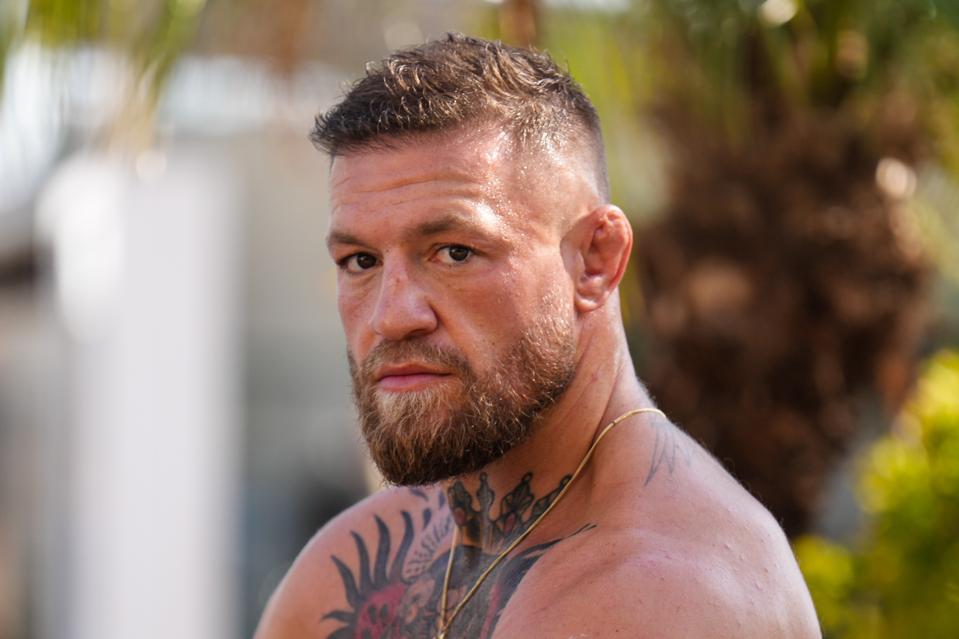
POLICY WIRE — Las Vegas, Nevada — The velvet ropes part once more for combat sports’ most compelling, confounding enigma: Conor McGregor. He’s back, or so they say. The spectacle, as always, eclipses the sport itself when the Irishman steps into the spotlight. UFC 329, slated for July 11 at the T-Mobile Arena, isn’t just another fight card; it’s another meticulously crafted, high-octane installment in the ongoing narrative of a once-undisputed king—now largely a king in absentia—attempting to reclaim a throne long occupied by younger, hungrier challengers.
Because frankly, it’s never just about the punches with McGregor, is it? It’s about the noise, the swagger, the ghost of past glory that still haunts every pay-per-view projection. The UFC isn’t selling a fair fight; they’re selling the tantalizing, almost desperate hope that the old Conor, the one who tore through divisions with ruthless efficiency, might somehow, impossibly, materialize again. And for that elusive promise, the masses, like Pavlov’s dogs, keep ringing up the register. This July showdown with Max Holloway isn’t just a rematch a decade in the making; it’s an audit of McGregor’s remaining commercial viability, cloaked in athletic pretense.
It’s a curious turn for an athlete whose recent track record looks more like a highlight reel from a career obituary than a preamble to championship contention. Since October 2018, McGregor’s cage activity registers at a rather dismal 1-3. The dramatic, almost cinematic leg break against Dustin Poirier in July 2021 was supposed to be the end—a final, brutal punctuation mark on an era. Yet, here he stands (or will stand), booked against one of the sport’s most active — and dominant forces. Holloway, in stark contrast, has danced in the Octagon eight times since McGregor’s last actual win, compiling a respectable 5-3 record against a murderers’ row of opponents. He’s been living in the arena, building his legacy, while McGregor has been… elsewhere.
But the numbers tell a story, even if it’s not always about win-loss columns. UFC CEO Dana White, a man who understands the alchemy of star power better than most, certainly knows this. “He still moves the needle like nobody else, doesn’t he?” White was quoted, flashing his characteristic grin after initial murmurs of the matchup emerged. “People will pay to see Conor. Win or lose, that’s just a fact. The market speaks, — and it says they want the show.” He’s not wrong; McGregor is a human money magnet. Remember UFC 303, initially pegged for a McGregor comeback against Michael Chandler? Even before the broken toe derailment, it was predicted to break the gate record. And when UFC 306 eventually smashed that benchmark with a stunning $21,829,245 live gate, according to industry analyses, it merely underscored the staggering financial muscle such mega-events command.
But what does Max Holloway—the former featherweight king, the relentless Hawaiian striker—make of all this? When asked about the fight, his response carried the understated confidence of a man who’s been grinding through the division’s toughest challenges for years. “Look, Conor’s a legend, no doubt. The first fight? That was a lifetime ago,” Holloway reportedly stated, a slight shrug betraying years of professional maturity. “I’ve been in there with everyone since then. This isn’t the same Max. And if he thinks he’s fighting the same guy from 2013, he’s got another thing coming.”
The betting markets, those cold, calculating bastions of objective assessment, offer their own brutal insights. Holloway, once the underdog, now sits as a significant favorite, around -230, against McGregor’s +195. It’s a testament to how far their respective trajectories have diverged. Yet, that doesn’t deter the faithful, nor the promoters. In markets stretching from the bustling streets of Lahore to the high-rise offices of Dubai, where combat sports are gaining immense traction, fans are glued. This fight will undoubtedly be streamed, shared, and discussed, pulling in eyeballs from a global audience that includes millions of fervent new followers across emerging combat sports economies in South Asia and the Muslim world, eagerly awaiting the unfolding drama, regardless of past performance.
What This Means
This showdown between McGregor and Holloway transcends mere athletic competition; it’s a profound study in brand resilience and the cynical economics of professional fighting. For the UFC, it’s a brilliant leveraging of their most potent asset—McGregor’s star power—even as his physical prowess arguably wanes. It demonstrates how, in an attention economy, a well-marketed persona can often outlast a consistent athletic output, especially if that persona delivers cultural impact. Economically, a strong showing from McGregor, win or lose, validates the UFC’s investment in cultivating crossover stars and maintains the inflated value of pay-per-view spectacles. A definitive, embarrassing loss for McGregor, however, could finally deflate his commercial appeal, forcing the promotion to find new, legitimate drawing cards. It’s also a stark reminder of the financial disparities in combat sports: a global brand like McGregor, even past his athletic peak, can command multi-million dollar purses, while many other fighters, even champions, struggle for a fraction of that.