

Wimbledon’s Grandstand Spectacle: A Royal PR Masterclass Amidst Global Currents
POLICY WIRE — London, UK — Forget, for a moment, the thwack of felt on strings, or the strained grunts echoing from Centre Court. The true theater at Wimbledon this past Saturday wasn’t merely...

POLICY WIRE — London, UK — Forget, for a moment, the thwack of felt on strings, or the strained grunts echoing from Centre Court. The true theater at Wimbledon this past Saturday wasn’t merely the tennis — though a fierce competition between Linda Noskova and Karolina Muchova certainly played its part. No, the real spectacle was arguably in the stands, a carefully arranged diorama of royalty, Hollywood, and global sporting prowess, all designed to broadcast a very particular message.
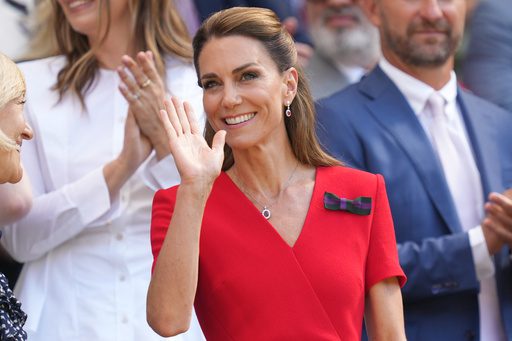
It’s a peculiar alchemy, really, how a British lawn tennis championship becomes a stage for such varied forms of influence. And who better to anchor this intricate display than Kate, the Princess of Wales? Her presence isn’t just about patronage; it’s a living endorsement, a subtle affirmation of tradition meeting contemporary celebrity. She was there, just as she has done in prior years, preparing to present the trophy to the winner. It’s a role she’s perfected, a familiar — and reassuring constant amidst a swirling cast of high-profile guests. [QUOTE_PLACEHOLDER]
Her reappearance, not long after she announced her cancer was in remission early last year, felt like an almost scripted return to a semblance of normalcy, or at least public duty. A week before, she had visited the grass-court tournament and sat next to Andy Murray to watch the tennis, perhaps a gentle re-entry before the full glare of the final. The Royals, they understand optics, don’t they?
But the Royal Box on Saturday wasn’t just royalty and venerable tennis greats like Martina Navratilova and Billie Jean King. Hollywood royalty, in the form of Jodie Foster, brought an international glitz. Emily in Paris star Lily Collins, and Ted Lasso actress Hannah Waddingham also graced the coveted seats, underscoring the entertainment world’s increasing intertwining with these legacy events. And of course, the former Wimbledon singles champions Maria Sharapova (2004), Marion Bartoli (2013), and Simona Halep (2019) were there, a nod to the sport’s recent history.
However, it was the presence of Eileen Gu that perhaps offers a more compelling glimpse into the future of global identity and soft power. A three-time Olympic goal medalist, Gu isn’t just an athlete; she’s a walking embodiment of geopolitical fluidity. She’s the U.S.-born skier, one of the stars of the Milan Cortina Games, who competes for her mother’s homeland of China. Think about that for a second. It’s a nuanced allegiance, one that raises questions about nationality in a world where talent, influence, and marketability often transcend traditional borders. It’s a trend we’ve watched closely across various sporting and economic spheres—a kind of talent free agency that redefines what it means to belong, much like the global talent wars echoed in baseball’s latest gambles. What message does this send to developing nations, particularly in places like Pakistan and broader South Asia, grappling with their own brain drains and the allure of global opportunities for their brightest? Does Gu’s dual loyalty signal a new paradigm, or simply a particularly marketable one?
📄 POLICY WIRE WHITEPAPER PUBLISHED: PAKISTAN'S NATIONAL SECURITY POLICY PRIORITIES
👉 READ BY CLICKING HEREThe entire Royal Box at Centre Court for the all-Czech women’s final became a living tableau. Two-time Wimbledon singles champion Petra Kvitova of the Czech Republic completed the blend of sport — and spectacle. These aren’t just famous people; they’re symbols, carefully chosen, deliberately placed, radiating specific brand values, whether that’s tradition, athleticism, glamour, or a very modern sense of globalized identity. The audience, estimated in the hundreds of millions worldwide, as Brand Finance reported Wimbledon’s total TV audience reach topped 365 million in 2022, consumes this curated reality right along with the tennis. They don’t just watch a match; they observe an institution flexing its global reach.
What This Means
The Wimbledon Royal Box, far from being just a seating arrangement, is a potent political and economic tool for the British monarchy and the UK’s soft power machine. You see, the Princess’s calculated appearances, paired with a diverse ensemble of global celebrities and athletes like Gu, serve several key functions. For one, it reinforces the monarchy’s enduring relevance, presenting them as both traditional custodians and modern influencers. They’re blending heritage with today’s influencer culture, a strategic move in an era where royal families globally constantly justify their existence.
Economically, this is pure branding. Wimbledon is an incredibly valuable global commodity, and the Royal family’s association amplifies its prestige, attracting tourists, sponsors, and viewers worldwide. It’s an unspoken but effective marketing campaign for ‘Brand Britain.’ Gu’s presence adds another layer: it’s a subtle acknowledgement of changing global dynamics. Her split allegiance, her navigation between two superpowers, reflects a world where national identity is no longer monolithic. This isn’t just about one skier; it’s about the increasing porousness of borders for talent and capital, a dynamic that impacts economies from London to Lahore. What’s more, for countries like Pakistan, the aspiration for such global representation and the dilemmas of attracting back, or retaining, their internationally recognized talent become incredibly sharp against such a backdrop. It’s a complex dance of heritage, commerce, and shifting geopolitical winds, all playing out on the most genteel of stages.