


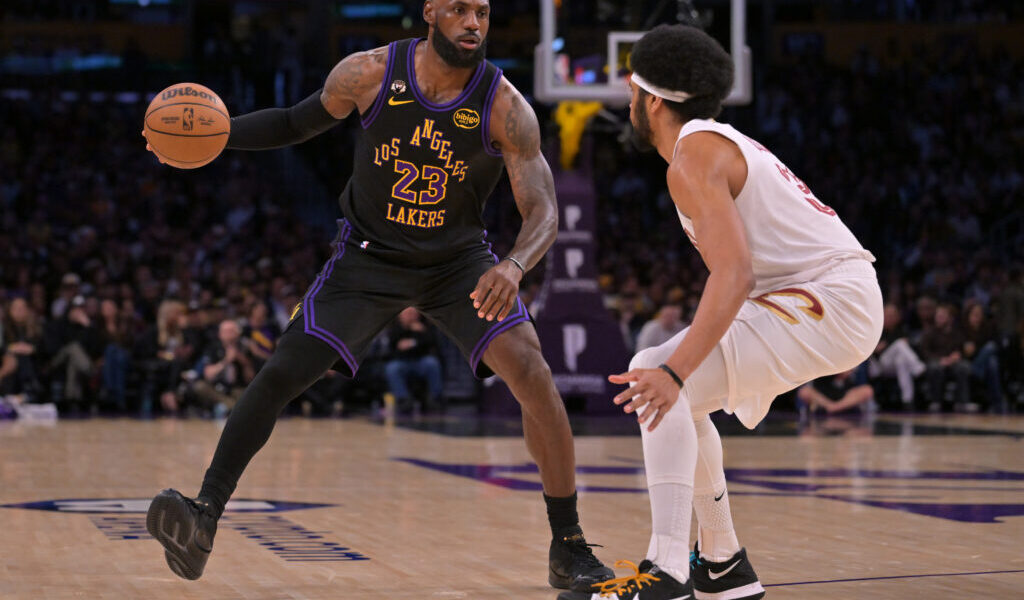
The King’s Homecoming? Navigating Legacy and Capital in LeBron’s Latest Stanza
POLICY WIRE — Washington D.C. — For an economy driven by intangible assets and personal brands, the annual summer spectacle of NBA free agency has morphed into something more resembling a...

POLICY WIRE — Washington D.C. — For an economy driven by intangible assets and personal brands, the annual summer spectacle of NBA free agency has morphed into something more resembling a geopolitical summit than mere athletic transaction. It’s less about dribbling, more about a delicate balance of legacy, market influence, — and raw, unapologetic capital. This year, the marquee event? The protracted, rather theatrical dance of one LeBron James.
His recent tenure in Los Angeles, though occasionally spectacular, never quite delivered the dynastic promise. So now, the question isn’t just where the 41-year-old forward lands next, but what this final act signifies for a player—and a league—that increasingly conflates athletic prowess with national mythology. The whispers, no, the shouts, point increasingly east, back to where his legend was truly forged: Cleveland.
It’s not simply a fan fantasy; the narrative’s getting a serious shove from some surprisingly heavy hitters. Charles Barkley, ever the contrarian sage, laid it out with characteristic bluntness. “If he goes to Philly people are going to say he’s ring chasing to catch Michael. If he goes to Golden State, they’re going to say he’s ring-chasing,” Barkley mused on Unfiltered With Ricky Bo and Bill Colarulo. “He don’t have no affiliation to Philadelphia or Golden State.” His point was clear, delivered with a gravelly conviction: Cleveland, his actual home, the place he famously brought a championship to a decade ago, represents something different. And he believes it’s where LeBron should end it all.
Because, as Barkley sees it, the Cavaliers have a strong team, but they’re missing a certain something. “They’re lacking leadership. And LeBron’s a great leader. To me, it’ll be a fitting way for him to finish his career, in my opinion.” It’s a compelling argument, grounded in sentiment but backed by potential on-court logic. You couldn’t ask for a better setup, could you?
The Cavs certainly seem ready to roll out the red carpet, gilded though it might be. Donovan Mitchell, fresh off signing a monster four-year, $273 million maximum contract extension (a tidy sum indeed, as confirmed by ESPN’s Brian Windhorst), appears to be campaigning for the King’s return. Shams Charania, a fixture in the league’s rumour mill, dropped an interesting detail. Mitchell, he shared on NBA Today, has made it “very clear behind the scenes” that he’s not just open to, but actively embracing, the idea of James donning wine and gold again. This isn’t just passive acceptance; it’s an active solicitation. And it signals a unified front that’s often rare in the fickle world of professional sports.
So, picture it: Mitchell, James, Evan Mobley, Jarrett Allen, — and potentially James Harden. It’s a roster that, on paper, immediately becomes an Eastern Conference contender. Of course, the devil’s in the salary cap details. The dream scenario might even involve James taking a “veteran minimum”—a deliciously ironic prospect given his global empire, allowing the team crucial financial flexibility. But even in a sport obsessed with statistical optimization, narrative — and brand longevity play a heavier hand.
📄 POLICY WIRE WHITEPAPER PUBLISHED: PAKISTAN'S NATIONAL SECURITY POLICY PRIORITIES
👉 READ BY CLICKING HEREThis quest for a fitting end, a perfect legacy narrative, resonates far beyond American basketball courts. Just as the global demand for energy security shapes dynamics from the Strait of Hormuz to Karachi, so too does the gravitational pull of athletic celebrity mold economic realities. The reach of the NBA, and specifically its most enduring stars like James, stretches from Akron, Ohio, to the burgeoning sports markets across South Asia and the Muslim world. Fans in Lahore, watching illegal streams (no, don’t pretend they aren’t), aren’t just cheering for a team; they’re engaging with an aspirational brand of individualism and triumph—a particularly potent soft power export. The narrative of an aging lion returning to defend his pride often speaks louder than any win-loss record, building brand equity that dwarfs mere salaries.
What This Means
The proposed Cleveland reunion for LeBron James transcends typical sports banter. Economically, a third act in Cleveland—a non-glamour market, by Hollywood standards—could deliver a significant financial jolt. Local businesses, tourism, even municipal pride stand to gain from the superstar’s presence. For the Cavaliers franchise, it represents a calculated gamble: the immediate ceiling for contention skyrockets, but the long-term cap implications (even with a veteran minimum) mean careful, almost political, budgeting decisions. Think of it like a developing nation’s leadership balancing populist demands with the long-term fiscal health of the country—high stakes, tricky choices. it solidifies Mitchell’s buy-in, making Cleveland a legitimate destination, not just a holding pattern for top-tier talent. This isn’t just about winning games; it’s about establishing a winning culture that attracts talent years after James inevitably departs. But it’s also a commentary on power. This free agency period, like collegiate chess moves in the tech sector, illustrates how a select few individuals dictate massive financial and cultural flows. LeBron’s decision isn’t just personal; it’s an economic earthquake. And everyone, it seems, has an opinion on where its epicenter should be.