


Silent Inferno: US Grinds Under Invisible Climate Threat as El Niño Looms
POLICY WIRE — Washington, D.C. — It’s the kind of threat that doesn’t always scream disaster—not a flood, nor a hurricane with dramatic swirling radar. But a dangerous heat wave was building across...

POLICY WIRE — Washington, D.C. — It’s the kind of threat that doesn’t always scream disaster—not a flood, nor a hurricane with dramatic swirling radar. But a dangerous heat wave was building across the U.S. on Saturday, a slow-burn crisis, less visually stunning perhaps, but brutally effective in its assault on daily life and public health. This isn’t just about triple-digit days; it’s about the nights too, where relief proves stubbornly elusive.
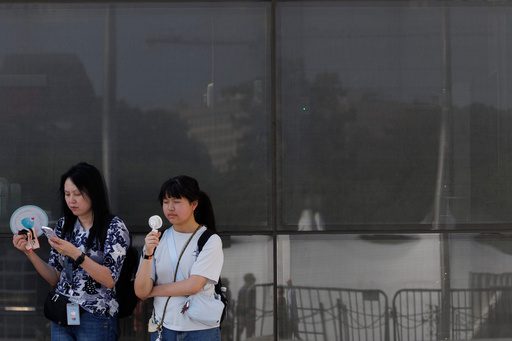
Meteorologists say this atmospheric pressure cooker, this dome of heat, could trap oppressive temperatures for a week or more. That’s an eternity for folks living on the margins, — and it means bodies don’t get a chance to recover. Tynika Smith knows this firsthand. She’s out there in Bloomington, Minnesota, hitting up encampments for homeless people in nearby St. Paul. She’s handing out what relief she can muster: frozen towels, washcloths, — and little battery-operated fans. It’s a grassroots, often thankless, scramble against a relentless enemy.
And what choice do these folks have? [QUOTE_PLACEHOLDER] Smith pointed out, articulating the obvious but often overlooked truth. The encampments, frequently secluded, make trips to public cooling centers a trek most simply can’t make. Little shade — and tents that become personal ovens amplify the risk. I mean, think about it—the temperature inside their tents gets even hotter than outdoors. It’s a cruel feedback loop, isn’t it? [QUOTE_PLACEHOLDER] Smith said, underscoring the stark limitations in the face of such a vast problem. She distributed water, freezer pops, food and hygiene supplies, doing what she could as temperatures started climbing into the mid- to high 90s.
This isn’t a regional quirk. This beast of a heat dome is expected to affect as much as two-thirds of the continental United States. It’s painting a pretty stark picture across states usually less accustomed to such furnace-like conditions. Even in Bismarck, North Dakota, a place where summer temperatures are typically in the 80s, the mercury will soar past 100 F (37 C) for days. But the dark hours offer scant respite. Josh Adam, a meteorologist with the National Weather Service in Bismarck, put it bluntly: [QUOTE_PLACEHOLDER]
Temperature records are getting obliterated. The National Weather Service predicted that more than 90 U.S. local temperature records will be tied or broken through Wednesday. And here’s the real gut-punch: two-thirds of those being overnight heat records. In places like Fort Lauderdale, Miami, Galveston, and Charleston, the mercury isn’t forecast to dip below a sweltering 80 F (27 C) at night. Nevada, a state famously acquainted with heat, found itself battling even hotter conditions than usual. Andrew Gorelow, a meteorologist with the National Weather Service in Las Vegas, expected the city to hit a blistering 111 F (48 C) on Saturday. But when even pools become a precious luxury, it shows you the scale of the fight. In Helena, Montana, a swim meet still went ahead even though temperatures were expected to creep above 95 F (35 C). Sean Swingley, assistant manager of Last Chance Splash Waterpark & Pool, observed, [QUOTE_PLACEHOLDER] A slight nod to normality in the face of anomaly.
So, what’s behind all this? Scientists aren’t shy about placing blame squarely on climate change, specifically the continued burning of coal, oil and natural gas. These activities aren’t just making heat waves hotter; they’re making them stick around longer — and spread wider. This year’s misery also gets a booster shot from El Niño, that natural warming event in the equatorial Pacific. The current El Niño, though nascent, is projected to be one of the most intense since records began in 1950. In fact, by fall it has an 81% chance of becoming “very strong”— the top category — according to the U.S. National Oceanic — and Atmospheric Administration. That’s a significant figure, a warning really, about what lies ahead. And then there’s the lurking fear of wildfires; Merrill from AccuWeather noted dry thunderstorms could develop in already arid areas like the Rockies, adding another layer to the catastrophe.
📄 POLICY WIRE WHITEPAPER PUBLISHED: PAKISTAN'S NATIONAL SECURITY POLICY PRIORITIES
👉 READ BY CLICKING HEREWhat This Means
This escalating heat crisis isn’t just about discomfort or even individual tragedy; it’s a direct challenge to America’s political and economic stability, revealing deep-seated inequalities that echo challenges seen across the globe, especially in developing regions. You can’t just ignore these things away. The sheer scale of the problem—two-thirds of the continental U.S.—demands more than simply advising people to stay hydrated. It exposes systemic failures in infrastructure, healthcare access, — and housing. For one, the disproportionate impact on communities experiencing homelessness isn’t just a social problem; it’s an economic one, draining emergency services and costing lives that could be saved with adequate public cooling and shelter.
the intensifying El Niño, with its strong likelihood of becoming a dominant weather pattern, suggests this isn’t a one-off summer. It implies a ‘new normal’ that our infrastructure, built for a different climate, isn’t ready for. The implications for agricultural output, already fragile, are significant, affecting food security and commodity prices. It means political leaders are under increasing pressure to move beyond partisan squabbles and enact substantive climate policy—or face voters literally wilting under their inaction. But there’s a wider resonance, too. Countries like Pakistan, which frequently grapple with extreme heat waves, water scarcity, and their associated public health crises, offer a grim preview of what even developed nations could face without serious shifts. Their experiences highlight how essential climate adaptation measures become, not as luxury, but as sheer survival. Because these issues—climate, equity, governance—they’re not confined by borders. They don’t respect political talking points; they just show up, hot — and dangerous, right on your doorstep. Maybe it’s time policy makers started drafting climate strategies as aggressively as scouts target emerging talent for baseball’s future.
The looming economic burden from health crises, decreased worker productivity, and infrastructure strain could reshape municipal budgets and federal priorities. And don’t forget the strain on power grids. These kinds of temperatures necessitate massive energy consumption for cooling, increasing both costs and the carbon footprint. It’s a vicious circle. But who pays the ultimate price? Usually, it’s those who have the least.