
Andalusia’s Scorched Earth: Southern Spain Battles Blaze, Haunting Questions Emerge
POLICY WIRE — Malaga, Spain — Another postcard-perfect corner of southern Spain, once a magnet for sun-drenched European getaways, has succumbed to ash and despair. Twelve souls, firefighters — and...

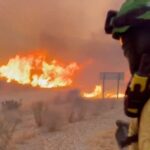
POLICY WIRE — Malaga, Spain — Another postcard-perfect corner of southern Spain, once a magnet for sun-drenched European getaways, has succumbed to ash and despair. Twelve souls, firefighters — and civilians caught in the inferno, won’t be enjoying that Mediterranean breeze again. And somewhere in the smoky, charred expanse, search parties still pick through the devastation for 23 missing people. They’re probably hoping for a miracle, but this late in the game, you don’t bet on those much, do you?
It’s become a depressingly familiar tableau: azure skies giving way to an apocalyptic orange haze, tourist villas morphing into cinders, and frantic locals abandoning everything they own. The Sierra Bermeja mountains, usually vibrant and green, are now a blackened scar on Andalusia’s already sun-baked landscape. Firefighters, some airlifted into hellish pockets of resistance, are grappling with what regional president Juan Manuel Moreno described as “a veritable fire monster, driven by erratic, hurricane-force winds.” Moreno wasn’t just waxing poetic; this fire’s sheer intensity has defied conventional suppression tactics, leaping firebreaks and creating its own brutal weather patterns.
Because, really, we’re talking about more than just a forest fire here. We’re talking about an existential confrontation. Europe’s quiet calculus, especially in its warmer climes, is getting loudly redefined by an accelerating environmental crisis. This isn’t just about hot summers; it’s about deserts encroaching, water vanishing, and traditional landscapes becoming tinderboxes. We’re witnessing the frontline of climate change, not in some distant polar ice cap, but in the vacation playground of millions.
Authorities haven’t yet pinned down the cause – arson’s always a suspect in these parts, but bone-dry conditions, high winds, and soaring temperatures form a more compelling narrative for rampant escalation. Spain, historically vulnerable to wildfires, has seen an uptick in their frequency — and ferocity. And it’s not alone. But the scale of this current blaze, chewing through thousands of hectares and forcing widespread evacuations, suggests a new, more dangerous chapter.
This isn’t an isolated incident; it’s a stark forecast of what’s to come, according to Teresa Ribera, Spain’s Minister for Ecological Transition. She wasn’t just talking about her own country’s fate, either. From the Mediterranean to the drylands of Pakistan, where water scarcity already fuels desperate migration and societal strains, the playbook for environmental disaster is becoming distressingly universal. The brutal ballet of nature’s wrath doesn’t pick its dance partners based on GDP.
Think about it: the Intergovernmental Panel on Climate Change (IPCC) reported in 2021 that extreme fire weather conditions, like those fanning the flames across Spain, have already increased significantly in many regions since the 1980s. That’s a fancy way of saying things are getting hotter, dryer, and much, much nastier for forests, towns, and the people living among them. We’re not talking about marginal shifts; we’re witnessing a systematic erosion of natural buffers.
📄 POLICY WIRE WHITEPAPER PUBLISHED: PAKISTAN'S NATIONAL SECURITY POLICY PRIORITIES
👉 READ BY CLICKING HERELocal communities, dependent on tourism — and agriculture, are staring down an economic chasm. What holidaymaker wants to visit a blackened, denuded landscape, even if the sea eventually sparkles again? And what about the psychological scars for those who’ve lost homes, livelihoods—or loved ones? That’s not a simple insurance payout kind of fix.
What This Means
This Andalusian catastrophe carries significant weight far beyond the immediate, heartbreaking death toll. Politically, it cranks up the heat—if you’ll pardon the expression—on governments to deliver concrete climate action, not just lofty pronouncements. Spanish Premier Pedro Sánchez will be hard-pressed to ignore the ecological and human cost, especially as opposition parties will seize on any perceived inadequacy in prevention or response. We’ve got upcoming regional elections, after all, — and the charred hillsides make for stark campaign visuals. Economically, the blow to southern Spain’s vital tourism sector will be immediate — and lasting. Rebuilding infrastructure and restoring ecological balance will demand substantial, likely unfunded, resources, diverting funds from other critical public services. And, importantly, this isn’t some outlier. It’s a bellwether. The events in Andalusia are a mirror reflecting the broader environmental insecurities shared across Europe, the Middle East, and parts of Asia. What we’re seeing isn’t an accident. It’s a blueprint, really, for the future of resource-scarce nations struggling with climate feedback loops, underscoring the interconnectedness of climate stability with global geopolitical health. The illusion of distance, say, between a Spanish hillside and India’s desperate bid for air superiority in a region also grappling with environmental stresses, shrinks daily.