


Red Devils’ Reckoning: When Gold Isn’t Enough for a ‘Golden Generation’
POLICY WIRE — Brussels, Belgium — Not every sunset is painted in heroic hues. Sometimes, the curtain falls with a wet thump, an error that costs you everything. And so it was for Belgium, a nation...

POLICY WIRE — Brussels, Belgium — Not every sunset is painted in heroic hues. Sometimes, the curtain falls with a wet thump, an error that costs you everything. And so it was for Belgium, a nation that has — for what feels like eons — held its breath, year after year, hoping its uniquely talented football squad would hoist the most coveted prize. It didn’t happen.
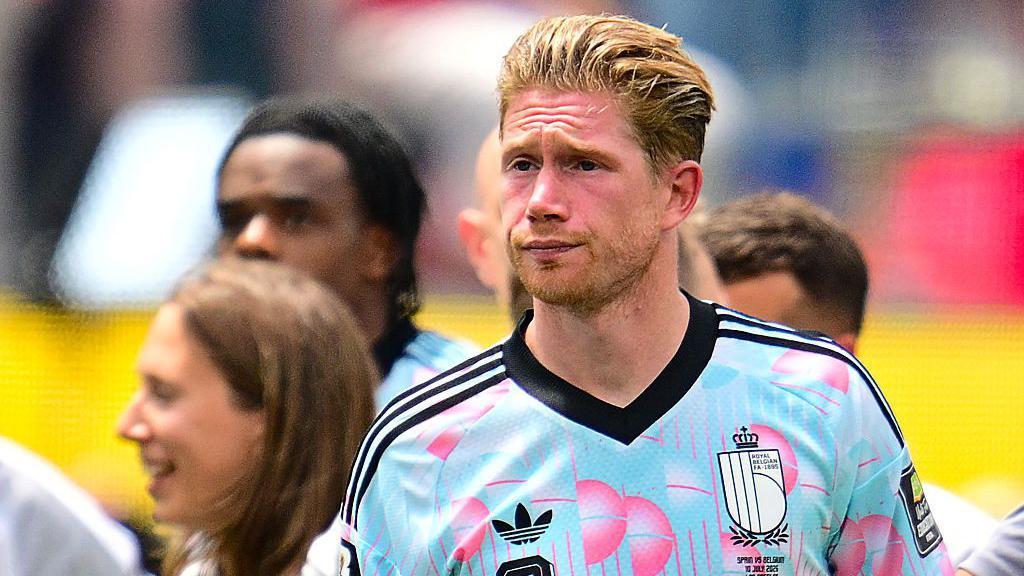
That 2-1 defeat to Spain in the quarter-finals of the 2026 World Cup? It wasn’t just a loss. It was a period, perhaps an exclamation mark, on an era of immense promise that, for all its sparkle, never quite achieved true brilliance. Think about it: a squad dubbed the “golden generation” – players like Thibaut Courtois, Romelu Lukaku, Kevin de Bruyne, Axel Witsel – they’ve been national team mainstays since the 2014 World Cup in Brazil. And their last shot? Slipped away not through a tactical masterclass by the opposition, but via a late-game blunder from a young replacement.
It’s a peculiar fate. Courtois, nursing an injury, could only watch from the sidelines as 24-year-old Senne Lammens, who’d subbed in, mishandled an 88th-minute shot, gifting Mikel Merino a tap-in. You don’t often get fairy-tale farewells in football; more often, it’s a sudden, bitter exit. Stephen Warnock, on BBC Radio 5 Live, observed that [QUOTE_PLACEHOLDER], then added [QUOTE_PLACEHOLDER]. It makes you think. Just as many developing football nations, including those in South Asia, wrestle with the monumental task of converting raw talent into systemic, trophy-winning machines, Belgium, for all its individual stars, simply couldn’t seal the deal. It’s a sobering thought that high hopes, even in a European context, can sometimes yield familiar frustrations.
Remember that 2014 World Cup team? The one that beat Algeria 2-1? It was practically a fantasy league lineup – Courtois, De Bruyne, Witsel, Lukaku all starting, joined by the likes of Eden Hazard and Vincent Kompany. Dries Mertens — and Marouane Fellaini even came off the bench. They topped their group. They made the quarter-finals. Then, in 2018, they went even further, reaching the semi-finals — and securing third place. Quarter-finals in Euro 2016 and 2020 too. Not bad, right? But critics, as they always do, whisper that such an embarrassment of riches should’ve garnered more. For a nation with fewer than 12 million inhabitants (according to Eurostat 2023 figures), these performances are, by objective metrics, quite remarkable.
Spanish football journalist Guillem Balague cut right to the chase: [QUOTE_PLACEHOLDER]. He’s not wrong, you know. He pointed out [QUOTE_PLACEHOLDER]. But also, as he noted, [QUOTE_PLACEHOLDER]. One wonders if the weight of a nation’s expectation, much like it falls upon teams from Pakistan or Saudi Arabia who are desperate for global sporting recognition, becomes an invisible yet tangible opponent in these high-stakes contests. It certainly seems that way.
This quarter-final clash saw not only the four prominent names likely play their last World Cup minutes, but also others like Leandro Trossard (31), Brandon Mechele (33), Timothy Castagne (33), Hans Vanaken (33), and Thomas Meunier (34). Manager Rudi Garcia wasn’t exactly chipper post-match. [QUOTE_PLACEHOLDER], he mused, adding [QUOTE_PLACEHOLDER]. And the regret, the collective sorrow of what could have been, hung heavy in the air. [QUOTE_PLACEHOLDER], he felt. Everyone knows that feeling of opportunities lost, especially when you can’t get things right—the ducks weren’t in a row.
But life, and football, carries on. Courtois, ever the pragmatist, acknowledged a changing of the guard even before the Spain game. [QUOTE_PLACEHOLDER], he’d said. Then, a statement that speaks to every team undergoing renewal: [QUOTE_PLACEHOLDER]. This time around, in Qatar, it really wasn’t. And that’s okay. A new crop is here: 13 squad members aged 25 or below. Youngsters like striker Charles de Ketelaere, who scored three goals in the tournament despite managing only three in 31 Serie A games last season. Youri Tielemans, 29, captained the side, while Aston Villa’s Amadou Onana, 24, showed flashes of brilliance before an ACL injury against the USA. Jeremy Doku, another 24-year-old, possesses elite talent, though perhaps couldn’t replicate his Manchester City form here.
📄 POLICY WIRE WHITEPAPER PUBLISHED: PAKISTAN'S NATIONAL SECURITY POLICY PRIORITIES
👉 READ BY CLICKING HEREGarcia, ever hopeful, thinks the younger contingent will learn from this. [QUOTE_PLACEHOLDER], he asserted. Losing their keeper, losing their captain mid-game, having to pull De Bruyne? That wasn’t in the blueprint. But he believes they weren’t humiliated. Sometimes, a hard lesson is still a lesson. You can’t give things away [QUOTE_PLACEHOLDER], — and unfortunately, they did that more than once. It’s a bitter pill, isn’t it?
What This Means
This isn’t just about football. For a relatively small European nation like Belgium, the national football team often serves as a potent symbol of identity, aspiration, and global presence. The ‘golden generation’ narrative wasn’t merely about winning games; it was about elevating Belgium’s international standing, projecting an image of sophistication and high performance on a world stage. That they fell short of the ultimate prize has subtle, yet noticeable, political — and economic echoes.
Politically, the continuous near-misses can breed a kind of national fatigue, or worse, a collective cynicism. Public morale, even subtly, can take a hit when a celebrated group consistently underperforms against the highest expectations. It raises questions about the allocation of resources in national sports programs, the psychological burden on star players, and the ability of a government or federation to capitalize on a golden era for broader nation-building. The pressure on this team to win often overshadowed any nuanced discussion about what constitutes ‘success’ for a country of Belgium’s size and population. Compare it to the immense, sometimes crushing, public pressure faced by cricket teams in South Asia; the underlying dynamics of national pride and expectation are remarkably similar.
Economically, prolonged success in major tournaments can boost tourism, foreign investment interest, and even consumer confidence through nationalistic fervor. Conversely, falling short can lead to a feeling of ‘what if’ for commercial opportunities tied to sporting glory. Sponsors might be slightly less eager to associate with a narrative of perpetual bridesmaids. The psychological capital accumulated over a decade of high performance risked being squandered on the final, critical hurdle. It’s a stark reminder that talent, however abundant, doesn’t automatically translate to triumph. And sometimes, you just can’t get that golden touch.