


Kyiv’s Nightly Ritual: When Routine Raids Mask Deeper, Unfolding Costs
POLICY WIRE — Kyiv, Ukraine — The relentless percussion of distant explosions has, for many in Ukraine’s capital, morphed into an unnervingly familiar hum. Not exactly background noise, but something...

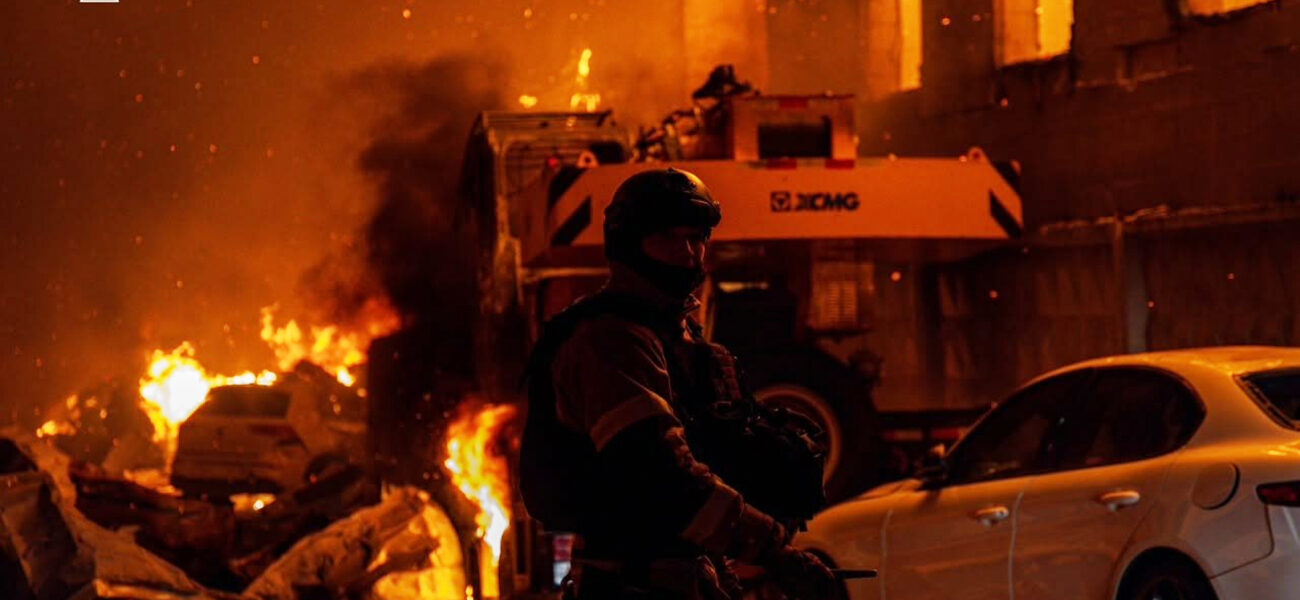
POLICY WIRE — Kyiv, Ukraine — The relentless percussion of distant explosions has, for many in Ukraine’s capital, morphed into an unnervingly familiar hum. Not exactly background noise, but something residents grimly absorb, a brutal constant in what used to be a bustling European metropolis. When air raid sirens pierce the pre-dawn quiet for a second consecutive night—as they did recently—it’s less a shocking anomaly and more a confirmation of a grim status quo. And that’s perhaps the most chilling aspect of it all: the routine nature of terror.
Early assessments tell a predictable, tragic tale: at least three people dead, casualties of Russia’s latest volley of missiles and drones. It’s a statistic that, while gut-wrenching, almost loses its bite against the backdrop of months of bloodshed. Kyiv city officials reported successful interceptions by air defenses, noting fragments falling in several districts, including one hitting a residential building. A classic scenario. A shattered window here, a structural compromise there, but mostly, another night ‘survived’ by a city that can’t seem to catch a break.
But survival, they’re finding, is a nuanced term. It’s not just about ducking falling debris or dodging direct hits. It’s the incessant strain on infrastructure, on mental well-being, on the sheer economic oxygen of a nation. Because each drone shot down isn’t free. Each siren blare disrupts sleep, work, life. It’s a psychological war waged patiently, deliberately, often with old-school Russian bluntness.
“Every strike, no matter how ‘minor’ in Moscow’s twisted calculus, chips away at more than just buildings. It’s the daily assault on our spirit, our normalcy,” lamented Mykhailo Podolyak, advisor to President Zelenskyy, his voice tight with an exasperation that barely masks profound weariness. “They want us to simply break, to accept this as our fate. We won’t.” He said it as if speaking to the Kremlin itself, a defiant whisper against a hurricane.
Overseas, the rhetoric often mirrors the reality: fatigued. “We stand with Ukraine, obviously. The humanitarian cost is… concerning. But direct escalation remains off the table, sadly,” confided a senior EU diplomat during an off-record conversation, a quiet concession to realpolitik that resonates far beyond Europe’s borders. It’s this delicate dance of support and constraint that often shapes global responses, often leaving allies caught between humanitarian ideals and national interests.
While Kyiv grapples with airborne threats, distant capitals in South Asia, like Islamabad, quietly recalculate economic projections. Disruptions in global commodity markets, particularly for oil and grains, intensified by the ongoing Ukrainian quagmire, directly impact the price of roti and petrol for millions in Pakistan. It’s a feedback loop; a war started in Eastern Europe ripples across oceans, tweaking inflation dials and political stability metrics in places most Western analysts rarely connect directly to a falling missile fragment in a Kyiv neighborhood.
📄 POLICY WIRE WHITEPAPER PUBLISHED: PAKISTAN'S NATIONAL SECURITY POLICY PRIORITIES
👉 READ BY CLICKING HERETake, for instance, global food security. According to a recent UN report, the Black Sea grain initiative’s intermittent functioning—itself a direct consequence of the conflict—has contributed to volatile wheat prices, driving up import costs for vulnerable nations. It’s a concrete example of how local battles bleed into global pain points, creating indirect casualties in ways we seldom properly acknowledge. Millions depend on these supply lines, their lives shaped by distant artillery barrages.
What This Means
The repeated aerial assaults on Kyiv aren’t just tactical maneuvers; they represent a layered strategic gambit by Moscow. Economically, these strikes drain Ukrainian resources, forcing costly defensive expenditures and disrupting production chains, thereby exacerbating the economic challenges that have seen the nation’s GDP plummet significantly since the invasion began. Politically, the aim is to erode morale, fragment international support (by demonstrating the conflict’s prolonged, intractable nature), and project an image of sustained Russian capability, despite Western sanctions.
For NATO and its allies, each attack is a harsh reminder of the precarious balance they attempt to strike between supporting Ukraine’s defense and avoiding a direct confrontation with Russia. They’re spending billions, yes, but often it feels like a perpetual drip-feed designed to prevent collapse, not secure a decisive victory. This prolonged state of attrition, where cities like Kyiv endure nightly bombardment, further complicates any path to negotiations, cementing animosity and hardening stances on both sides. And for the global south, including countries throughout the Muslim world, it underscores their own economic vulnerabilities to distant conflicts, forcing a re-evaluation of international alliances and self-sufficiency – because when global commerce snags, everybody feels it.