


The Quiet Ascension: How One Player’s Long Grind Reshaped St. Louis, Subtly Reshaping Baseball’s Global Map
POLICY WIRE — St. Louis, Missouri — In the cutthroat world of professional sports, where million-dollar contracts and social media flash supersede years of grinding obscurity, a different kind of...

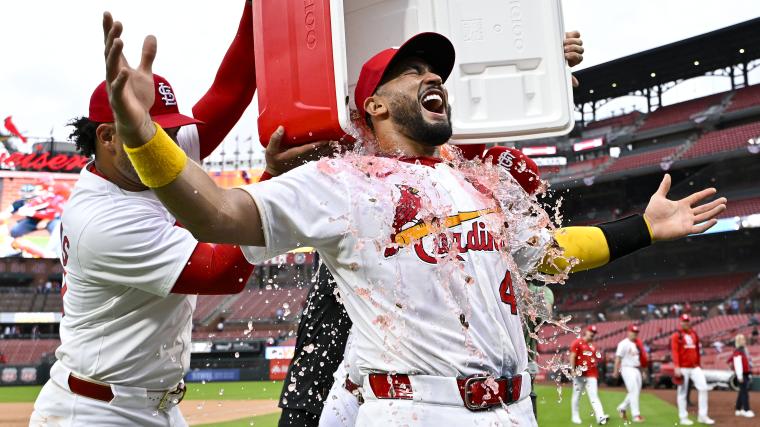
POLICY WIRE — St. Louis, Missouri — In the cutthroat world of professional sports, where million-dollar contracts and social media flash supersede years of grinding obscurity, a different kind of story sometimes breaks through. It’s the story of the quiet man in the dugout, the one whose name doesn’t immediately ignite fan hysteria, but whose perseverance subtly recalibrates a franchise’s trajectory. And right now, that story belongs to Ivan Herrera, catcher — and designated hitter for the St. Louis Cardinals, now an All-Star by sheer, dogged merit.
It wasn’t a sudden, supernova explosion. Nobody wakes up one morning — and finds themselves headed to Philadelphia to mingle with the league’s elite. For Herrera, that call—a last-minute nod replacing an injured superstar, mind you—marked the end of a long, arduous climb. Years spent buried in dusty minor league towns, the unglamorous reality of developing raw talent. Think about it: a teenager plucked from Panama in 2016, just a kid with a dream, facing attrition rates that would make most economists blanch.
But he stuck with it. Injuries came — and went, testing his resolve. Roster spots felt fleeting, often claimed by more celebrated names. He bounced around. But he hit. He got on base. He earned it.
“Ivan’s journey isn’t just about talent; it’s a blueprint for the guys coming up,” Cardinals Manager Oliver Marmol said in a recent, somewhat understated, press briefing. “We preach consistency, perseverance, and seizing your moment—he’s done just that. It’s rewarding for him, and frankly, it validates a lot of the less-seen work done behind the scenes in player development.”
The numbers aren’t flashy enough to headline SportsCenter every night, not by themselves. Yet, they tell a deeper story. This season, Herrera’s slashing .249/.384/.395, with 11 home runs — and 40 RBIs. The .384 on-base percentage, in particular, speaks volumes; it’s a testament to his elite plate discipline, arguably one of the best among offensive catchers in the National League. Data compiled by Baseball Reference, often used in executive decision-making, confirms his 51 walks position him among the league’s most patient and effective hitters. Because getting on base? That’s gold.
This kind of player, this kind of journey, offers a quieter reflection on baseball’s ever-expanding global footprint. While Shohei Ohtani’s dazzling multi-cultural appeal drives massive revenue and headlines, Herrera’s story illuminates the critical work of building pipelines—finding and nurturing talent wherever it exists. He’s a product of MLB’s rigorous international scouting apparatus. That machinery churns constantly, looking for diamonds in the rough from Caracas to Curacao, often with immense financial and cultural stakes attached. And, frankly, it’s not always a sure bet.
“The continued success of international scouting—whether in Panama or any emerging market—reinforces our commitment to globalizing the game,” noted a spokesperson for Major League Baseball, discussing the broader strategy earlier this year. “It’s smart business, good for competition, and ultimately, great for the fans.” But it’s more than just good business for the league; it’s about the very ethos of development and what constitutes genuine long-term value, especially in an era obsessed with immediate gratification and outsized celebrity.
📄 POLICY WIRE WHITEPAPER PUBLISHED: PAKISTAN'S NATIONAL SECURITY POLICY PRIORITIES
👉 READ BY CLICKING HEREThis quiet breakthrough from Panama casts a long shadow, albeit subtly, even into regions where baseball is far from the dominant sport. Just as significant investments are made in cultivating talent in Latin America, sports federations from emerging markets—like those exploring cricket alternatives in Pakistan or Bangladesh, looking for new pathways for their athletes—are watching this model. They’re seeing how sustained, globalized development, much like an interconnected system of trade routes, can translate into international presence and recognition, even if the specific sport differs. It’s about building a robust infrastructure for talent, no matter the origin.
Herrera joins teammates Jordan Walker and Riley O’Brien heading to the All-Star festivities, with manager Oliver Marmol also on the National League staff. The Cardinals were pegged by many as a team in transition this year, a rebuilding effort that would surely lag. But players like Herrera, Walker, and rookie JJ Wetherholt have expedited that timeline, demonstrating that the best kind of rebuild isn’t just about hoarding draft picks; it’s about making wise investments in human capital and fostering resilience.
His selection means the long wait is over for a guy who might’ve given up. But he didn’t.
What This Means
Ivan Herrera’s journey to the All-Star Game offers more than just a heartwarming sports story; it provides a fascinating case study in talent economics and strategic investment. For a team like the Cardinals, his rise validates a patient, often unseen development strategy. It underscores the financial wisdom of investing in a robust, international scouting network rather than simply chasing free-agent megastars. Because, let’s be honest, those cost a fortune, — and don’t always pan out. For other sports organizations—and even national sporting bodies globally—it highlights that sustainable success isn’t always about viral moments. It’s about cultivating long-term value from often overlooked corners of the world, fostering a deep loyalty that connects individual players to team identities and fans. This approach generates significant returns, financially and culturally, but demands an understanding of the raw business of loyalty that extends beyond annual contracts. Herrera is, in many ways, an analog blueprint in a digital age, reminding everyone that sometimes the slow burn generates the most lasting light.