


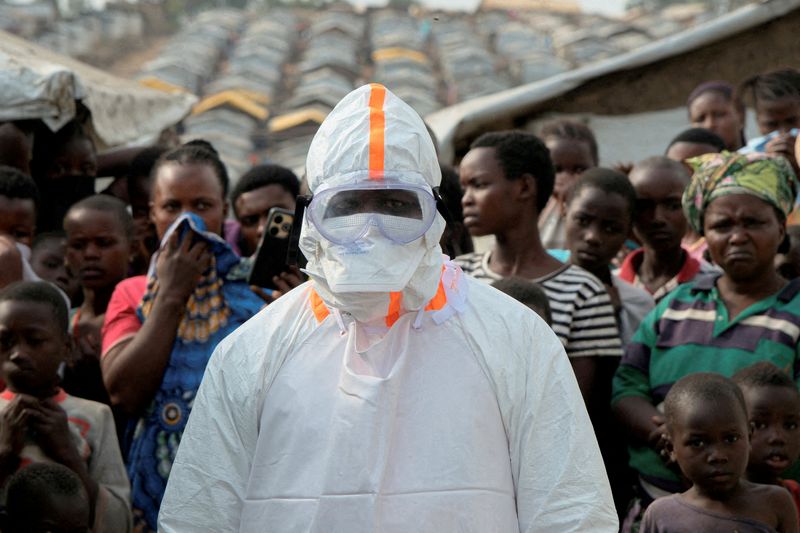
Congo’s Ghastly Roulette: As Death Toll Climbs, a New Front Opens in an Unrelenting War
POLICY WIRE — Kinshasa, DRC — The whisper of a single, suspected infection in a new province. That’s the real gut punch here, isn’t it? It’s not just a statistic, not just another...

POLICY WIRE — Kinshasa, DRC — The whisper of a single, suspected infection in a new province. That’s the real gut punch here, isn’t it? It’s not just a statistic, not just another dreadful milestone passed by the seemingly tireless Ebola outbreak ravaging the Democratic Republic of Congo. It’s a new front in an already desperate, utterly brutal war fought with syringes — and isolation tents, not bullets.
For months, the world’s attention has flickered on and off, but on the ground, healthcare workers have been engaged in a grimy, relentless grind. The tally is grim. The outbreak has claimed an estimated 600 lives—a number that shouldn’t roll off the tongue so easily, should it? Six hundred families torn apart, six hundred communities scarred by a contagion that eats at trust as much as it does human flesh. The sheer fatigue of it all, that’s what gets to you. People here are just worn out, you know? They’re facing down something invisible — and insidious. [QUOTE_PLACEHOLDER]
This newest scare—a suspected case emerging in a province previously thought clear—well, it casts a long, foreboding shadow. It suggests the disease, an utterly cruel and relentless foe, has found another pathway, another means of propagation, despite all the best efforts to bottle it up. And let’s be real, containing this thing in the DRC’s tumultuous east is less like medicine and more like geopolitical crisis management. You’ve got ongoing armed conflicts, deep-seated community mistrust, — and a vast, unforgiving landscape. These aren’t conditions ripe for orderly public health interventions. They’re conditions ripe for chaos.
It’s a nasty confluence of bad luck — and entrenched instability. Efforts to vaccinate have run into roadblocks, literally. Armed groups frequently obstruct access. Misinformation spreads like wildfire, perhaps even faster than the virus itself, making education and community engagement a constant, uphill battle. International aid organizations, bless their cotton socks, are doing their level best. But when local populations stone health workers, you start to see just how deep the well of cynicism — and fear runs.
This isn’t just Congo’s problem, you see. The reverberations from something this tenacious spread further than you’d think. We’ve seen similar patterns in other fragile states, and the implications for countries grappling with less robust healthcare infrastructures, say in parts of South Asia or the broader Muslim world, are always a stark reminder of global interconnectedness. A weak link in the global health security chain impacts everyone, regardless of borders or distant economies. For instance, data from the World Health Organization suggests that outbreaks of this scale strain international aid budgets by an average of 15-20% beyond initial projections, diverting resources that could address other pressing health issues globally. The global health economy is, shall we say, a rather delicate thing.
📄 POLICY WIRE WHITEPAPER PUBLISHED: PAKISTAN'S NATIONAL SECURITY POLICY PRIORITIES
👉 READ BY CLICKING HEREAnd so, the world watches, probably holding its breath, as Congo tries to stem this tide. But it’s not just a viral tide. It’s a tide of fear, a tide of distrust, — and a seemingly endless wave of logistical headaches. And somewhere, someone is probably still trying to convince a terrified local family that medical teams aren’t there to steal their children.
What This Means
This latest development signals a disheartening escalation, potentially stretching an already over-extended humanitarian response to its breaking point. Politically, the spread of Ebola to new provinces, particularly amidst ongoing conflict, amplifies internal and regional instability. Congolese authorities face increasing pressure—both from within and internationally—to demonstrate effective governance, not just in security, but in public health. Their failure or perceived failure can easily erode what little trust remains in some areas, fueling further unrest. For an economy that’s already brittle, marked by commodity price fluctuations and institutional corruption, a protracted health crisis can effectively gut nascent development efforts. Investments flee, tourism dries up, — and critical infrastructure projects stall. It’s a downward spiral, no kidding. The global community’s ability to respond to a multifaceted crisis like this also highlights uncomfortable truths about resource allocation. When nations grapple with their own economic pressures or shift foreign policy priorities, the ripple effect often leaves states like the DRC, battling the visible scourge of disease and the invisible enemy of apathy, even more exposed. It’s not just about stopping a virus; it’s about holding together the very fabric of society, often with nothing but sheer willpower and dwindling funds. These are the kinds of brutal calculations that often escape the headlines but define the geopolitical chessboard.